
Why Does Coffee Taste Bitter? 7 Real Causes — and How to Fix Each One
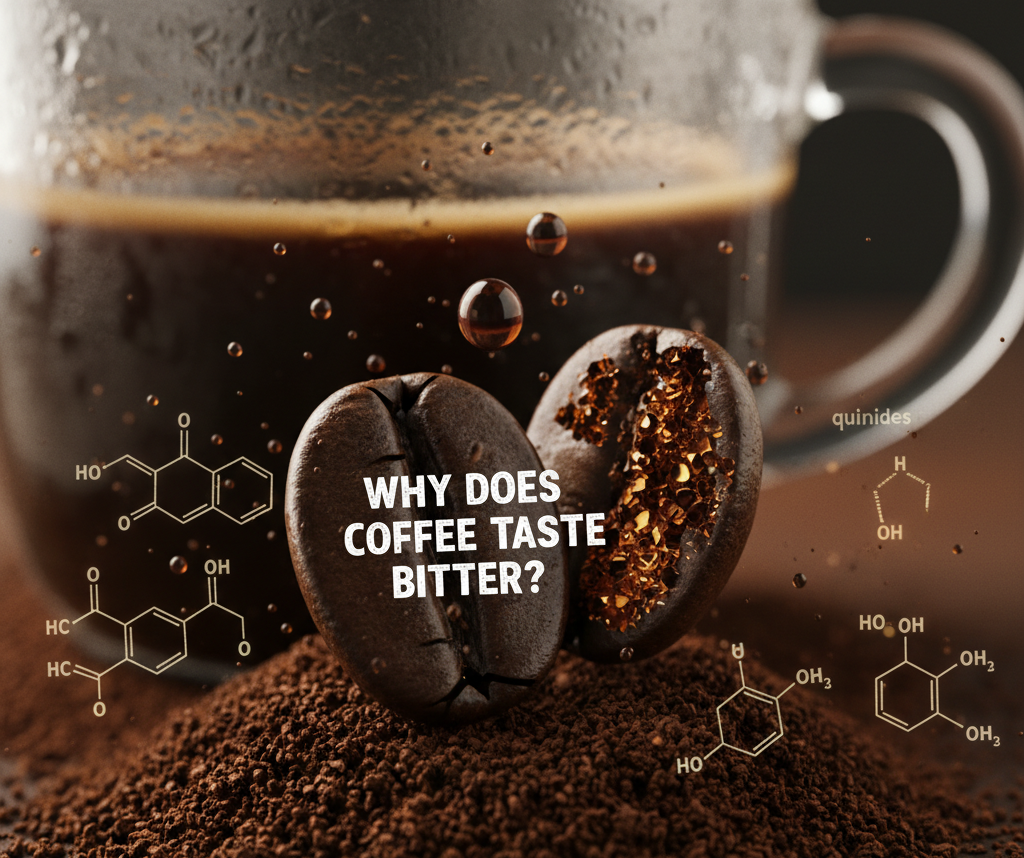
Bitter coffee is one of the most common complaints in home brewing — and one of the most fixable. The problem is that most advice tells you what to adjust without explaining why that adjustment works. Once you understand the chemistry behind bitterness, you stop guessing and start diagnosing. Every cup tells you exactly what went wrong and exactly how to correct it.
Here's the complete picture: why bitterness happens, what causes it, how to identify which cause is yours, and the precise fix for each one.
Table of contents
- What Actually Makes Coffee Taste Bitter? The Chemistry in 60 Seconds
- Cause 1: Over-Extraction (The Most Common Culprit)
- Cause 2: Grind Size Too Fine for Your Brewing Method
- Cause 3: Water Temperature Too High
- Cause 4: Stale or Low-Quality Beans
- Cause 5: Dirty Equipment
- Cause 6: Water Quality
- Cause 7: The Wrong Brewing Method for Your Beans (Roast Mismatch)
- The Bitter Coffee Diagnostic: How to Identify Your Problem in 3 Steps
- Bitterness by Brewing Method: Quick Reference
- Does Adding Salt to Coffee Actually Fix Bitterness?
- Frequently Asked Questions
- The Bottom Line
What Actually Makes Coffee Taste Bitter? The Chemistry in 60 Seconds
Coffee contains over 1,000 chemical compounds. Many of them are delicious — sugars, organic acids, aromatic esters, melanoidins. Some of them taste bitter — primarily caffeine, tannins, quinic acid, and phenolic compounds. The goal of brewing is to extract the delicious compounds while leaving most of the bitter ones behind.
This works because coffee compounds dissolve in a specific sequence. When hot water contacts coffee grounds, it extracts different compounds at different rates:
- First to extract (0–30% of brew time): Acids, bright fruity flavors, aromatic compounds — the "bright" flavors. These are highly soluble and dissolve quickly.
- Middle extraction (30–70%): Sweetness, caramel compounds, body-building melanoidins — the "balanced" flavors. This is the sweet spot you're aiming for.
- Late extraction (70–100%+): Tannins, quinic acid, phenolic compounds — the harsh, dry, bitter flavors. These are less soluble and require longer contact time to dissolve.
The ideal extraction range is 18% to 22% of the coffee's soluble mass (measured as extraction yield). Below 18% and you get sour, weak, underdeveloped coffee (under-extraction). Above 22% and the late-stage bitter compounds dominate — giving you that harsh, dry, lingering bitterness at the back of your tongue.
☕ Recommended by cocondo.coffee
Cocondo Orgánico — The only certified organic coffee from Antioquia, Colombia
Reserve Your Bag →Important distinction: Bitterness and strength are not the same thing. Strength (concentration) refers to how much dissolved coffee is in your cup — measured as TDS (total dissolved solids). A strong coffee can be perfectly balanced and not bitter at all. A weak coffee can be bitter if it's over-extracted. These are independent variables, and confusing them leads to wrong fixes.
With that foundation, here are the seven most common causes of bitter coffee and how to fix each one.
Cause 1: Over-Extraction (The Most Common Culprit)
Over-extraction is responsible for the majority of bitter coffee. It happens when water stays in contact with the grounds long enough to pull out those late-stage bitter compounds — tannins, quinic acid, and phenolics — after the desirable sugars and aromatics have already been extracted.
How to identify it: Over-extracted coffee has a specific bitterness profile. It's harsh and dry — you'll feel a drying, astringent sensation at the back of your tongue that lingers after you swallow. It may also taste hollow or flat despite being bitter, because the pleasant flavors were extracted and then overwhelmed by the bitter ones that followed.
What causes over-extraction:
- Grind too fine for the brewing method (more surface area = faster extraction)
- Water temperature too high (heat accelerates extraction of all compounds)
- Brew time too long (more time = more extraction)
- Too much coffee relative to water (higher ratio = faster saturation, more extraction)
The fix: Adjust one variable at a time, starting with grind size (usually the biggest lever):
- Grind coarser — this is the single most effective adjustment for most bitter coffee. Larger particles have less surface area, slow the extraction rate, and reduce contact time by allowing water to flow through faster.
- Lower water temperature — aim for 90 to 96°C (195 to 205°F). If you're pouring straight from a boil (100°C), let it sit 30 to 60 seconds first.
- Shorten brew time — for French press, try 3 to 4 minutes instead of 5 to 6. For pour-over, speed up your pour.
Cause 2: Grind Size Too Fine for Your Brewing Method
Grind size and brewing method are inseparable — you can't optimize one without accounting for the other. Each brewing method has a specific grind size that matches its water contact time and flow dynamics. Using a grind designed for espresso in a French press is a guaranteed recipe for bitterness.
Why it causes bitterness: A finer grind creates dramatically more surface area — meaning water touches more of the coffee simultaneously and extraction happens faster. It also slows water flow through the grounds, increasing contact time further. These two effects compound: you get faster extraction AND more time, which pushes you rapidly past the sweet spot into bitter territory.
The right grind for each method:
- Espresso: Very fine — like table salt or finer. 25 to 30 second extraction under 9 bars of pressure.
- Moka pot: Fine — similar to espresso but slightly coarser.
- AeroPress: Medium-fine — like granulated sugar. Flexible depending on brew time.
- Pour-over (V60, Chemex): Medium — like sea salt.
- Drip machine: Medium — similar to pour-over.
- French press: Coarse — like coarse sea salt or breadcrumbs.
- Cold brew: Extra coarse — the coarsest setting on most grinders.
The fix: Match your grind to your method. If you're unsure where you are, taste your way there: if the coffee is bitter, go coarser. If it's sour and weak, go finer. Move one notch at a time on your grinder until you find the sweet spot for your specific setup.
Cause 3: Water Temperature Too High
Water temperature directly controls extraction speed. Higher temperatures extract compounds from coffee grounds faster — including the bitter ones. Water that's too hot doesn't just over-extract — it can also "scorch" certain compounds, producing a burnt, acrid taste that's distinct from regular over-extraction bitterness.
The numbers:
- Below 90°C (194°F): Under-extraction — weak, sour, underdeveloped
- 90–96°C (195–205°F): Optimal range for most coffees and methods
- Above 96°C (205°F): Over-extraction begins accelerating; higher risk of bitterness
- 100°C (212°F — boiling): Harsh, burnt bitterness; scalds the grounds
Roast-specific adjustments:
- Light roasts: 200–205°F (93–96°C) — denser beans need slightly higher temperatures to extract properly
- Medium roasts: 195–200°F (90–93°C) — the standard sweet spot
- Dark roasts: 190–195°F (88–90°C) — more porous bean structure extracts faster; cooler water prevents bitterness
The fix: Use a temperature-controlled kettle if possible. If not, bring water to a full boil and wait 30 to 60 seconds before pouring — this typically drops temperature to approximately 95–97°C, which is close enough for most home brewing.
Cause 4: Stale or Low-Quality Beans
This one surprises people: you can do everything right in brewing and still end up with bitter coffee if the beans are stale or poor quality. Stale beans have a different chemical profile from fresh ones — the pleasant volatile aromatics have already escaped, and what remains are primarily the more stable bitter and flat compounds.
How stale beans cause bitterness: Fresh beans contain a balance of sugars, acids, aromatics, and bitter compounds. As coffee ages after roasting, oxidation breaks down the sugars and aromatics preferentially — they're less chemically stable than the bitter compounds. The result is that the ratio shifts toward bitterness over time, even before you brew. You're starting from a less favorable chemical baseline.
Low-quality beans present a related problem: Commercial coffee blends often contain beans with defects — over-roasted beans, broken beans, chaff (the papery skin from the coffee cherry) — all of which contribute bitter, burnt, or off-flavors that no brewing technique can fully mask. Some roasters use very dark roasting to disguise defective or poor-quality green beans, since the roasting flavors overpower origin defects. The result is coffee that tastes primarily of "roast" — bitter, smoky, lacking sweetness — regardless of how carefully you brew it.
The fix:
- Buy beans with a visible roast date — within 5 to 21 days is the target
- Store properly in an airtight, opaque container at room temperature
- Switch to medium or light roast if dark roast bitterness is consistently a problem — lighter roasts preserve more natural sweetness and are less prone to harsh bitterness when properly brewed
- Try single-origin specialty coffee from Colombia, Ethiopia, or Costa Rica — these origins are known for natural sweetness and less inherent bitterness compared to Sumatran or heavily dark-roasted commercial blends
Cause 5: Dirty Equipment
This is the most overlooked cause of bitter coffee — and the easiest to fix once you know to look for it. Coffee contains natural oils that coat the inside of every surface they touch: your grinder burrs, your portafilter, your French press screen, your drip machine basket, your carafe. These oils don't evaporate. They go rancid.
Rancid coffee oils have a distinctly bitter, stale, musty quality. Every fresh cup you brew passes through this residue, picking up those off-flavors on the way. Even a few days of buildup in an unclean French press or drip machine creates a background bitterness that tints every cup you make — and no amount of grind adjustment or temperature control will fix it.
How to diagnose it: Run a brew cycle with just clean, filtered water — no coffee. Taste the output. If the water tastes bitter, stale, or has any coffee-like off-flavors, your equipment needs cleaning before you can accurately diagnose any other bitterness problem.
Cleaning recommendations by method:
- French press: Disassemble completely after every use. Wash plunger and screen thoroughly with soap and warm water. Coffee oils accumulate in the mesh and turn rancid quickly.
- Pour-over dripper: Rinse with hot water after each use. Deep clean with a mild detergent weekly.
- Drip machine: Run a descaling cycle monthly using white vinegar or a commercial descaler (1:1 white vinegar to water, run through a full brew cycle, then two full cycles of plain water). Clean the carafe and basket after every use.
- Espresso machine: Backflush with detergent weekly. Descale every 1 to 3 months depending on water hardness. Clean the portafilter basket after every shot.
- Grinder: Run cleaning tablets through monthly, or wipe burrs with a dry brush. Coffee dust and oil residue in the burrs directly affects grind consistency and flavor.
Cause 6: Water Quality
Coffee is approximately 98% water — so the quality of your water has a direct and significant impact on the quality of your cup. Two specific water quality issues cause or amplify bitterness:
High mineral content (hard water): Water with high levels of calcium and magnesium can cause both under-extraction (certain minerals inhibit the dissolving of flavor compounds) and the perception of increased bitterness. Bicarbonate in hard water specifically amplifies bitter notes by changing the pH of the brew.
Chlorine and chloramine (treated tap water): Municipal water treatment uses chlorine or chloramine to kill bacteria. These chemicals react with coffee compounds during brewing, producing unpleasant, medicinal, or bitter off-flavors that have nothing to do with your extraction parameters.
The fix: Use filtered water. A basic pitcher filter (Brita, ZeroWater) or tap filter removes chlorine, chloramine, and reduces mineral content significantly. This simple change makes a noticeable difference in cup clarity and sweetness for most urban tap water users. Avoid distilled water — it lacks the minerals needed for proper extraction and produces flat, hollow coffee. The target is clean, slightly mineral water — filtered tap usually hits this well.
Cause 7: The Wrong Brewing Method for Your Beans (Roast Mismatch)
This is a subtler cause that experienced brewers appreciate: certain bean and roast combinations are mismatched with certain brewing methods, producing bitterness even when technique is correct.
Dark roasts in immersion brewers: Dark roast beans are porous and extract quickly. In immersion methods like French press — where the grounds steep in water for 4 to 5 minutes — the extraction can push past the sweet spot into bitterness even with a coarse grind. Dark roasts often do better with percolation methods (pour-over, drip) where water passes through quickly rather than sitting.
Light roasts in low-pressure methods: Very light roasts are dense and harder to extract. In a basic drip machine that doesn't reach optimal temperature, they can simultaneously under-extract (producing sourness) and create harsh flavor imbalance. Light roasts generally perform best with pour-over at proper temperature or with AeroPress using higher pressure.
High-caffeine beans: Robusta beans contain nearly double the caffeine of Arabica — and caffeine is itself a bitter compound. Blends with high Robusta content will always taste more bitter than comparable Arabica coffees, regardless of brewing technique. If you've optimized every other variable and your coffee still tastes inherently bitter, check whether your beans contain significant Robusta.
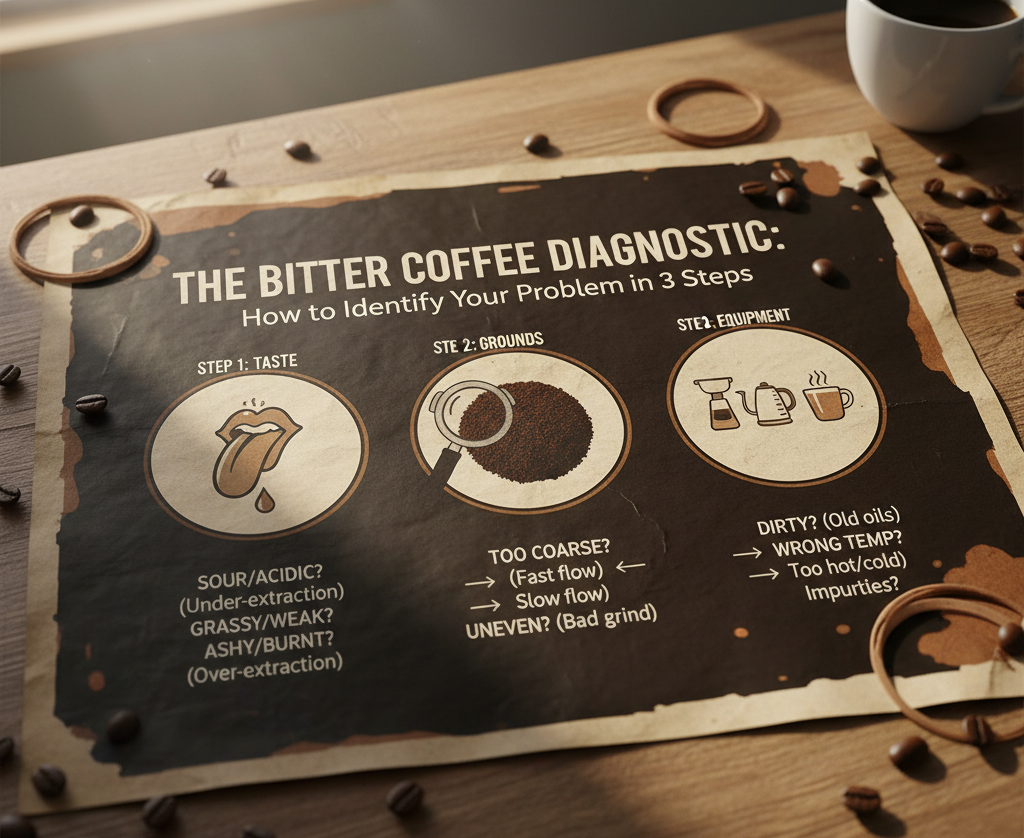
The Bitter Coffee Diagnostic: How to Identify Your Problem in 3 Steps
Rather than guessing, use this systematic approach:
- Run a water test. Brew hot water through your equipment with no coffee. If it tastes off, clean your equipment first before diagnosing anything else.
- Check your beans. Look for a roast date. If there isn't one, or it's more than 6 weeks ago, stale beans are likely contributing. Smell the beans — they should smell vibrant and complex. If they smell flat or vaguely like cardboard, they're past their prime.
- Diagnose the extraction. Ask: does the coffee taste harsh and dry with a lingering aftertaste? That's over-extraction. Start with grind size — go one notch coarser and taste again. If bitterness reduces, that was your problem. If not, try lowering water temperature by 2 to 3 degrees. If still bitter, shorten brew time.
Change one variable at a time. Adjusting grind, temperature, and brew time simultaneously makes it impossible to know what fixed the problem — and you'll end up chasing your tail.
Bitterness by Brewing Method: Quick Reference
French Press
Most common cause: Steep time too long, grind too fine, or failing to decant immediately after pressing.
Fix: Use coarse grind (like breadcrumbs), steep exactly 4 minutes, press and pour immediately — don't let the coffee sit on the grounds after pressing.
Pour-Over (V60, Chemex, Kalita)
Most common cause: Grind too fine causing slow drawdown, or water temperature too high.
Fix: Target a total brew time of 3 to 4 minutes. If drawdown is taking 5+ minutes, grind coarser. Check water temperature with a thermometer if available.
Drip Machine
Most common cause: Machine not reaching optimal temperature, dirty equipment, or coffee left on a warming plate.
Fix: Descale regularly, brew what you'll drink immediately, use a thermal carafe instead of a warming plate. Budget drip machines often don't reach 95°C — if this is your machine, it may be worth upgrading to an SCA-certified model.
Espresso
Most common cause: Grind too fine causing over-extraction, tamping too hard, or channeling through the puck.
Fix: Target a 25 to 30 second extraction for a standard double shot. If taking longer and tasting bitter, grind coarser. Ensure even tamping to prevent channeling.
AeroPress
Most common cause: Steep time too long or plunging too slowly (extending contact time).
Fix: Use a medium-fine grind, steep 1 to 2 minutes, plunge steadily in 20 to 30 seconds. AeroPress is highly forgiving — small adjustments produce noticeable changes.
Cold Brew
Most common cause: Steeped too long (beyond 24 hours) or grind too fine for the long steep time.
Fix: Use extra-coarse grind, steep 16 to 24 hours (not longer), in the refrigerator. Cold brew should taste smooth and sweet — if it's bitter, it over-steeped.
Does Adding Salt to Coffee Actually Fix Bitterness?
You may have seen this trick — adding a pinch of salt to bitter coffee. Surprisingly, it has scientific merit. Sodium ions suppress the perception of bitterness by partially blocking bitter taste receptors on the tongue. A small pinch (literally a few grains) can make bitter coffee taste noticeably smoother without making it taste salty.
However, salt is a masking technique, not a fix. It changes how you perceive the coffee without changing its actual chemistry. It's useful when you have no other options — a hotel room with bad coffee, a diner with stale drip. For your daily home brewing, the better approach is to fix the underlying cause rather than masking the result.
Frequently Asked Questions
Why does my coffee always taste bitter?
Consistently bitter coffee usually points to one of three systemic issues: you're using a grind that's too fine for your brewing method, your water temperature is too high (above 96°C), or your beans are stale or low-quality. Check all three systematically — start by looking for a roast date on your beans, then adjust grind size one notch coarser, then verify your water temperature. One of these three adjustments fixes the majority of consistently bitter coffee problems.
How do I make my coffee less bitter?
The fastest single adjustment: grind coarser. This reduces extraction rate and contact time simultaneously, which is the most direct lever over bitterness. If that doesn't fully resolve it, lower your water temperature slightly (2 to 3 degrees) and shorten brew time. If the problem persists after those adjustments, check your beans' freshness and clean your brewing equipment thoroughly.
Is bitter coffee over-extracted or under-extracted?
Bitter coffee is over-extracted — too many compounds were dissolved, including the late-stage bitter tannins and quinic acids. Under-extracted coffee tastes sour, weak, and underdeveloped, not bitter. The distinction matters because the fixes are opposite: bitter coffee needs less extraction (coarser grind, shorter time, lower temperature) while sour coffee needs more extraction (finer grind, longer time, higher temperature).
Why does dark roast coffee taste more bitter?
Dark roasting breaks down the coffee bean's sugars through caramelization and Maillard reactions, progressively converting sweetness into roasty, bitter compounds. The longer and darker the roast, the more the natural sweetness of the bean is replaced by bitter roasting compounds — chlorogenic acid lactones and phenylindanes specifically. This is an intrinsic property of dark-roasted beans, not a brewing problem. If you find all dark roasts too bitter, try a medium or medium-light roast — same satisfying body with significantly more natural sweetness.
Does cold brew coffee taste less bitter?
Yes — cold brew is significantly less bitter than hot-brewed coffee. The reason is temperature: cold water extracts compounds much more slowly and selectively than hot water, and the acidic compounds and bitter chlorogenic acid lactones that form at high temperatures simply don't form during cold extraction. Cold brew typically has 60 to 70% less acidity than hot-brewed coffee and a naturally sweeter, smoother flavor profile. If bitterness is a persistent problem with hot brewing, cold brew is worth exploring as an alternative.
The Bottom Line
Bitter coffee is almost always fixable — and fixing it requires understanding, not guessing. The diagnostic sequence is simple: check your equipment cleanliness, check your beans' freshness, then adjust extraction variables one at a time starting with grind size.
Most bitter coffee problems resolve with a single adjustment. The grind is too fine — go coarser. The water is too hot — let it cool 30 seconds. The beans are stale — buy fresher ones. One change, tasted immediately, usually tells you everything you need to know.
The deepest fix, of course, is starting with beans that have natural sweetness built in — high-quality, properly roasted, single-origin specialty coffee from regions like Colombia, Ethiopia, or Costa Rica. These origins produce beans with higher natural sugar content, more complex aromatics, and a broader range of pleasant compounds that make achieving a balanced, sweet cup far easier than fighting against the inherent bitterness of over-roasted commercial blends. Better beans don't make bitterness impossible — but they give you a much more forgiving starting point.
If you'd like to read other articles similar to Why Does Coffee Taste Bitter? 7 Real Causes — and How to Fix Each One you can visit the category The Art and Science of Coffee: Guides, Reviews, and Expert Tips.
Does Coffee Affect Cortisol Levels? The Science Behind Caffeine and Your Stress Hormone

Is Coffee Good for Depression Risk? What the Research Actually Shows

Is Coffee Bad for Anxiety? What the Science Actually Shows
The 5 Elements of Coffee Tasting Every Coffee Lover Should Know
What Is Green Coffee? How Raw Beans Differ From Roasted — and What That Means for Your Health
How Is Coffee Decaffeinated? The 4 Methods Explained — Including the One You Should Avoid
What Is Coffee Degassing? Why Fresh Roasted Beans Release CO2 — and Why It Matters
What Is a Coffee Cooperative? How They Help Farmers — and Why They Matter for Your Cup
How Altitude Affects Coffee Flavor: Why High-Grown Coffee Tastes Different
Leave a Reply
Related post