

Coffee and Brain Health: What the Science Actually Says

Most people know that coffee makes them feel more alert. But "feeling more alert" and "actually benefiting your brain" are two different things — and the research on coffee and brain health goes much, much deeper than a morning energy boost.
Over the past two decades, a growing body of evidence has established that regular coffee consumption is one of the most consistently studied protective factors for long-term brain health. We're talking reduced risk of Alzheimer's disease, Parkinson's disease, depression, stroke, and cognitive decline — all backed by large-scale human studies and increasingly understood at the molecular level.
Let's break down exactly what coffee does to your brain, both in the short term and over a lifetime of regular drinking.
Table of contents
- How Coffee Gets Into Your Brain in the First Place
- The Short-Term Effects: What Coffee Does to Your Brain Right Now
- The Long-Term Effects: What Years of Coffee Drinking Does to Your Brain
- Which Compounds in Coffee Are Doing the Heavy Lifting for Brain Health?
- Does the Type of Coffee Matter for Brain Health?
- Is Coffee Good for Brain Inflammation?
- How Much Coffee Do You Need for Brain Benefits?
- Frequently Asked Questions
- The Bottom Line
How Coffee Gets Into Your Brain in the First Place
Before diving into the benefits, it helps to understand why coffee affects the brain at all. The key is that caffeine is both water-soluble and fat-soluble. That combination allows it to cross the blood-brain barrier — the protective filter that keeps most substances out of the brain — within minutes of entering your bloodstream.
Once inside the brain, caffeine doesn't add energy directly. Instead, it works by blocking adenosine receptors. Adenosine is a naturally occurring chemical that builds up in the brain throughout the day and progressively makes you feel tired. By blocking the receptors that adenosine binds to, caffeine essentially removes the "slow down" signal — leaving the brain in a more active, alert state.
This also triggers a cascade of secondary effects: dopamine activity increases (improving mood and motivation), norepinephrine rises (sharpening focus and reaction time), and neural firing speeds up across multiple brain regions. All of this from a single cup.
☕ Recommended by cocondo.coffee

Cocondo Orgánico — The only certified organic coffee from Antioquia, Colombia
Reserve Your Bag →But caffeine is only one of over 1,000 bioactive compounds in roasted coffee. And for long-term brain health, the other compounds are just as important — if not more so.
The Short-Term Effects: What Coffee Does to Your Brain Right Now
Focus and Alertness
The most immediate effect of coffee on the brain is improved alertness and sustained attention. Research consistently shows that caffeine reduces reaction time, improves vigilance on repetitive tasks, and helps maintain concentration over extended periods. These effects kick in within 30 to 45 minutes of drinking coffee and typically last 3 to 6 hours depending on your individual metabolism.
Memory Consolidation
A study published in Nature Neuroscience found that 200 mg of caffeine (roughly two cups) taken after a learning session significantly improved memory consolidation — the process by which short-term memories are encoded into long-term storage. The key finding was that caffeine enhanced memory when taken after learning, not before, suggesting it plays a role in strengthening memory traces during the consolidation window.
Mood and Motivation
Coffee's stimulation of dopamine pathways has real mood effects. Regular coffee drinkers report lower rates of depression and generally better mood ratings on average. Part of this is biochemical — dopamine is directly tied to motivation, pleasure, and reward. Part of it is also ritualistic: the act of making and drinking a morning coffee can itself be grounding and mood-stabilizing.
Physical Reaction Time and Motor Control
Caffeine speeds up signal transmission between neurons, which translates to faster physical reactions. This is part of why athletes use caffeine before performance — but it also just means your brain is operating more efficiently at baseline during the hours your coffee is active.
The Long-Term Effects: What Years of Coffee Drinking Does to Your Brain
This is where the research gets genuinely remarkable. Multiple large studies and systematic reviews published between 2020 and 2025 have converged on a consistent picture: regular, moderate coffee consumption is associated with significantly lower rates of nearly every major neurodegenerative and neurological condition.
Alzheimer's Disease
Of all the research on coffee and brain health, the connection to Alzheimer's disease is among the most robust. A 2024 review published in Neural Regeneration Research found that observational studies have associated regular, moderate coffee consumption with up to a 65% lower risk of developing Alzheimer's disease.
For a long time, researchers assumed this was mostly about caffeine. But a landmark study from the Krembil Brain Institute compared three types of coffee — light roast, dark roast, and decaffeinated dark roast — and found that all three offered protection against Alzheimer's-associated protein buildup, including in the decaf version. That finding was a turning point: it proved that non-caffeine compounds in coffee are doing significant neuroprotective work.
The compound that has since emerged as most promising is phenylindane — a compound that forms specifically during the roasting process (especially dark roast) and has been shown to inhibit the clumping of tau and beta-amyloid proteins, two of the key markers of Alzheimer's disease. The darker the roast, the more phenylindane is produced.
Another key player is trigonelline, a compound found in green coffee beans that converts to other neuroprotective chemicals during roasting. Research published in Nutrition Research Reviews in 2024 identified trigonelline as one of the most promising candidates for neuroprotection in both Alzheimer's and Parkinson's disease.
Parkinson's Disease
The link between coffee and Parkinson's disease is one of the most consistently replicated findings in nutritional neuroscience. Regular coffee drinkers have a 32 to 65% lower risk of developing Parkinson's disease compared to non-drinkers — a range that has held up across studies involving hundreds of thousands of participants across multiple countries.
For Parkinson's specifically, caffeine does appear to play a central role. Caffeine blocks adenosine A2A receptors in the brain's basal ganglia — the region most affected by Parkinson's disease. This blocking reduces neuroinflammation, modulates dopaminergic signaling (the dopamine pathway that progressively deteriorates in Parkinson's), and may slow the accumulation of alpha-synuclein, the pathological protein that characterizes Parkinson's.
A 2025 review in Cureus noted that regular coffee drinkers not only develop Parkinson's less frequently, but those who already have the condition show better motor control with regular caffeine intake — suggesting an ongoing therapeutic effect, not just a preventive one.
Interestingly, a 2024 study of more than 2,400 people with atrial fibrillation (average age 73) found that drinking more than five cups of caffeinated coffee daily was associated with significantly better performance on cognitive tests — including in individuals already dealing with a complex medical condition.
General Cognitive Decline and Dementia
Beyond Alzheimer's specifically, the research consistently shows that coffee drinkers experience slower rates of general cognitive decline as they age. A 2025 narrative review published in Cureus summarized the current evidence: regular coffee drinkers have lower rates of dementia, cognitive impairment, and age-related memory loss compared to non-drinkers across multiple large studies.
The protective mechanisms are multiple and work together:
- Caffeine's adenosine antagonism keeps neural circuits more active over time, which may help preserve synaptic density.
- Chlorogenic acids reduce oxidative stress and inflammation throughout the brain — both of which are key drivers of cognitive aging.
- Trigonelline supports the maintenance of neuronal structure and synaptic connections.
- The overall antioxidant load of coffee — which is substantial — reduces the chronic low-grade inflammation that underlies most age-related brain decline.
Depression and Mental Health
Coffee's relationship with mental health is positive and well-documented. Multiple studies have found that regular coffee consumption is associated with a 20 to 30% lower risk of depression. A large Harvard study found that women drinking 4 or more cups per day had meaningfully lower rates of depression than non-drinkers.
The mechanisms include caffeine's stimulation of dopamine and serotonin — both key neurotransmitters in mood regulation. But the ritual and social aspects of coffee culture also appear to play a protective role in mental wellbeing that's harder to quantify.
For people who already have anxiety disorders, however, caffeine can amplify symptoms. The relationship between coffee and mental health is genuinely bidirectional — beneficial for depression risk, potentially counterproductive for anxiety when consumed in excess.
Stroke Risk Reduction
Regular coffee consumption is associated with a lower risk of stroke, particularly in women. Research from Johns Hopkins found that women who drink at least one cup of coffee per day have measurably lower stroke risk. The mechanism appears to involve coffee's effect on vascular inflammation and blood vessel function — both of which affect stroke risk independently of other factors.
Which Compounds in Coffee Are Doing the Heavy Lifting for Brain Health?
The research has moved far beyond "caffeine is good for the brain." Here's a breakdown of the key compounds and what they specifically do:
Caffeine
Blocks adenosine receptors → increases alertness, focus, and reaction time. Modulates dopaminergic and serotonergic systems → supports mood and motivation. Crosses the blood-brain barrier rapidly → fast-acting effects. Reduces neuroinflammation via adenosine A2A receptor antagonism → long-term neuroprotection especially relevant for Parkinson's.
Chlorogenic Acids
Powerful antioxidants that reduce oxidative stress in brain tissue. Anti-inflammatory effects help counteract the chronic neuroinflammation that underlies Alzheimer's, Parkinson's, and general cognitive decline. Present in all coffee types, but reduced by heavier roasting — lighter roasts preserve more chlorogenic acids.
Trigonelline
Converted to nicotinic acid (vitamin B3) during roasting. Supports maintenance of neuronal structure. Shows neuroprotective effects in both Alzheimer's and Parkinson's research. Reduces tau protein aggregation — one of the key markers of Alzheimer's pathology.
Phenylindanes
Formed during the roasting process — more abundant in dark roasts. Specifically inhibit clumping of both beta-amyloid and tau proteins, making them particularly relevant to Alzheimer's prevention. This is why dark roast coffee showed stronger Alzheimer's protection in the Krembil Brain Institute study.
Cafestol and Kahweol
Diterpenes found primarily in unfiltered coffee. Show neuroprotective effects in animal models, protecting neurons from toxic compounds. Also raise LDL cholesterol in large quantities — a tradeoff worth noting if you drink French press or espresso heavily.
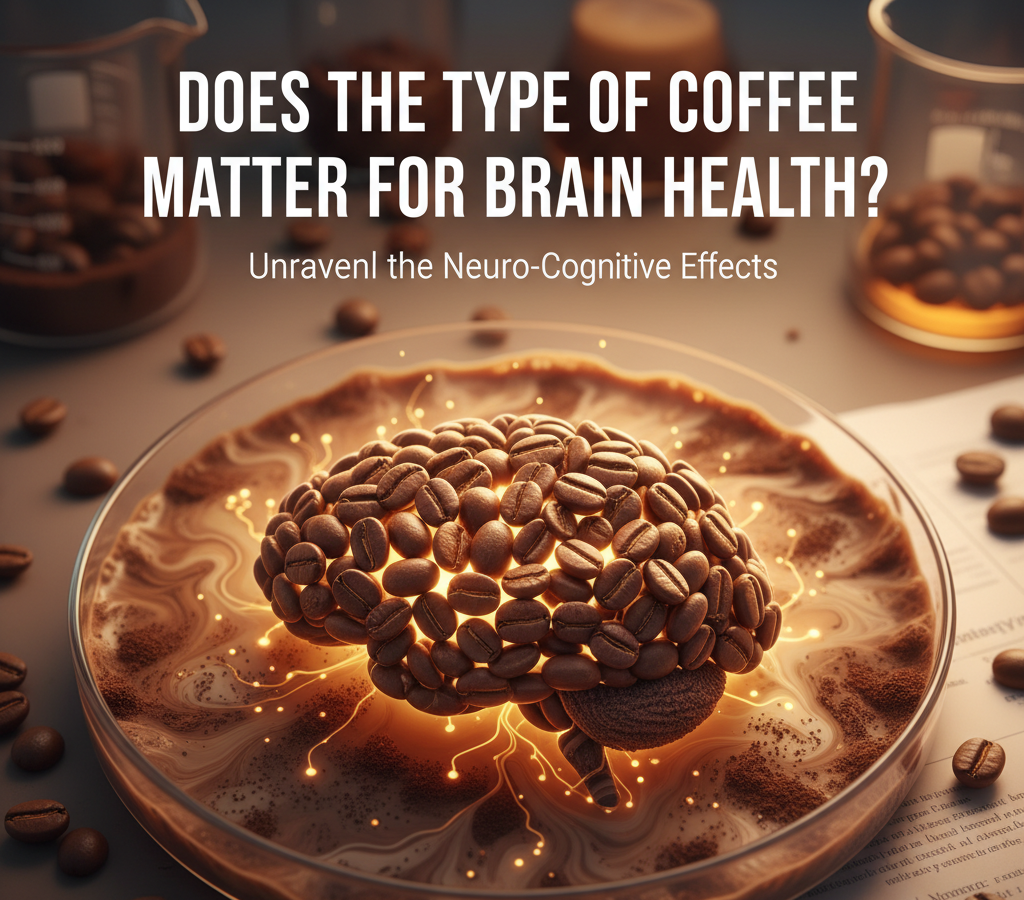
Does the Type of Coffee Matter for Brain Health?
Yes — and the answer is more nuanced than most people realize.
Light Roast vs Dark Roast
Light roasts preserve more chlorogenic acids (better for general antioxidant protection). Dark roasts produce more phenylindanes (specifically protective against Alzheimer's protein buildup). Both offer meaningful brain health benefits — they just emphasize different mechanisms. Neither is definitively "better" for brain health overall.
Caffeinated vs Decaf
Decaf still contains chlorogenic acids, trigonelline, phenylindanes, and other neuroprotective compounds — just without the caffeine. The Krembil study showed decaf dark roast offered protection against Alzheimer's proteins comparable to caffeinated versions. If you can't tolerate caffeine, decaf is a genuinely meaningful option for brain health. It's not a consolation prize.
Filtered vs Unfiltered
Paper-filtered coffee (pour-over, drip, Aeropress) removes most diterpenes. Unfiltered coffee (French press, espresso, moka pot) retains them — along with their neuroprotective benefits and their cholesterol-raising effects. For brain health specifically, unfiltered has a slight edge. For cardiovascular health in people with high cholesterol, filtered is the wiser choice.
Specialty vs Commercial Coffee
Single-origin specialty coffee — particularly organically grown beans from high-altitude farms — tends to have a richer polyphenol and chlorogenic acid profile than mass-produced commercial blends. The growing altitude, processing method, and freshness of roasting all affect the concentration of the very compounds most responsible for coffee's brain health benefits. If brain health is a priority, the quality of your beans is worth caring about.
Is Coffee Good for Brain Inflammation?
Yes — and this is one of the most important mechanisms for long-term brain health. Chronic neuroinflammation is a key driver of cognitive decline, Alzheimer's, Parkinson's, and other neurodegenerative conditions. Coffee contains multiple compounds that reduce neuroinflammation through different pathways:
- Caffeine reduces microglial activation — microglia are the brain's immune cells, and when chronically overactivated, they contribute significantly to neurodegeneration.
- Chlorogenic acids reduce levels of inflammatory markers in the brain including TNF-alpha and IL-6.
- The overall antioxidant action of coffee reduces oxidative stress, which is both a cause and consequence of neuroinflammation.
Regular coffee drinkers consistently show lower levels of neuroinflammation markers than non-drinkers in epidemiological studies — which helps explain why the disease-protective effects of coffee appear across so many different neurological conditions simultaneously.
How Much Coffee Do You Need for Brain Benefits?
The dose-response relationship varies slightly by condition:
- General cognitive protection: Benefits appear even at 1 to 2 cups per day, with the strongest effects at 3 to 5 cups.
- Alzheimer's protection: Most studies show significant risk reduction at 3 to 5 cups per day. Some suggest the relationship is dose-dependent — more cups, stronger protection — up to a point.
- Parkinson's protection: The inverse relationship between coffee and Parkinson's risk is strongest at 3 to 4 cups per day in most studies.
- Depression risk reduction: Benefits are measurable even at 2 cups per day, with the strongest effects at 4+ cups in some studies.
- Stroke protection: Even 1 cup per day shows meaningful benefit for women.
The general message is consistent with the rest of the coffee health literature: 3 to 5 cups per day gives you the most brain benefit with the least risk of side effects.
Frequently Asked Questions
Does coffee benefit the brain?
Yes — extensively and through multiple mechanisms. Short-term, coffee improves alertness, focus, memory consolidation, mood, and reaction time. Long-term, regular coffee consumption is associated with significantly lower rates of Alzheimer's, Parkinson's, dementia, depression, and cognitive decline. The evidence comes from dozens of large-scale human studies and is supported by increasingly well-understood molecular mechanisms.
Can moderate amounts of caffeine positively impact brain health?
Yes — moderate caffeine intake (roughly 200 to 400 mg per day, or 2 to 4 cups of coffee) consistently shows cognitive benefits in both short-term performance studies and long-term epidemiological research. However, many of coffee's brain benefits also apply to decaf, indicating that non-caffeine compounds play an equally important role in long-term neuroprotection.
Is coffee good for brain inflammation?
Yes. Coffee — particularly its chlorogenic acids and caffeine — reduces neuroinflammation through multiple pathways, including reducing microglial overactivation and lowering inflammatory cytokine levels in the brain. This anti-inflammatory effect is one of the primary mechanisms behind coffee's protection against multiple neurodegenerative conditions.
Does dark roast or light roast protect the brain better?
Both offer meaningful but different protections. Light roast preserves more chlorogenic acids (general antioxidant and anti-inflammatory protection). Dark roast produces more phenylindanes (specifically protective against Alzheimer's protein clumping). For comprehensive brain protection, alternating between roast levels or choosing medium roast as a balance is a reasonable approach.
Is decaf coffee good for brain health too?
Yes — decaf coffee retains most of the non-caffeine compounds responsible for long-term brain health, including chlorogenic acids, trigonelline, and phenylindanes. Research from the Krembil Brain Institute found decaf dark roast offered protection against Alzheimer's-associated proteins comparable to caffeinated versions. Decaf is a genuinely meaningful option for brain health.
The Bottom Line
Coffee is one of the most comprehensively studied foods for brain health, and the picture that has emerged from decades of research is consistently positive. Regular, moderate coffee consumption — 3 to 5 cups per day — is associated with lower rates of virtually every major neurodegenerative condition, better mood, sharper cognition, and slower cognitive aging.
And it's not just one compound doing the work. Caffeine, chlorogenic acids, trigonelline, and phenylindanes all contribute through different mechanisms, which is part of why the benefits show up so broadly and so consistently across different populations and study designs.
If you care about your brain health long-term — and who doesn't — your daily coffee habit is already working in your favor. The question is just whether you're making the most of it.
Choosing high-quality beans matters. Freshly roasted single-origin coffee, especially organic varieties grown at high altitude like those from Colombia's Antioquia region, tends to have a more concentrated polyphenol and chlorogenic acid profile than commercial blends. For something you're drinking 3 to 5 times every single day, that difference in quality adds up — cup after cup, year after year.
If you'd like to read other articles similar to Coffee and Brain Health: What the Science Actually Says you can visit the category The Art and Science of Coffee: Guides, Reviews, and Expert Tips.
Does Coffee Affect Cortisol Levels? The Science Behind Caffeine and Your Stress Hormone

Is Coffee Good for Depression Risk? What the Research Actually Shows

Is Coffee Bad for Anxiety? What the Science Actually Shows

The 5 Elements of Coffee Tasting Every Coffee Lover Should Know

What Is Green Coffee? How Raw Beans Differ From Roasted — and What That Means for Your Health
How Is Coffee Decaffeinated? The 4 Methods Explained — Including the One You Should Avoid

What Is Coffee Degassing? Why Fresh Roasted Beans Release CO2 — and Why It Matters

What Is a Coffee Cooperative? How They Help Farmers — and Why They Matter for Your Cup

How Altitude Affects Coffee Flavor: Why High-Grown Coffee Tastes Different
Leave a Reply
Related post