

Coffee and Sleep: How Caffeine Really Affects Your Rest (And When to Stop Drinking It)
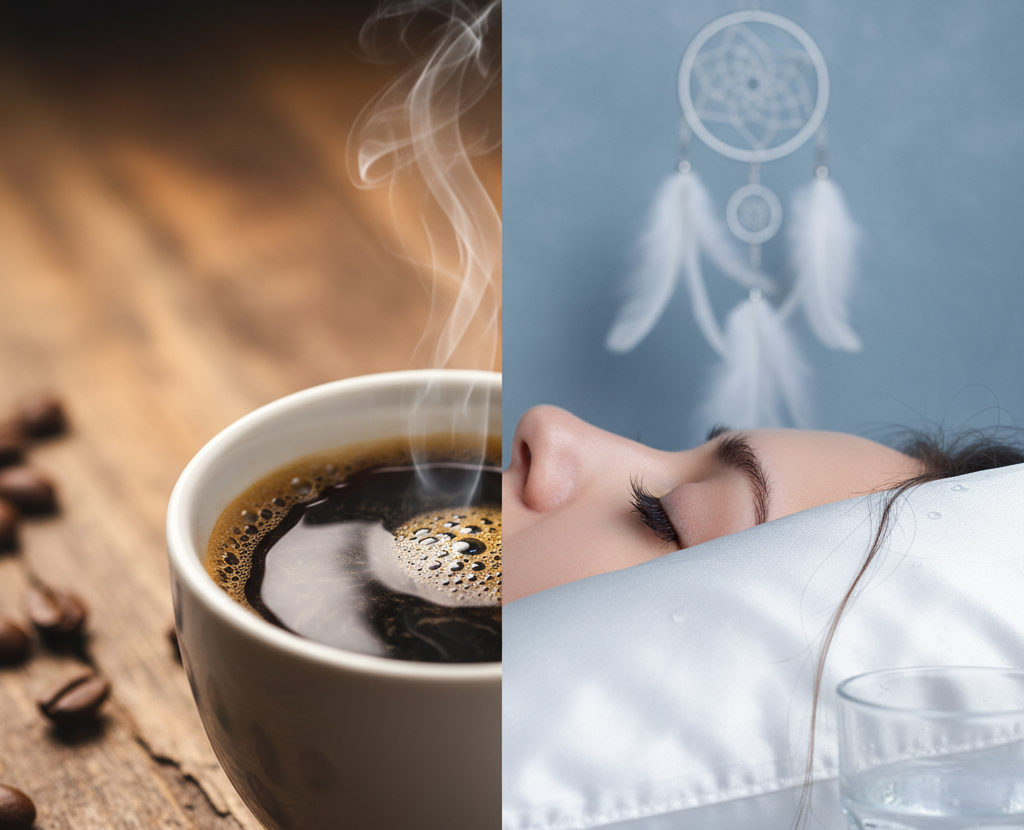
Most people who drink coffee have a vague sense that too much, too late, isn't great for sleep. But "too much" and "too late" mean very different things depending on who you are, how much you drink, and what time you go to bed. The conventional advice — "stop drinking coffee after 2 PM" — is a reasonable rule of thumb, but the actual science is both more precise and more nuanced than that.
Here's what the research actually shows about coffee, caffeine, and sleep — including some findings from 2024 and 2025 that significantly refine the picture.
Table of contents
- Why Caffeine Disrupts Sleep in the First Place
- What Caffeine Does to Your Sleep Architecture
- The Half-Life Question: How Long Does Caffeine Stay in Your System?
- The New Research: Dose Matters As Much As Timing
- What the Stanford Research Says About the Ideal Cutoff
- The "I Sleep Fine With Evening Coffee" Phenomenon
- Age, Sex, and Individual Differences
- How Bad Sleep Cancels Out Coffee's Health Benefits
- The Morning Timing Question: When to Drink Your First Cup
- Practical Guidelines: Finding Your Personal Coffee Cutoff
- Quick Reference: Caffeine Cutoff Times by Bedtime
- Frequently Asked Questions
- The Bottom Line
Why Caffeine Disrupts Sleep in the First Place
To understand caffeine's effect on sleep, you need to understand adenosine — the brain chemical that makes you feel sleepy.
Throughout your waking hours, adenosine accumulates in your brain. The longer you're awake, the more adenosine builds up, and the sleepier you feel. This is your brain's natural "sleep pressure" system — it's what makes you want to go to bed after 16 hours of being awake.
Caffeine works by blocking adenosine receptors in your brain. It doesn't reduce adenosine — it just prevents adenosine from binding to its receptors and signaling sleepiness. So while you feel awake and alert, adenosine continues accumulating in the background. The moment caffeine wears off and the receptors are unblocked, that accumulated adenosine floods in all at once — which is why the "caffeine crash" can feel so sudden and heavy.
☕ Recommended by cocondo.coffee

Cocondo Orgánico — The only certified organic coffee from Antioquia, Colombia
Reserve Your Bag →The sleep disruption doesn't just happen at the level of falling asleep. Caffeine fundamentally changes the architecture of your sleep — the proportion of time spent in different sleep stages — even when you feel like you slept fine.
What Caffeine Does to Your Sleep Architecture
This is where the science gets really important — and where most casual advice falls short.
A 2023 systematic review and meta-analysis published in ScienceDirect, analyzing 24 studies on caffeine and nighttime sleep, found that caffeine consumption:
- Reduced total sleep time by an average of 45 minutes
- Reduced sleep efficiency by 7% (the proportion of time in bed actually spent sleeping)
- Increased time to fall asleep by 9 minutes (sleep onset latency)
- Increased time spent awake after initially falling asleep by 12 minutes
- Increased light sleep (N1 stage) by 6.1 minutes
- Decreased deep slow-wave sleep (N3/N4) by 11.4 minutes
That last point is the most significant finding that most people miss. Caffeine reduces deep sleep — the restorative slow-wave sleep that is essential for memory consolidation, immune function, hormone regulation, cellular repair, and metabolic health.
As Stanford MD-PhD researcher Ank Agarwal noted in a 2025 analysis: "Plenty of people claim that they 'sleep just fine' after consuming caffeine late in the day, but studies show that caffeine reduces deep, slow-wave sleep, which is essential for memory consolidation, immune function, hormone regulation." The key word is "claim." You may not feel the disruption consciously, but your brain is experiencing less of the most restorative phase of sleep.
This creates a hidden cycle that many daily coffee drinkers are trapped in: caffeine reduces deep sleep quality → you wake up feeling unrestored → you need more caffeine to compensate → which further reduces deep sleep quality → repeat. Stanford researchers specifically identified this as a mechanism by which caffeine dependence "paradoxically fuels the very exhaustion it's meant to cure."
The Half-Life Question: How Long Does Caffeine Stay in Your System?
Caffeine's half-life — the time it takes your body to eliminate half of a dose — varies widely between individuals due to genetic differences in how the liver metabolizes caffeine. This variation is one of the most important and least discussed aspects of the coffee-sleep relationship:
- Fast metabolizers: Half-life of 2 to 3 hours. A cup of coffee at 3 PM is largely cleared by 9 PM.
- Average metabolizers: Half-life of 5 to 6 hours. A cup at 3 PM still has significant caffeine activity at 9 PM.
- Slow metabolizers: Half-life of up to 9 to 10 hours. A cup at noon can still be affecting sleep at midnight.
This genetic variation explains why some people genuinely can drink an espresso after dinner and sleep perfectly, while others find that a 2 PM coffee ruins their night. Both are telling the truth about their experience — their metabolisms are simply different.
Factors that slow caffeine metabolism include:
- Oral contraceptives (can slow clearance by up to 40%)
- Pregnancy (metabolism slows dramatically, especially in the third trimester)
- Certain medications including some antidepressants and antibiotics
- Liver disease
- Age — metabolism tends to slow with age, meaning older adults often need to cut off caffeine earlier than they did in their 30s
Factors that speed caffeine metabolism include:
- Smoking (smokers metabolize caffeine roughly twice as fast as non-smokers)
- Certain genetic variants in the CYP1A2 enzyme
The New Research: Dose Matters As Much As Timing
Here's where the 2024-2025 research adds critical nuance that older advice misses.
A randomized, placebo-controlled crossover clinical trial published in PMC in 2025 (conducted by Australian Catholic University) tested different doses of caffeine at different times before bed. The findings were striking:
- 100 mg of caffeine (approximately one standard cup of coffee) consumed up to 4 hours before bedtime did NOT significantly negatively impact subsequent sleep in most participants.
- 400 mg of caffeine (approximately four cups, the FDA's daily upper limit) negatively impacted sleep when consumed 12, 8, and even 4 hours before bedtime.
This is genuinely important. It means that:
- A single cup of coffee at 6 PM for someone going to bed at 10 PM is unlikely to significantly affect their sleep.
- Four cups of coffee at noon for someone going to bed at midnight may still disrupt their sleep.
- Total daily caffeine load matters as much as cutoff time — possibly more.
The standard "stop at 2 PM" advice assumes you're drinking a typical amount of caffeine. If you're regularly consuming 400+ mg per day (4+ cups), you may need your cutoff to be much earlier — or reduce your total intake.
What the Stanford Research Says About the Ideal Cutoff
Stanford's 2025 analysis recommends allowing at least 8 to 10 hours before bedtime for caffeine to sufficiently clear your system. For someone going to bed at 10 PM, that means your last cup should be no later than noon to midnight.
The earlier 2023 ScienceDirect meta-analysis calculated specific cutoffs based on dose:
- Coffee (107 mg / standard cup): Should be consumed at least 8.8 hours before bedtime to avoid reductions in total sleep time
- Pre-workout supplement (217.5 mg): Should be consumed at least 13.2 hours before bedtime
Translating this to real life for someone with a 10:30 PM bedtime:
- Last cup of standard coffee: ideally by 1:42 PM (8.8 hours before)
- Last espresso (if it's a double shot ~126 mg): by around 12:30 PM
- Last energy drink or pre-workout: by 9:18 AM
These numbers are stricter than the conventional "stop at 2 PM" advice — and they're based on what the research says about actual sleep architecture, not just perceived ability to fall asleep.
The "I Sleep Fine With Evening Coffee" Phenomenon
This is real — and it's explained by several factors:
Tolerance. Regular coffee drinkers develop partial tolerance to caffeine's sleep-disrupting effects. The 2025 coffee and health review noted that "the effects of caffeine are less marked in those who regularly drink coffee when compared to occasional coffee drinkers." This doesn't mean the disruption disappears — the deep sleep reduction persists — but the perceived difficulty falling asleep diminishes with regular use.
You're not measuring the right thing. Most people assess sleep quality by how quickly they fall asleep and how groggy they feel in the morning. But deep sleep reduction doesn't necessarily make you feel like you "couldn't sleep." It makes your sleep less restorative without you necessarily knowing it. The 2025 SleepSmart study from LMU Munich (using wearable devices rather than self-report) found that even when participants felt they slept normally with late caffeine, objective measurements showed disrupted sleep architecture.
Genetic fast metabolizers genuinely are less affected. If you have a CYP1A2 genetic variant that makes you metabolize caffeine quickly, your evening coffee really is cleared faster and may genuinely not disrupt your sleep as much. This is a real difference, not just a belief.
Age, Sex, and Individual Differences
The 2025 systematic review specifically highlighted that caffeine's sleep effects vary by age and require age-specific guidance:
- Young adults (18–30): Caffeine at typical doses reduces sleep efficiency and prolongs sleep onset latency more noticeably than in middle-aged adults.
- Middle-aged adults (30–60): Still experience total sleep time reduction but somewhat less marked sleep onset effects.
- Older adults (60+): Caffeine metabolism slows with age, meaning the effective half-life extends. Older adults often need to cut off caffeine earlier than they did when younger, even if their consumption habits haven't changed.
- Women using hormonal contraceptives: Oral contraceptives significantly slow caffeine metabolism — meaning caffeine stays in the system 40% longer. Women on the pill may need to move their cutoff earlier than the standard guidelines suggest.
How Bad Sleep Cancels Out Coffee's Health Benefits
Here's the broader health argument for taking the coffee-sleep relationship seriously: most of the health benefits associated with regular coffee consumption depend on getting adequate, quality sleep.
Poor sleep independently increases risk of:
- Type 2 diabetes (impaired glucose tolerance)
- Cardiovascular disease
- Obesity and metabolic syndrome
- Depression and anxiety
- Weakened immune function
- Accelerated cognitive decline
These are the exact same conditions that coffee protects against. If late caffeine is eroding your sleep quality — even subtly — it may be partially offsetting the protective benefits you're drinking coffee for in the first place. The healthiest coffee habit is one that preserves, not undermines, your sleep.

The Morning Timing Question: When to Drink Your First Cup
Sleep and coffee interact not just at the end of the day but at the beginning. Your body produces its highest natural cortisol spike in the first 30 to 60 minutes after waking — cortisol being the hormone that naturally promotes alertness and energy in the morning.
Drinking coffee during this cortisol peak means you're layering caffeine on top of an already-elevated alertness system. This can feel like too much for some people (jitteriness, anxiety), and may also mean that your body doesn't learn to rely on its natural cortisol as effectively over time.
Many sleep and circadian rhythm researchers suggest waiting 60 to 90 minutes after waking before your first cup. This allows the natural cortisol spike to do its job, then caffeine provides a second wave of alertness as cortisol begins to naturally decline mid-morning. The result is typically smoother, more sustained energy rather than a sharp spike and crash.
Practical Guidelines: Finding Your Personal Coffee Cutoff
There's no single cutoff time that works for everyone. Here's how to find yours:
- Start with the research baseline: Aim for your last cup at least 8 to 9 hours before your typical bedtime. For a 10:30 PM bedtime, that's around 1:30 to 2:00 PM.
- Adjust for your total daily intake: If you regularly drink 4+ cups, move your cutoff earlier — or reduce total intake. High total caffeine load disrupts sleep even with an early cutoff.
- Track your sleep quality for 2 weeks: Use a sleep tracker or simply note how rested you feel. Try moving your cutoff 30 minutes earlier and see if anything improves. Most people find their sweet spot within 2 to 3 adjustments.
- Consider your age and medications: If you're over 50 or take any medications that affect metabolism (oral contraceptives, certain antidepressants), assume you're a slower metabolizer and plan accordingly.
- Use decaf for afternoon rituals: If you love the experience of an afternoon coffee, switching to decaf after your cutoff time lets you maintain the ritual without the sleep cost.
Quick Reference: Caffeine Cutoff Times by Bedtime
- Bedtime 9:00 PM → Last cup by 12:00 PM (noon)
- Bedtime 10:00 PM → Last cup by 1:00 PM
- Bedtime 10:30 PM → Last cup by 1:30 PM
- Bedtime 11:00 PM → Last cup by 2:00 PM
- Bedtime 12:00 AM → Last cup by 3:00 PM
Note: These are based on the 8.8-hour guideline from the 2023 meta-analysis for a standard cup (~107 mg). If you drink larger cups, double espressos, or multiple cups in your last session, adjust accordingly.
Frequently Asked Questions
Does caffeine affect your sleep quality even if it doesn't keep you awake?
Yes — this is one of the most important findings in sleep research. A 2023 meta-analysis of 24 studies found that caffeine reduces deep slow-wave sleep (N3/N4) by over 11 minutes on average, even in people who fall asleep without difficulty. Deep sleep is essential for memory consolidation, immune function, hormone regulation, and cellular repair. You can "sleep through the night" and still be getting less of the most restorative sleep because of afternoon or evening caffeine.
What time should I stop drinking coffee for good sleep?
The research-backed answer depends on your total intake. For a standard single cup (~95–107 mg caffeine), the 2023 ScienceDirect meta-analysis recommends stopping at least 8.8 hours before bedtime. The 2025 Stanford research recommends 8 to 10 hours for caffeine to sufficiently clear the system. For someone going to bed at 10:30 PM, that means stopping by approximately 1:30 to 2:00 PM. If you drink 4+ cups per day total, your effective cutoff may need to be even earlier.
What is the 2-hour coffee rule?
The "2-hour coffee rule" is a popular but overly simplified guideline suggesting you stop drinking coffee 2 hours before bed. The research does not support this as sufficient for most people. Studies show that a standard cup needs 8 to 9 hours to fully clear, and that even moderate doses of caffeine significantly affect sleep architecture when consumed close to bedtime. Two hours is not enough for most average caffeine metabolizers.
Is coffee bad for cortisol?
Caffeine stimulates cortisol release, but regular coffee drinkers develop tolerance to this effect. The more significant issue is timing: drinking coffee during your natural morning cortisol peak (first 30 to 60 minutes after waking) layers caffeine on top of an already-elevated system. Waiting 60 to 90 minutes after waking before your first cup allows your natural cortisol to do its job before caffeine is introduced, typically resulting in smoother, more sustained energy throughout the morning.
Can you build tolerance to caffeine's sleep-disrupting effects?
Partially. Regular coffee drinkers do develop tolerance to some of caffeine's sleep-disrupting effects — particularly the difficulty falling asleep. Research confirms that "the effects of caffeine are less marked in those who regularly drink coffee compared to occasional drinkers." However, the reduction in deep slow-wave sleep persists even with tolerance, meaning the most restorative phase of sleep remains affected even in habitual drinkers. Tolerance reduces the subjective experience of disruption, not the objective physiological impact.
The Bottom Line
Coffee and sleep have a relationship that's more nuanced than "don't drink it after 2 PM." The research tells a more complex story: dose matters as much as timing, deep sleep is affected even when falling asleep isn't difficult, individual metabolism varies dramatically, and total daily caffeine load may be more important than any single cutoff rule.
The most evidence-backed approach is:
- Wait 60 to 90 minutes after waking for your first cup
- Keep total daily caffeine to 300–400 mg (3 to 4 standard cups)
- Stop caffeine at least 8 to 9 hours before your bedtime
- Switch to decaf for afternoon and evening coffee rituals
- Track your sleep quality and adjust your personal cutoff based on how you actually feel
Getting this right matters more than most people realize — because poor sleep systematically undermines many of the health benefits that coffee provides in the first place. The goal isn't to drink less coffee. It's to drink it at the right times, in the right amounts, so your habit works with your biology rather than against it.
And when it comes to the coffee itself: the quality of what you drink matters too. A well-sourced, freshly roasted specialty coffee — lower in acidity, richer in polyphenols — gives you more of what makes coffee beneficial while being gentler on your system overall. The best cup of coffee is one that enhances your day without costing you your night.
If you'd like to read other articles similar to Coffee and Sleep: How Caffeine Really Affects Your Rest (And When to Stop Drinking It) you can visit the category The Art and Science of Coffee: Guides, Reviews, and Expert Tips.
Does Coffee Affect Cortisol Levels? The Science Behind Caffeine and Your Stress Hormone

Is Coffee Good for Depression Risk? What the Research Actually Shows

Is Coffee Bad for Anxiety? What the Science Actually Shows
The 5 Elements of Coffee Tasting Every Coffee Lover Should Know

What Is Green Coffee? How Raw Beans Differ From Roasted — and What That Means for Your Health
How Is Coffee Decaffeinated? The 4 Methods Explained — Including the One You Should Avoid
What Is Coffee Degassing? Why Fresh Roasted Beans Release CO2 — and Why It Matters

What Is a Coffee Cooperative? How They Help Farmers — and Why They Matter for Your Cup

How Altitude Affects Coffee Flavor: Why High-Grown Coffee Tastes Different
Leave a Reply
Related post