
Is Coffee Bad for Anxiety? What the Science Actually Shows
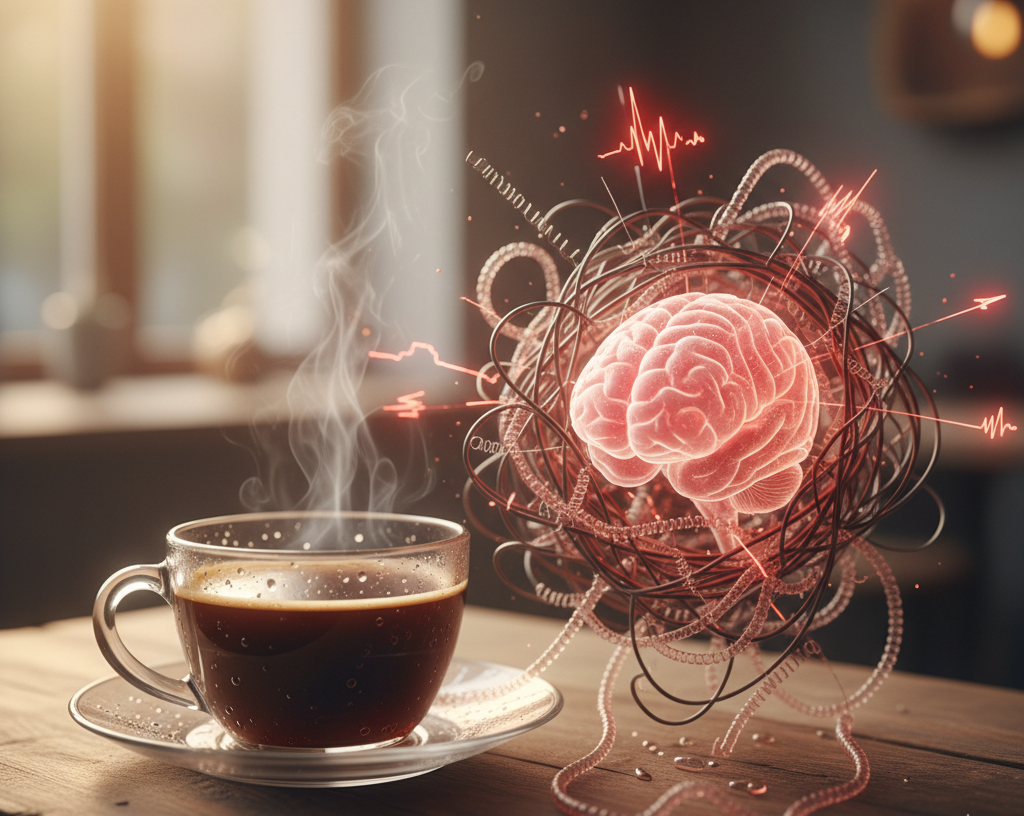
If you have anxiety and drink coffee, you've probably wondered at some point whether your morning cup is making things worse. The answer is genuinely complicated — and most articles either dismiss the concern entirely ("coffee is fine in moderation") or catastrophize it ("coffee triggers anxiety disorder"). Neither captures what the research actually shows.
The honest answer is: coffee's relationship with anxiety is dose-dependent, genetically influenced, and highly individual. For some people, coffee is anxiety-neutral. For others, even a single cup reliably triggers uncomfortable symptoms. For most people, the truth sits somewhere in between and can be actively managed.
Here's what the science shows — including the most recent research — and what it means practically for people who love coffee but also struggle with anxiety.
Table of contents
- The Most Recent Research: What 2026 Says
- How Caffeine Affects the Anxious Brain: The Mechanisms
- The Genetics Factor: Why Some People Are Far More Sensitive
- The U-Shaped Relationship: What the Meta-Analysis Shows
- Caffeine-Induced Anxiety Disorder: When It's a Clinical Diagnosis
- Three Types of Anxiety — and How Coffee Affects Each Differently
- The Sleep Disruption Pathway: Coffee's Indirect Anxiety Effect
- What the Research Shows About Coffee and Anxiety Disorders Specifically
- Coffee and Anxiety: Practical Guidance Based on the Evidence
- The Withdrawal Complication: Why Stopping Abruptly Makes Anxiety Worse
- L-Theanine: The Natural Anxiety Modifier in Tea
- Frequently Asked Questions
- The Bottom Line
The Most Recent Research: What 2026 Says
A comprehensive review published in Nutrients in September 2026 — "Exploring the Impact and Mechanisms of Coffee and Its Active Ingredients on Depression, Anxiety, and Sleep Disorders" (Shi et al., Wuhan University of Science and Technology) — synthesized 27 animal studies, 11 clinical studies, and 6 epidemiological studies on coffee's effects on anxiety and mood.
Its headline conclusion: "Moderate caffeine intake may improve mood and cognitive performance, while excessive intake may be associated with anxiety, insomnia, and post-traumatic stress disorder."
This finding — moderate intake beneficial, excessive intake harmful — is consistent across virtually all the serious recent research and reflects what's called a non-linear (U-shaped) relationship between caffeine and anxiety. The dose matters enormously. The relationship isn't "coffee causes anxiety" or "coffee prevents anxiety" — it's "coffee's effect on anxiety depends critically on how much you consume."
☕ Recommended by cocondo.coffee

Cocondo Orgánico — The only certified organic coffee from Antioquia, Colombia
Reserve Your Bag →How Caffeine Affects the Anxious Brain: The Mechanisms
Understanding why caffeine can trigger anxiety requires understanding what it does in the brain. Research published in Progress in Brain Research (2024) identified four primary neurobiological mechanisms through which caffeine affects mood and anxiety:
Mechanism 1: Adenosine Receptor Antagonism
This is caffeine's primary mechanism — the one responsible for both its alertness-promoting effects and much of its anxiety potential. Adenosine is a neurotransmitter that accumulates in the brain throughout the day and promotes sleepiness and relaxation. Caffeine works by blocking adenosine receptors — specifically the A1 and A2a receptor subtypes — preventing adenosine from binding and producing its calming effects.
The result is the alertness, reduced fatigue, and improved focus that most people drink coffee for. But adenosine's calming effects aren't limited to sleepiness — it also modulates anxiety. When caffeine blocks adenosine receptors, it removes a biological brake on arousal. In people whose baseline anxiety is already elevated, or who consume caffeine in amounts that overwhelm the system, this can tip the balance from "alert and focused" to "anxious and on edge."
The International Society for Caffeine and Coffee (ISIC) specifically identifies the adenosine receptor system as the primary pathway through which caffeine influences anxiety regulation: "It is thought that the adenosine receptor system, which mediates the psychoactive effects of caffeine, is involved in the regulation of anxiety."
Mechanism 2: Epinephrine (Adrenaline) Release
Caffeine stimulates the adrenal glands to release epinephrine (adrenaline) and other catecholamines. This is the "fight or flight" response activation — the same neurobiological state triggered by perceived threat or danger. Physical symptoms include increased heart rate, elevated blood pressure, faster breathing, and heightened alertness.
For most people in most contexts, this is benign — it's the energized feeling that makes coffee useful before exercise or demanding mental work. But for people with anxiety disorders, particularly panic disorder and generalized anxiety disorder, these physical symptoms can trigger or amplify anxiety attacks. The rapid heart rate from caffeine can be misinterpreted as the beginning of a panic attack — creating a cycle where the physical sensation amplifies the psychological anxiety, which amplifies the physical sensation further.
Mechanism 3: Cortisol Elevation
Caffeine stimulates cortisol release through the HPA (hypothalamic-pituitary-adrenal) axis. Cortisol is the body's primary stress hormone — useful in acute, short-term situations but associated with anxiety, disrupted sleep, and reduced emotional regulation when chronically elevated.
Drinking coffee first thing in the morning — particularly before the cortisol peak that naturally occurs 30–60 minutes after waking — amplifies an already elevated cortisol response. Chronically high cortisol from multiple daily coffee doses contributes to what some clinicians describe as "adrenal fatigue" — a state of elevated background stress that makes anxiety harder to manage throughout the day, even when caffeine isn't actively in the system.
Mechanism 4: GABA-A Receptor Antagonism
At higher concentrations, caffeine inhibits GABA-A receptors. GABA (gamma-aminobutyric acid) is the brain's primary inhibitory neurotransmitter — it reduces neuronal excitability and produces calming, anti-anxiety effects. This is the same system targeted by benzodiazepine medications (like Xanax and Valium), which work by enhancing GABA activity.
By partially antagonizing GABA-A receptors at higher caffeine concentrations, caffeine reduces the brain's natural calming mechanism — contributing directly to anxiety, restlessness, and the jittery feeling associated with "too much coffee." This mechanism is dose-dependent — it's more significant at high caffeine intakes than at moderate ones.
The Genetics Factor: Why Some People Are Far More Sensitive
One of the most important and least-discussed aspects of caffeine and anxiety is the enormous individual variation in how people respond to caffeine — and the genetic basis of that variation.
The ADORA2A Gene
A landmark 2003 study by Alsene et al. in Neuropsychopharmacology identified specific polymorphisms in the ADORA2A gene (adenosine A2a receptor gene) that significantly predict caffeine-induced anxiety. People carrying certain variants of this gene are substantially more sensitive to caffeine's anxiogenic (anxiety-producing) effects than those with other variants.
In the Alsene study, participants with the 1976T/T genotype experienced significantly more anxiety after caffeine consumption than those with other genotypes — even at the same dose. The ISIC summary of this research is direct: "caffeine may be associated with an increase in anxiety at moderate levels of intake (150mg caffeine — approximately two cups of coffee) in individuals who are predisposed to this effect."
This genetic basis explains what many anxiety sufferers already know experientially: some people truly cannot drink coffee without anxiety symptoms, while others can consume large quantities with no apparent anxiogenic effect. It's not weakness or imagination — it's genetics. The adenosine receptor density, sensitivity, and regulatory mechanisms differ measurably between individuals.
The CYP1A2 Gene (Slow vs Fast Metabolizers)
As discussed in previous articles on coffee and health, the CYP1A2 gene determines how quickly your liver breaks down caffeine. Slow metabolizers maintain higher caffeine blood levels for longer — meaning the same cup of coffee produces a more prolonged anxiety-promoting effect in slow metabolizers than in fast metabolizers.
The combination of ADORA2A sensitivity (heightened receptor response to caffeine) and CYP1A2 slow metabolism (prolonged caffeine exposure) creates the subgroup of people for whom coffee is most reliably anxiety-inducing — their receptors are more sensitive AND the caffeine stays in their system longer. If you're in this group, no amount of "you should be able to drink coffee at moderate levels" advice is practically useful.
The U-Shaped Relationship: What the Meta-Analysis Shows
The 2024 Frontiers in Psychology meta-analysis (Liu et al., Xuzhou Medical University) specifically examined the association between caffeine intake and anxiety risk across multiple studies. The finding aligned with the broader literature: the relationship is dose-dependent and non-linear.
At low to moderate caffeine intakes, the overall anxiety signal is neutral to slightly positive for most people — caffeine's mood-enhancing effects (dopamine stimulation, adenosine antagonism producing alertness) slightly outweigh anxiety-inducing effects. At high caffeine intakes — typically defined as above 400–600 mg per day (4–6 cups of regular coffee) — the anxiety-promoting effects dominate and the relationship reverses.
The important caveat: "moderate" is relative to the individual. For someone with the anxiogenic ADORA2A variant who is a slow CYP1A2 metabolizer, "moderate intake" that produces anxiety might be 150mg — two cups. For a fast metabolizer with low adenosine receptor sensitivity, 400mg might produce no anxiety whatsoever. The population-level finding of "moderate is fine" doesn't eliminate individual variation — it describes the average across a diverse group.
Caffeine-Induced Anxiety Disorder: When It's a Clinical Diagnosis
Most people think of coffee and anxiety as an informal concern — "I drink too much coffee and feel jittery." But caffeine-induced anxiety is formally recognized in the DSM-5 (Diagnostic and Statistical Manual of Mental Disorders) as "Caffeine-Induced Anxiety Disorder" — a diagnosable condition characterized by prominent anxiety, panic attacks, obsessive-compulsive symptoms, or phobia-like symptoms directly caused by caffeine intoxication or withdrawal.
The DSM-5 also includes "Caffeine Intoxication" as a diagnosable condition with specific criteria including restlessness, nervousness, excitement, insomnia, flushed face, diuresis, gastrointestinal disturbance, muscle twitching, rambling thoughts and speech, tachycardia (rapid heart rate), and periods of inexhaustibility.
These clinical diagnoses aren't rare curiosities — they represent the far end of a spectrum that many coffee drinkers with anxiety touch in milder forms regularly. Understanding that caffeine's anxiety effects are serious enough to warrant clinical recognition helps calibrate the appropriate level of concern.
Three Types of Anxiety — and How Coffee Affects Each Differently
Not all anxiety is the same, and coffee's effects on different anxiety types differ meaningfully:
Generalized Anxiety Disorder (GAD)
Characterized by persistent, excessive worry across multiple domains (work, health, relationships, finances). Caffeine's cortisol-elevating and adrenergic effects can maintain the physiological state of arousal that sustains GAD symptoms. Many psychiatrists and psychologists recommend reducing or eliminating caffeine as a first-line behavioral intervention for GAD patients — not because caffeine causes GAD, but because chronic caffeine consumption maintains the sympathetic nervous system activation that makes GAD symptoms harder to manage. The research supports caffeine reduction as a meaningful symptom-management tool for GAD specifically.
Panic Disorder
Characterized by recurrent, unexpected panic attacks. Caffeine is particularly implicated here — the physical symptoms of caffeine's effects (racing heart, shortness of breath, sweating) closely mimic the physical symptoms of a panic attack and can trigger actual panic attacks in predisposed individuals. Multiple studies have found that caffeine can induce panic attacks in people with panic disorder at doses that produce no such response in people without the disorder. For people with panic disorder, coffee is often not a neutral beverage — it can be a reliable panic trigger.
Social Anxiety Disorder (SAD)
Characterized by intense fear of social situations. Coffee's effects on social anxiety are more mixed — the alertness and confidence boost from moderate caffeine may actually help some social anxiety sufferers in performance contexts, while the physiological arousal (flushing, trembling, rapid heart rate) can amplify the physical symptoms that people with SAD fear others will notice. Individual response varies considerably here.
Situational/Stress Anxiety (Not a Disorder)
The most common type — anxiety in response to specific stressors (work deadlines, relationship issues, life transitions). For most people with situational anxiety, coffee is largely neutral at moderate doses. The cortisol-amplifying effect of morning coffee during already-stressful periods can worsen the anxiety of a difficult day, but coffee isn't a significant driver of this type of anxiety in the way it can be for anxiety disorders.
The Sleep Disruption Pathway: Coffee's Indirect Anxiety Effect
Beyond caffeine's direct neurobiological effects, there's a critically important indirect pathway through which coffee worsens anxiety: sleep disruption.
The Nutrients 2025 review specifically identified caffeine-associated sleep disorder as one of the co-occurring conditions with anxiety — and this connection is bidirectional and self-reinforcing:
- Late-day caffeine disrupts sleep quality and quantity
- Poor sleep increases anxiety the following day — through elevated cortisol, reduced prefrontal cortex function (the brain region responsible for emotional regulation), and increased amygdala reactivity (the brain's threat-detection center becomes hyperreactive with sleep deprivation)
- Anxiety makes it harder to fall asleep the next night
- The resulting tiredness drives more coffee consumption the next day
- The cycle continues and deepens
For many people with anxiety who drink coffee regularly, this sleep-disruption cycle is the primary mechanism through which coffee worsens their condition — not the direct anxiogenic effects of caffeine itself, but the cascading sleep deprivation that follows late or excessive caffeine consumption. Addressing the sleep disruption pathway by stopping coffee after 1–2 PM often produces more anxiety improvement than reducing total coffee consumption, because it breaks the sleep-anxiety feedback loop.
What the Research Shows About Coffee and Anxiety Disorders Specifically
The important nuance in the research: the findings differ significantly between people with diagnosed anxiety disorders and the general population without:
For People WITHOUT Anxiety Disorders
Population-level studies consistently show that moderate coffee consumption is not a significant driver of anxiety for most people. The Nutrients 2025 review and the Frontiers 2024 meta-analysis both found that for healthy adults, moderate caffeine intake is associated with improved mood and cognitive performance. The anxiety risk at moderate doses in the general population is relatively low.
For People WITH Anxiety Disorders
The picture is substantially different. Multiple studies show that people with anxiety disorders — particularly panic disorder and GAD — respond to caffeine differently than the general population. Caffeine at doses that are anxiety-neutral for most people can reliably trigger anxiety symptoms in anxious individuals. The ISIC's review of the evidence specifically notes that the anxiety association is most significant "in individuals who are predisposed to this effect."
If you have a diagnosed anxiety disorder, treating yourself as an "average person" who can drink moderate coffee without anxiety effects is likely to produce disappointing results. The research that shows "moderate coffee is fine" was largely conducted on general population samples — not on people with anxiety disorders specifically.
Coffee and Anxiety: Practical Guidance Based on the Evidence
If You Have No Anxiety Disorder
Moderate coffee consumption (1–3 cups per day, before 2 PM, without excessive sugar) is unlikely to be driving significant anxiety. If you experience occasional jitteriness or restlessness after coffee, reduce total daily intake or spread it across more of the morning rather than concentrating it. Don't drink coffee on an empty stomach — food slows caffeine absorption and moderates the cortisol spike. The cortisol peak in the morning (30–60 minutes after waking) is when caffeine has the most amplifying effect on stress hormones — waiting 60–90 minutes after waking before your first cup reduces this cortisol overlap significantly.
If You Have Generalized Anxiety Disorder (GAD)
Consider a structured reduction experiment — not a dramatic cold-turkey elimination (which produces withdrawal headaches and more anxiety), but a deliberate, gradual taper over 2–3 weeks. Reduce by half a cup per day until you're at 1 cup in the morning only, then assess whether your baseline anxiety level has changed meaningfully. Many GAD patients are surprised by how much ambient anxiety decreases when chronic caffeine stimulation is removed. The cortisol-elevating and adrenergic effects of caffeine maintain the physiological anxiety state that GAD makes so difficult to escape.
If you choose to continue drinking coffee with GAD, prioritize timing over quantity: one cup in the mid-morning (after cortisol peak), never on an empty stomach, never after 12 PM, and always with water alongside to counteract the mild dehydration that can amplify anxiety symptoms.
If You Have Panic Disorder
The evidence strongly supports eliminating or dramatically reducing caffeine. The physical symptoms of caffeine — rapid heart rate, shortness of breath, lightheadedness — are so closely aligned with panic attack precursors that caffeine functions as a reliable panic trigger in many people with panic disorder. Discuss with your mental health professional, but for most panic disorder patients, the case for eliminating coffee is stronger than for any other anxiety disorder.
If You're Genetically Sensitive (ADORA2A / Slow CYP1A2)
If you reliably experience anxiety symptoms from even modest caffeine intake that others seem to handle easily, your genetics are likely a significant factor. Consider switching to decaf (which preserves coffee's antioxidant and liver-protective benefits while eliminating caffeine) or half-caf as a practical long-term solution rather than continuing to fight your biology. Swiss Water Process decaf from quality specialty beans is now genuinely excellent coffee — you don't have to sacrifice the experience to eliminate the caffeine.
Managing the Sleep-Anxiety Cycle
Regardless of anxiety type or severity, the single most impactful change most coffee drinkers with anxiety can make is enforcing a strict caffeine cutoff time. The half-life of caffeine is 5–7 hours in most people — a cup of coffee at 3 PM still has half its caffeine active at 8–10 PM when you're trying to fall asleep. A cutoff of 12–1 PM ensures caffeine has cleared substantially before sleep, breaking the sleep-disruption pathway that amplifies anxiety regardless of direct caffeine effects.

The Withdrawal Complication: Why Stopping Abruptly Makes Anxiety Worse
An important practical warning: stopping caffeine abruptly after regular use — even for anxiety management — typically causes a temporary anxiety surge before improvement. Caffeine withdrawal symptoms include headache, irritability, fatigue, difficulty concentrating, and notably, increased anxiety — as the adenosine receptors that caffeine has been blocking suddenly receive the full force of adenosine's signal, and the brain's compensatory upregulation of those receptors produces an over-correction.
For people with anxiety who want to reduce caffeine, gradual tapering is essential:
- Reduce by approximately 10% of daily intake per day or every 2 days
- Move to half-caf blends as an intermediate step
- Switch to green tea (lower caffeine, contains L-theanine which has documented anti-anxiety properties) as a transition
- Expect some increased tiredness and mild headache in the first 1–2 weeks — this is normal withdrawal and not evidence that caffeine was helping your mood
L-Theanine: The Natural Anxiety Modifier in Tea
Worth mentioning in the context of coffee and anxiety: L-theanine, an amino acid found in tea leaves but not in coffee, has documented anxiolytic (anti-anxiety) properties. L-theanine promotes alpha brain waves (associated with calm, focused alertness) and modulates the caffeine response — the combination of caffeine + L-theanine in green tea produces alertness with significantly less anxiety than caffeine alone.
This explains why many people who find coffee anxiogenic can tolerate green tea without anxiety — the L-theanine counteracts much of caffeine's anxiety-promoting effect. L-theanine supplements (100–200 mg alongside caffeine) are sometimes used by people who love coffee but are sensitive to its anxiogenic effects — though the evidence for supplemental L-theanine is less robust than for naturally occurring L-theanine in tea.
Frequently Asked Questions
Is coffee bad for anxiety?
It depends on the dose, the individual, and the type of anxiety. At moderate intake (1–2 cups per day) for most people without anxiety disorders, coffee is largely anxiety-neutral. At higher doses, for genetically sensitive individuals, or for people with diagnosed anxiety disorders (particularly panic disorder and GAD), coffee can significantly worsen anxiety through multiple neurobiological mechanisms — blocking adenosine receptors, stimulating adrenaline release, elevating cortisol, and inhibiting GABA activity. The relationship is U-shaped: low-to-moderate intake is neutral or slightly beneficial for mood; high intake is anxiety-promoting.
Can coffee cause anxiety attacks?
Yes — particularly in people with panic disorder. Caffeine's physical effects (rapid heart rate, shortness of breath, sweating, trembling) closely mimic the physical symptoms of panic attacks and can trigger actual panic attacks in predisposed individuals. Multiple studies have documented caffeine-induced panic attacks in people with panic disorder at doses that produce no such response in people without the disorder. Caffeine-Induced Anxiety Disorder is a formally recognized diagnosis in the DSM-5.
How much coffee is too much for anxiety?
This is genetically individual — not a universal threshold. For most healthy adults without anxiety disorders, above 400 mg of caffeine per day (roughly 4 cups) is where anxiety-promoting effects consistently dominate. For people with anxiety disorders or the ADORA2A genetic variant associated with caffeine sensitivity, as little as 150 mg (approximately 2 cups) can produce meaningful anxiety. The International Society for Coffee and Health specifically notes that predisposed individuals may experience anxiety at moderate intake levels that are fine for others.
Should I stop drinking coffee if I have anxiety?
For most people with mild to moderate situational anxiety: no — reducing total intake and enforcing a strict afternoon cutoff time (12–1 PM) is usually sufficient. For people with GAD: consider a structured reduction experiment — many GAD patients report significant baseline anxiety improvement after reducing caffeine. For people with panic disorder: the evidence for eliminating caffeine is strongest here. Discuss with your mental health professional — caffeine management is a recognized behavioral component of anxiety treatment but is most effective as part of a broader treatment approach.
Why does coffee make some people anxious but not others?
Two primary genetic factors explain most of the variation. The ADORA2A gene (adenosine A2a receptor gene) has specific polymorphisms that significantly increase sensitivity to caffeine-induced anxiety — people with the anxiogenic variant experience more anxiety from the same dose. The CYP1A2 gene determines caffeine metabolism speed — slow metabolizers maintain higher caffeine blood levels for longer, prolonging its anxiety effects. The combination of high adenosine receptor sensitivity and slow caffeine metabolism produces the subgroup most reliably affected by caffeine-induced anxiety.
Does decaf coffee cause anxiety?
Decaf retains approximately 1–3 mg of caffeine per cup (compared to 80–135 mg in regular coffee) — negligible for most people including those with caffeine sensitivity. Decaf also retains all of coffee's antioxidant, liver-protective, and anti-inflammatory benefits that aren't dependent on caffeine. For anxiety-prone coffee lovers, quality decaf (particularly Swiss Water Process) is a genuinely good solution — it preserves the ritual, the flavor, and most of the health benefits while essentially eliminating the anxiety risk.
The Bottom Line
Coffee is not universally bad for anxiety — and it's not universally safe for anxiety either. The relationship is dose-dependent, genetically influenced, disorder-specific, and profoundly individual. The Nutrients 2025 review's conclusion — "moderate intake may improve mood, excessive intake may worsen anxiety" — is accurate but incomplete without acknowledging that "moderate" means very different things to different people based on genetics, anxiety type, and overall caffeine metabolism.
The most evidence-based practical framework: if you have anxiety and drink coffee, experiment deliberately. Try reducing to one morning cup for two weeks. Enforce a strict 12 PM cutoff. Never drink on an empty stomach. Notice whether your baseline anxiety changes. If it doesn't change meaningfully, caffeine is probably not a major driver of your anxiety and other factors deserve more attention. If it changes significantly, you've discovered an important variable that pharmaceutical and therapeutic interventions often don't address.
For those who find coffee genuinely worsens their anxiety but love the ritual and experience — quality decaf is better than it's ever been. The specialty coffee world now produces decaf coffees that honor the origin, the varietal, and the flavor profile nearly as fully as caffeinated equivalents. You don't have to choose between managing your anxiety and enjoying exceptional coffee. You choose the process, not the bean.
If you'd like to read other articles similar to Is Coffee Bad for Anxiety? What the Science Actually Shows you can visit the category The Art and Science of Coffee: Guides, Reviews, and Expert Tips.
Does Coffee Affect Cortisol Levels? The Science Behind Caffeine and Your Stress Hormone

Is Coffee Good for Depression Risk? What the Research Actually Shows
The 5 Elements of Coffee Tasting Every Coffee Lover Should Know
What Is Green Coffee? How Raw Beans Differ From Roasted — and What That Means for Your Health
How Is Coffee Decaffeinated? The 4 Methods Explained — Including the One You Should Avoid
What Is Coffee Degassing? Why Fresh Roasted Beans Release CO2 — and Why It Matters

What Is a Coffee Cooperative? How They Help Farmers — and Why They Matter for Your Cup

How Altitude Affects Coffee Flavor: Why High-Grown Coffee Tastes Different

What Is a Coffee Cherry? The Fruit Behind Every Cup You Drink
Leave a Reply
Related post