
How Is Coffee Decaffeinated? The 4 Methods Explained — Including the One You Should Avoid
Decaf coffee seems straightforward: take regular coffee, remove the caffeine. But the how — the actual chemistry and process of separating caffeine from a coffee bean without destroying everything that makes the coffee taste good — turns out to be a genuinely fascinating problem with four distinct solutions, each with different implications for flavor, safety, cost, and environmental impact.
Here's the complete guide to how coffee is decaffeinated, what each method actually does, how they compare on the metrics that matter, and which one a growing number of health and environmental advocates say you should avoid entirely.
Table of contents
- The Challenge: Why Decaffeination Is Difficult
- A Brief History: The Accidental Origin of Decaf
- Method 1: Swiss Water Process — The Gold Standard for Chemical-Free Decaf
- Method 2: CO2 Process (Supercritical Carbon Dioxide) — The Premium Choice
- Method 3: Ethyl Acetate (EA) — "Natural" Decaf With Important Caveats
- Method 4: Methylene Chloride — The One to Avoid
- Comparing All Four Methods: The Complete Picture
- How Much Caffeine Remains in Decaf?
- Does Decaffeination Affect Health Benefits?
- How to Choose Your Decaf: A Practical Decision Guide
- Frequently Asked Questions
- The Bottom Line
The Challenge: Why Decaffeination Is Difficult
Caffeine sounds simple to remove — it's just one molecule, after all. The problem is that caffeine doesn't exist in isolation in a coffee bean. It's interwoven with hundreds of other soluble compounds — sugars, acids, proteins, lipids, aromatic precursors — that collectively determine what the coffee will taste like after roasting.
Any solvent that removes caffeine will inevitably interact with some of these other compounds too. The challenge of decaffeination is selectively removing caffeine while preserving as much of the bean's flavor profile as possible. As ConsumerLabs executive editor Meredith Worthington explained to National Geographic: there are basically four main solvents used to achieve this, each with different selectivity for caffeine vs. other compounds.
An additional constraint: decaffeination must happen to green (unroasted) beans, not roasted ones. Roasting transforms the bean's chemical structure so dramatically that post-roast decaffeination would destroy the flavor compounds created by roasting. All decaffeination happens before the coffee ever sees a roaster — the green beans are decaffeinated, then shipped to roasters, who roast them as they would regular green coffee.
☕ Recommended by cocondo.coffee
Cocondo Orgánico — The only certified organic coffee from Antioquia, Colombia
Reserve Your Bag →This green bean constraint also means that the decaffeination process interacts with more delicate, less stable precursor compounds rather than the robust roasted flavor molecules — making flavor preservation even more challenging.
A Brief History: The Accidental Origin of Decaf
The first commercially successful decaffeination process was invented by German coffee merchant Ludwig Roselius in 1903, patented in 1906, and sold under the brand name "Kaffee HAG" in Europe and "Sanka" (from the French "sans caféine") in the US.
The motivation, according to coffee industry lore, was personal tragedy: Roselius believed that his father had died from excessive coffee consumption and that caffeine was the culprit. Whether the story is literally true or a marketing narrative is unclear, but it drove him to develop the first industrial-scale decaffeination process — using sea water and benzene as solvents. (Benzene, now known to be carcinogenic, was later replaced by safer solvents.)
From that 1903 starting point, the decaffeination industry evolved through the 20th century as chemistry improved: methylene chloride replaced benzene, ethyl acetate emerged as a "natural" alternative, the Swiss Water Process was developed in the 1930s and commercialized in the 1980s, and the CO2 method emerged as the most sophisticated approach in the 1980s and 1990s.
Method 1: Swiss Water Process — The Gold Standard for Chemical-Free Decaf
The Swiss Water Process is the most consumer-beloved decaffeination method and the gold standard for specialty decaf coffee. It uses no chemical solvents of any kind — only water, temperature, time, and activated carbon filtration.
How It Works
The Swiss Water Process is elegantly clever in its simplicity:
- Initial soak: A batch of green coffee beans is soaked in hot water. The hot water dissolves and extracts everything soluble from the beans — including caffeine, but also sugars, acids, proteins, and aromatic precursors. This leaves behind "stripped" beans and caffeine-containing water full of flavor compounds.
- Carbon filtration: The caffeine-containing water is passed through activated carbon filters. Caffeine molecules are larger than most flavor compound molecules and are selectively trapped in the carbon filter's porous structure. The result is water that is caffeine-free but still contains most of the original flavor compounds — this is called Green Coffee Extract (GCE).
- New beans soak in GCE: A fresh batch of caffeinated green beans is now soaked in the caffeine-free Green Coffee Extract. Because the GCE is already saturated with flavor compounds from the previous batch, it creates an osmotic environment where only caffeine diffuses out of the new beans (following the concentration gradient from high-caffeine beans to zero-caffeine GCE) while the flavor compounds remain in equilibrium — they don't diffuse out because the GCE already contains them at equivalent concentrations.
- Repeat: The cycle continues with fresh GCE, progressively removing caffeine from the beans until approximately 99.9% has been extracted.
What makes it work: The Green Coffee Extract is the key innovation. By pre-saturating the water with flavor compounds, Swiss Water Process creates a selective osmotic pressure that pulls caffeine out while leaving flavor precursors behind. It's chemical-free chemistry at its most elegant.
Results
- Caffeine removal: 99.9% — the highest of any method
- Flavor preservation: Very good — better than solvent methods for most specialty coffees
- Chemical residues: None — certified organic, kosher, halal
- Cost: Higher than solvent methods — the process is slower and more equipment-intensive
- Who uses it: Most specialty decaf roasters, organic brands, and health-conscious coffee companies. Raw Bean's Swiss Water decaf won 6 Great Taste Awards including a 2-star in 2025.
Limitations
The Swiss Water Process does remove some flavor compounds along with caffeine — no method is perfectly selective. Some tasters find Swiss Water decaf slightly less complex than the same coffee's caffeinated version, though the difference is much smaller than with solvent methods. The GCE recycling system also means the process is batch-dependent — the flavor profile of beans processed in the same batch influences each other.
Method 2: CO2 Process (Supercritical Carbon Dioxide) — The Premium Choice
The CO2 decaffeination process is considered the most technically sophisticated and arguably the best method for preserving coffee's flavor profile. It uses carbon dioxide — the same CO2 that naturally occurs in coffee after roasting — as the selective extraction solvent.
How It Works
- Bean preparation: Green coffee beans are soaked in water to open their cellular structure and make caffeine more accessible.
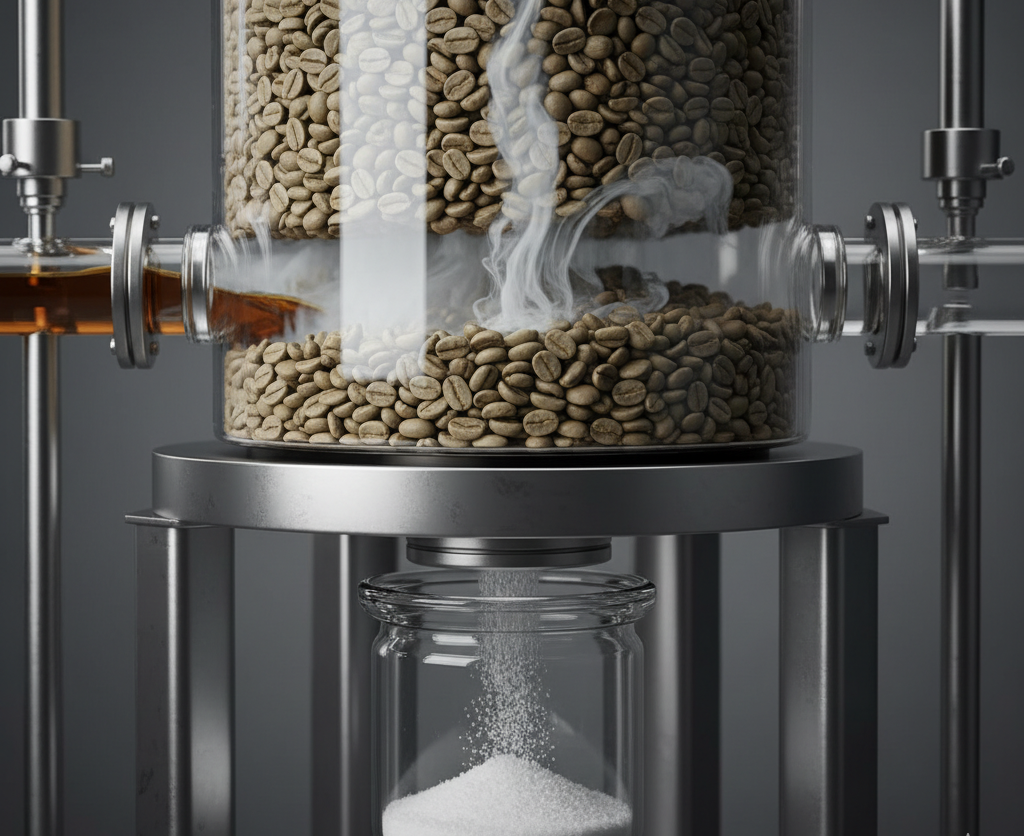
- Supercritical CO2 exposure: The moistened beans are placed in a sealed extraction vessel. CO2 is pumped in at very high pressure (approximately 200 to 300 atmospheres) and temperatures around 31 to 74°C — conditions that bring CO2 to its supercritical state, where it has properties of both a liquid and a gas simultaneously. In this supercritical state, CO2 is an exceptionally effective and selective solvent for caffeine specifically.
- Caffeine extraction: The supercritical CO2 flows through the beans, selectively dissolving caffeine while largely leaving larger, heavier flavor compound molecules undisturbed. The caffeine-laden CO2 exits the extraction vessel.
- Caffeine separation: The CO2 pressure is reduced, causing it to return to gaseous form. The caffeine precipitates out and is collected. The CO2 is recycled for the next extraction cycle.
Why CO2 Is Selectively Good at Caffeine
Supercritical CO2 has a molecular size and polarity that make it particularly effective at dissolving caffeine (a relatively small, non-polar molecule) while having limited affinity for the larger, more polar flavor compounds like chlorogenic acids, trigonelline, and Maillard precursors. This natural selectivity is what makes CO2 the best flavor-preserving decaffeination method available.
Results
- Caffeine removal: 97–99%
- Flavor preservation: Excellent — generally considered the best of all methods for maintaining the bean's original flavor character
- Chemical residues: None — CO2 is a natural compound that leaves no trace
- Cost: Highest of all methods — the high-pressure equipment required is expensive to build and maintain
- Who uses it: Premium specialty decaf producers; Lavazza and some high-end European brands use CO2 decaffeination for their premium decaf lines
Limitations
The capital cost of CO2 decaffeination equipment is prohibitive for smaller operations. This method is primarily used at industrial scale by major decaffeination facilities rather than craft roasters. Finding CO2-decaffeinated specialty coffee requires more research — look for it specifically on the roaster's website or packaging.
Method 3: Ethyl Acetate (EA) — "Natural" Decaf With Important Caveats
Ethyl acetate decaffeination is often marketed as "naturally decaffeinated" — the most misleading label in the decaf coffee world. Here's what's actually happening and why the "natural" claim deserves scrutiny.
How It Works
- Steaming: Green coffee beans are steamed with water vapor to open their pores and make caffeine accessible.
- EA soak: Beans are soaked in ethyl acetate at around 50°C for approximately 36 hours. Ethyl acetate is a solvent that binds to caffeine molecules and extracts them from the bean.
- Steaming and drying: The EA-soaked beans are steamed again to remove residual solvent, then dried. High temperatures during steaming evaporate most of the EA.
Why It's Labeled "Natural"
Ethyl acetate occurs naturally in fruit fermentation — it's a compound found in apples, bananas, and blackberries. When ethyl acetate for decaffeination is derived from fermenting sugar cane (common in some Latin American origins), producers label it "natural" or "sugarcane EA decaf."
The reality: most ethyl acetate used in commercial decaffeination is synthetically produced — manufactured from acetic acid and ethanol through industrial chemical processes. Only specifically labeled "sugarcane ethyl acetate" decaf uses the fermentation-derived version. The distinction matters significantly if "natural" is your priority.
Results
- Caffeine removal: 97%
- Flavor preservation: Fair — ethyl acetate is less flavor-selective than CO2 and affects some aromatic compounds noticeably. Raw Bean's review notes it has "the biggest impact on the original taste of the beans. You can often tell the difference."
- Chemical residues: Trace amounts may remain, though considered food-safe at regulated levels. Ethyl acetate is volatile and largely evaporates during steaming.
- Cost: Lower than Swiss Water or CO2 — faster process, less equipment
- Who uses it: Many commercial decaf brands; common in Latin American origins where sugarcane EA is locally available
Limitations
Flavor impact is the primary concern — EA is less selective than CO2 and affects more of the flavor profile. The "natural" marketing label is misleading when synthetic EA is used. For health-conscious consumers, the chemical residue question (while legally within safety limits) is a consideration that CO2 and Swiss Water processes avoid entirely.
Method 4: Methylene Chloride — The One to Avoid
Methylene chloride decaffeination is the most widely used method globally — sometimes called the "European method" or "direct solvent method" — and also the most controversial. Here's why a growing body of scientific and regulatory opinion suggests avoiding it.
How It Works
There are two variants:
Direct method: Green beans are steamed to open pores, then directly soaked in methylene chloride (dichloromethane, DCM) solution for about 10 hours. The DCM bonds to caffeine molecules and extracts them. Beans are then rinsed repeatedly and steamed at high temperatures to evaporate residual DCM.
Indirect method: Beans are soaked in hot water first (like Swiss Water), extracting caffeine and flavor compounds. The beans are removed; then the caffeine-laden water is treated with methylene chloride. DCM selectively binds caffeine and is separated. The now caffeine-free, flavor-rich water is returned to the beans to reabsorb their flavor compounds.
The Regulatory Controversy: 2024 Developments
This is where the most significant recent news falls — and why 2024 and 2025 changed the methylene chloride conversation dramatically:
EPA ban (July 2024): The US Environmental Protection Agency finalized a ban on most industrial and consumer uses of methylene chloride, effective July 2024, specifically citing cancer risk — methylene chloride is classified as a probable human carcinogen. The EPA banned DCM for paint stripping, furniture refinishing, and dozens of other applications.
The critical exemption: Despite this widespread ban, methylene chloride remains permitted in food processing — including coffee decaffeination — under FDA jurisdiction. The EPA and FDA have separate regulatory authority; the EPA's ban covers non-food industrial uses while the FDA has yet to act on food applications.
EDF petition to FDA (December 2023): The Environmental Defense Fund formally petitioned the FDA to remove methylene chloride from the list of permitted food additives under the Delaney Clause — a provision of US food law that prohibits FDA-approved food additives that have been shown to cause cancer. The EDF's Maria Doa stated: "Although the levels of methylene chloride may generally be minimal, it is completely unnecessary because safer processes for decaffeinating coffee are available and being used." That FDA petition remains under review as of 2025.
CDC health effects: According to the CDC, direct exposure to methylene chloride can cause drowsiness, dizziness, numbness, and nausea. At high concentrations, it has been associated with liver and lung damage. The question for decaf coffee is whether the trace amounts that survive steaming and rinsing pose meaningful health risk at typical consumption levels.
A 2024 study published in the Proceedings Journal by Massimiliano Fabian suggested the European decaf method (methylene chloride) may leave trace solvent residue or cause health risks — though the National Coffee Association (NCA) maintains the method is safe at regulated levels. The science on trace amounts in brewed coffee specifically is evolving.
Results
- Caffeine removal: 97–99%
- Flavor preservation: Good — DCM is relatively selective for caffeine, and indirect method produces decent flavor retention
- Chemical residues: Trace amounts legally permitted; safety at trace levels debated
- Cost: Lowest — fast, efficient, well-established industrial process
- Who uses it: The majority of commercial decaf globally — most supermarket decaf uses this method
How to Avoid It
If you want to avoid methylene chloride-processed decaf:
- Look for "Swiss Water Process," "CO2 Process," or "Supercritical CO2" on the label
- Check the roaster's website — most specialty roasters who use clean methods advertise it prominently
- If the decaffeination method isn't specified anywhere, assume it's likely methylene chloride or ethyl acetate (the cheapest and most common methods)
- Organic decaf is usually safer — methylene chloride processing is incompatible with USDA organic certification
Comparing All Four Methods: The Complete Picture
| Method | Caffeine Removed | Flavor Preservation | Chemical-Free | Relative Cost |
|---|---|---|---|---|
| Swiss Water | 99.9% | Very Good | ✅ Yes | High |
| CO2 (Supercritical) | 97–99% | Excellent | ✅ Yes | Highest |
| Ethyl Acetate | 97% | Fair | ⚠️ Trace solvent | Lower |
| Methylene Chloride | 97–99% | Good | ❌ Probable carcinogen | Lowest |
How Much Caffeine Remains in Decaf?
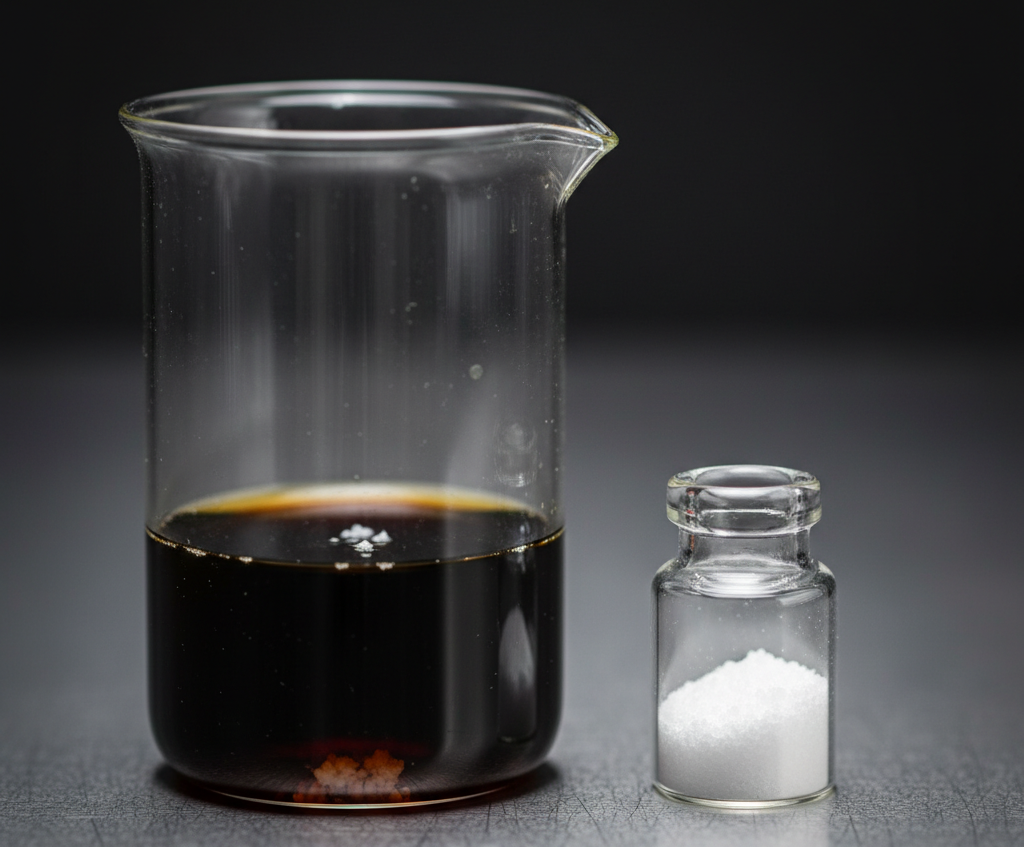
All four methods remove approximately 97–99.9% of caffeine — but none removes 100%. A standard 8oz cup of decaf contains approximately:
- Swiss Water decaf: 1–3 mg caffeine (99.9% removal)
- CO2 decaf: 2–5 mg caffeine
- Ethyl acetate decaf: 3–10 mg caffeine
- Methylene chloride decaf: 3–12 mg caffeine
For comparison, a standard 8oz cup of regular coffee contains 80–135 mg caffeine. Even the least effective decaffeination method removes roughly 90% compared to caffeinated coffee.
For people avoiding caffeine due to severe sensitivity, certain medications, or medical conditions, these residual amounts matter. Swiss Water Process decaf's near-complete caffeine removal makes it the preferred choice for those who need to minimize caffeine as much as possible.
Does Decaffeination Affect Health Benefits?
A consistent finding from the National Geographic review and multiple studies: decaf retains more than 80% of regular coffee's antioxidant and health-protective compounds regardless of decaffeination method. The chlorogenic acids, melanoidins, trigonelline, and phenolic compounds responsible for coffee's liver protection, anti-inflammatory effects, and cardiovascular benefits largely survive all four decaffeination processes.
Specific comparisons from the research: "Decaf coffee that was prepared using the Swiss Water method or methylene chloride resulted in slightly lower levels of phenols than using ethyl acetate or liquid CO2. However, in all of these methods, decaf retained more than 80% [of antioxidants]."
The American Association for the Study of Liver Diseases (AASLD) officially recommends that either caffeinated or decaffeinated coffee can be consumed for liver health benefits — explicitly validating the health value of decaf regardless of method. For people who need or prefer to avoid caffeine, this is perhaps the most reassuring finding in decaf research: the health benefits largely transfer.
How to Choose Your Decaf: A Practical Decision Guide
For maximum health safety and clean ingredients
→ Swiss Water Process or CO2. Both are chemical-free. Look for these terms explicitly on the label or roaster website. Organic certification is a reliable proxy — methylene chloride is incompatible with organic certification.
For maximum flavor preservation
→ CO2 (Supercritical). The most selective caffeine extraction preserves the most original bean character. Harder to find; worth seeking out for specialty decaf enthusiasts.
For maximum caffeine removal
→ Swiss Water Process (99.9% removal) — the most complete decaffeination available.
For budget-conscious everyday decaf
→ Ethyl Acetate from sugarcane (specified on label) is a reasonable compromise — lower cost than Swiss Water, natural-origin solvent, decent flavor preservation.
What to avoid
→ Methylene chloride / DCM / "European method" / "direct solvent method" — an EPA-banned carcinogen still permitted in food processing that health advocates are actively working to remove from coffee production. Safer alternatives exist at modest additional cost.
Frequently Asked Questions
How is coffee decaffeinated?
Coffee is decaffeinated by removing caffeine from green (unroasted) beans using one of four main methods: Swiss Water Process (water, activated carbon filtration — chemical-free), CO2/Supercritical (high-pressure carbon dioxide — chemical-free), Ethyl Acetate (organic solvent from fermented sugarcane or synthetic production), or Methylene Chloride (chemical solvent, probable carcinogen, EPA-banned for most uses but still permitted in food processing). All methods remove approximately 97–99.9% of caffeine while preserving most flavor compounds and antioxidants.
What is the healthiest decaffeination method?
Swiss Water Process and CO2 (Supercritical) are the healthiest decaffeination methods — both are completely chemical-free. Swiss Water uses only water, time, and activated carbon filtration. CO2 uses carbon dioxide under high pressure. Both leave no chemical residues. Methylene chloride is the method most concerning from a health perspective — it is classified as a probable human carcinogen by the EPA, which banned most of its industrial uses in July 2024.
Is Swiss Water decaf really caffeine-free?
Very nearly — Swiss Water Process removes 99.9% of caffeine, leaving approximately 1–3 mg per 8oz cup compared to 80–135 mg in regular coffee. It's the most complete caffeine removal of any commercial decaffeination method. For most people, this residual amount is physiologically insignificant. For those with extreme caffeine sensitivity or specific medical conditions, even 1–3 mg matters — and Swiss Water is still the best available option.
Why does decaf taste different from regular coffee?
Decaffeination inevitably removes some flavor compounds along with caffeine — no method is perfectly selective for caffeine alone. The degree of flavor change varies significantly by method: CO2 causes the least flavor alteration; Swiss Water causes modest flavor change; Ethyl Acetate causes more noticeable flavor impact. Additionally, decaf beans have been through a hot water and drying cycle that affects cell structure before roasting, which can affect how the beans respond to roasting. Well-processed, freshly roasted Swiss Water or CO2 decaf from quality beans is dramatically better than typical commercial decaf.
What does "naturally decaffeinated" mean on a coffee label?
"Naturally decaffeinated" most often refers to Ethyl Acetate decaf — because ethyl acetate occurs naturally in fruit fermentation. However, most commercial ethyl acetate used for decaffeination is synthetically produced, not derived from natural fermentation. Only decaf specifically labeled "sugarcane EA" or "sugar cane ethyl acetate" uses the fermentation-derived version. Swiss Water and CO2 processes are the truly chemical-free options, though they aren't always marketed as "natural" despite being the most genuinely natural decaffeination methods available.
Is methylene chloride in decaf coffee dangerous?
This is actively debated. The EPA classified methylene chloride as a probable human carcinogen and banned most of its industrial uses in July 2024. The Environmental Defense Fund petitioned the FDA in December 2023 to ban it from food processing under the Delaney Clause (which prohibits food additives that cause cancer). The FDA hasn't yet acted on this petition. Trace amounts in brewed decaf are generally very small — the NCA maintains they're safe. Health advocates argue that since safer alternatives exist, there's no reason to maintain the risk. The practical recommendation: if you drink decaf regularly, choosing Swiss Water or CO2 processed decaf eliminates this uncertainty entirely.
The Bottom Line
Coffee is decaffeinated by one of four methods — two chemical-free and two solvent-based. Swiss Water Process and CO2 decaffeination are the cleanest options: no chemical residues, no safety concerns, and better flavor preservation than solvent methods. Ethyl acetate is a reasonable middle ground when specifically from fermented sugarcane. Methylene chloride is the one to actively avoid — an EPA-banned probable carcinogen that has no place in daily-consumption food products when safer alternatives exist at modest additional cost.
The practical implication for decaf coffee buyers is simple: check the label. If it says Swiss Water Process or Supercritical CO2, you have the cleanest, most transparent decaf available. If it doesn't specify the method, email the roaster or choose a brand that's transparent. Organic certification is a reliable shortcut — methylene chloride is incompatible with USDA Organic.
And remember that the quality of the underlying beans matters as much as the decaffeination method. Swiss Water Process decaf from fresh, specialty-grade Colombian Arabica grown at altitude will taste dramatically better than Swiss Water Process decaf from stale commercial commodity beans — the method preserves what's there, and what's there needs to be worth preserving.
If you'd like to read other articles similar to How Is Coffee Decaffeinated? The 4 Methods Explained — Including the One You Should Avoid you can visit the category The Art and Science of Coffee: Guides, Reviews, and Expert Tips.
Does Coffee Affect Cortisol Levels? The Science Behind Caffeine and Your Stress Hormone

Is Coffee Good for Depression Risk? What the Research Actually Shows

Is Coffee Bad for Anxiety? What the Science Actually Shows
The 5 Elements of Coffee Tasting Every Coffee Lover Should Know
What Is Green Coffee? How Raw Beans Differ From Roasted — and What That Means for Your Health
What Is Coffee Degassing? Why Fresh Roasted Beans Release CO2 — and Why It Matters
What Is a Coffee Cooperative? How They Help Farmers — and Why They Matter for Your Cup

How Altitude Affects Coffee Flavor: Why High-Grown Coffee Tastes Different
What Is a Coffee Cherry? The Fruit Behind Every Cup You Drink
Leave a Reply
Related post