

What is Honey Process Coffee? (And No, There’s No Actual Honey)

If you’re reading this, you probably saw a bag of coffee at your local café labeled "Yellow Honey" or "Black Honey" and thought: Wait, did they flavor this with real honey? Will it taste like a sweet pastry?
Let’s rip the band-aid off right now: There is absolutely zero real honey in honey process coffee.
I know, it sounds like false advertising! But the truth behind how this coffee gets its name is actually one of the most fascinating—and delicious—innovations in the modern coffee world. If you love a cup of coffee that naturally tastes like brown sugar, caramel, or stone fruit, you are in exactly the right place. Let's break down exactly what this processing method is and why you need to try it.
Table of contents
The Anatomy of the Bean: Where the "Honey" Comes From
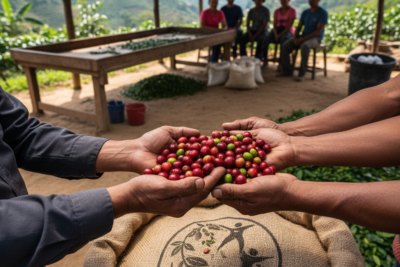
To understand the honey process, we have to look at the coffee cherry itself. Yes, coffee beans are actually the pits of a small fruit that looks a lot like a red cherry.
Normally, there are two traditional ways to get the bean out of the fruit:
- Washed Process: They strip the cherry away, wash the beans completely clean with water, and dry them. This gives you a very clean, crisp-tasting coffee.
- Natural Process: They leave the entire cherry intact and let it dry in the sun like a raisin. This creates a wild, super-fruity, and heavy-bodied cup.
The honey process is the perfect middle ground. Farmers remove the outer skin of the cherry but leave the sticky, fleshy layer underneath attached to the bean while it dries. In the coffee world, this layer is scientifically called the mucilage.
☕ Recommended by cocondo.coffee

Cocondo Orgánico — The only certified organic coffee from Antioquia, Colombia
Reserve Your Bag →So, why call it honey? Because this sticky, sugar-rich mucilage layer feels exactly like gooey, golden honey. As the beans dry in the sun, this natural "honey" bakes its sweetness right into the core of the coffee seed.
The Colors of Honey: White, Yellow, Red, and Black

If you look at the bags from specialty roasters, you’ll notice they use colors to describe honey processed beans. These colors don't refer to the roast level; they tell you how much sticky mucilage was left on the bean and how long it took to dry.
1. White & Yellow Honey (The Approachable Ones)
For these, farmers wash off most of the mucilage, leaving only about 10% to 50% on the bean. They dry them quickly in direct sunlight (usually 8 to 10 days).
The Taste: Very clean, light body, with a subtle sweetness. Think notes of peach, apricot, and a crisp floral finish. It’s the perfect gateway if you usually drink washed coffees but want a tiny bit more natural sweetness.
2. Red Honey (The Sweet Spot)
Here, things get serious. About 50% to 75% of the mucilage stays on. To prevent the beans from spoiling, farmers dry them under shade canopies. This slows down the drying process to about two weeks, causing the sticky layer to turn a deep reddish-brown.
The Taste: Syrupy and rich. You’ll taste strong notes of brown sugar, caramel, and tropical fruits like mango. It has a heavier mouthfeel that coats your tongue beautifully.
3. Black Honey (The Bold Choice)
This is the most intense, labor-intensive version. Almost 100% of the mucilage is left intact. The beans are dried under heavy shade for up to three weeks or more. The exterior turns completely black and sticky. Farmers have to watch these beans like hawks, turning them constantly so they don't over-ferment.
The Taste: Deep, jammy, and incredibly complex. Expect dark chocolate, molasses, wine-like berry flavors, and a heavy, creamy body.
Why Did We Start Doing This? (A Quick History Lesson)
You can thank Costa Rica for this brilliant invention. Back in 2008, a severe earthquake caused massive water shortages in the region. Since the traditional "washed" process requires thousands of gallons of water, farmers had to pivot quickly to survive the harvest.
By leaving the mucilage on the bean, they drastically cut down their water usage. What started as an eco-friendly survival tactic turned out to create some of the sweetest, most balanced coffees on the planet. Today, it’s a staple in Central America and beyond.
How to Brew Honey Processed Coffee Like a Pro
Because these beans have so much natural sugar baked into them, you want to brew them in a way that highlights that sweetness without burning it. Here are a few quick tips:
- For White and Yellow Honey: Grab your pour-over gear (like a V60 or Chemex). The paper filter will catch any heavy oils and let those delicate peach and floral notes shine. Keep your water temperature around 200°F (93°C).
- For Red and Black Honey: These make mind-blowing espresso. The syrupy body of a red or black honey bean creates a thick, tiger-striped crema. If you don't have an espresso machine, a French Press will perfectly capture that rich, heavy-bodied dark chocolate flavor.
- Skip the Sugar: Seriously, taste it black first! You might be shocked at how sweet it is all on its own.
The Final Sip
So, what is honey process coffee? It’s a brilliant, water-saving processing method that gives you the best of both worlds: the clean, refreshing acidity of a washed bean, paired with the deep, fruity sweetness of a natural bean.
Next time you're at your local specialty roaster, grab a bag of Yellow or Red Honey. It might just change the way you look at your morning cup forever.
If you'd like to read other articles similar to What is Honey Process Coffee? (And No, There’s No Actual Honey) you can visit the category The Art and Science of Coffee: Guides, Reviews, and Expert Tips.
Does Coffee Affect Cortisol Levels? The Science Behind Caffeine and Your Stress Hormone

Is Coffee Good for Depression Risk? What the Research Actually Shows

Is Coffee Bad for Anxiety? What the Science Actually Shows
The 5 Elements of Coffee Tasting Every Coffee Lover Should Know
What Is Green Coffee? How Raw Beans Differ From Roasted — and What That Means for Your Health
How Is Coffee Decaffeinated? The 4 Methods Explained — Including the One You Should Avoid
What Is Coffee Degassing? Why Fresh Roasted Beans Release CO2 — and Why It Matters
What Is a Coffee Cooperative? How They Help Farmers — and Why They Matter for Your Cup
How Altitude Affects Coffee Flavor: Why High-Grown Coffee Tastes Different
Leave a Reply
Related post