
What Is Green Coffee? How Raw Beans Differ From Roasted — and What That Means for Your Health
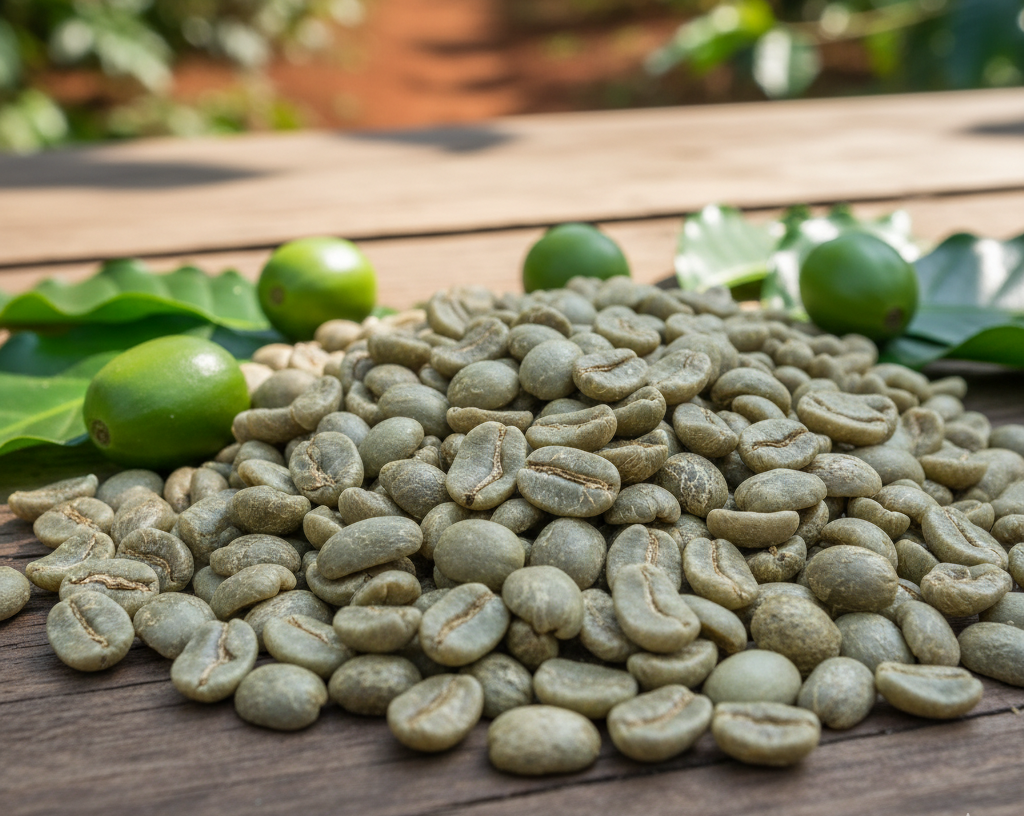
Most people know coffee as the dark, aromatic roasted beans they grind every morning. But before those beans become what you recognize as coffee, they go through a dramatic transformation: roasting. What exists before that transformation — the raw, unroasted seed of the coffee cherry — is green coffee, and it's fundamentally different from roasted coffee in ways that matter both for flavor and for health.
Here's everything you need to know about green coffee: what it is, how it differs from roasted, what its health properties actually are, how the supplement market evolved around it, and what the most current science says about its genuine benefits and limitations.
Table of contents
- What Is Green Coffee?
- The Key Difference: What Roasting Does to Green Coffee
- The Chemical Profile of Green Coffee
- The History of Green Coffee Extract: From Miracle Pill to Legitimate Science
- What the Current Science Actually Shows
- Green Coffee in the Supply Chain: What Specialty Roasters Work With
- Green Coffee vs Roasted Coffee: The Nutrient Comparison
- Green Coffee Extract Supplements: What to Look For
- Can You Drink Green Coffee?
- Frequently Asked Questions
- The Bottom Line
What Is Green Coffee?
Green coffee refers to the raw, unroasted seeds of the Coffea plant — what we call "coffee beans" even though they are botanically seeds, not beans. They are the same seeds that eventually become the roasted brown beans you brew every morning. The "green" in green coffee refers to the natural color of the unroasted seed, which ranges from pale beige to a distinctive blue-green or jade color depending on origin and varietal.
Green coffee beans are what travels internationally from producing countries (Colombia, Ethiopia, Brazil, Kenya) to roasters in consuming countries. The global specialty coffee trade is essentially a green coffee trade — roasters receive green beans and perform the final transformation (roasting) locally to ensure freshness. When specialty roasters talk about "cupping a new lot" or "evaluating green coffee," they're working with these unroasted seeds in their raw state.
Green coffee is not a beverage that most people drink directly — raw coffee beans taste grassy, vegetal, and woody, with almost none of the aromatic complexity associated with roasted coffee. The flavors we associate with coffee develop almost entirely during roasting through Maillard reactions and caramelization. Green coffee's value — increasingly recognized in health research — comes not from its flavor but from specific chemical compounds that roasting destroys.
☕ Recommended by cocondo.coffee
Cocondo Orgánico — The only certified organic coffee from Antioquia, Colombia
Reserve Your Bag →The Key Difference: What Roasting Does to Green Coffee
Roasting transforms green coffee at the molecular level — creating hundreds of new flavor compounds while simultaneously destroying compounds that existed in the raw bean. The most nutritionally significant of these destroyed compounds are chlorogenic acids (CGAs).
Green coffee beans contain extraordinarily high concentrations of chlorogenic acids:
- Unroasted green coffee: Up to 14.4% chlorogenic acid content by weight — one of the highest CGA concentrations found in any agricultural product
- Light roast coffee: Approximately 5.5–8% CGAs remaining — roughly half the green bean content
- Dark roast coffee: As little as 1–3% CGAs — roasting destroys 50–95% of the original green bean's chlorogenic acid content
This dramatic reduction is why green coffee attracts health researchers and supplement manufacturers. The chlorogenic acids that survive roasting are responsible for much of regular coffee's documented health benefits — anti-inflammatory effects, liver protection, cardiovascular benefits. Green coffee, with its much higher CGA concentration, theoretically offers these benefits in more concentrated form, and through mechanisms that regular roasted coffee can't fully replicate.
The flavor compounds you love in your morning cup are created by roasting — so you can't simply drink green coffee for the enhanced CGA benefits. That's where green coffee extract as a supplement enters the picture.
The Chemical Profile of Green Coffee
Raw green coffee contains a distinct set of compounds, many of which are fundamentally altered or destroyed during roasting:
Chlorogenic Acids (CGAs)
The primary bioactive compounds in green coffee. CGAs are a family of polyphenol antioxidants — specifically esters of caffeic acid and quinic acid. A 2008 study published in the Journal of Nutrition found that green coffee bean extract contains three types of chlorogenic and caffeoylquinic acids (CGAs), dicaffeoylquinic acids, and antioxidants including caffeic, ferulic, isoferulic, and p-coumaric acid. The researchers found these compounds were highly absorbed and metabolized in humans after consumption. Standardized green coffee extract products typically contain 45–50% chlorogenic acids by weight.
Caffeine
Present in green coffee in similar amounts to roasted coffee — caffeine is heat-stable and largely survives roasting. Green coffee extract supplements therefore still contain meaningful caffeine unless specifically decaffeinated. Arabica green coffee contains approximately 1.2–1.5% caffeine by weight; Robusta contains 2.0–2.7%.
Trigonelline
An alkaloid present in high concentration in green coffee that converts to nicotinic acid (vitamin B3) during roasting. Green coffee retains more trigonelline than roasted coffee. Trigonelline has documented neuroprotective effects and contributes to coffee's protection against Alzheimer's and Parkinson's disease.
Sugars and Amino Acids
Green coffee contains sucrose (approximately 6–9% in Arabica), free amino acids, and proteins — the raw materials that Maillard reactions transform into flavor compounds during roasting. These exist in unmodified form in green coffee but are dramatically altered by the roasting process.
Lipids
Green coffee contains significant lipid content (15–17% in Arabica) including cafestol and kahweol — the diterpenes with liver-protective and anti-cancer properties. These are largely preserved through roasting.
What Green Coffee Does NOT Contain (That Roasted Coffee Does)
Green coffee has almost none of the flavor compounds that define roasted coffee's aroma and taste — no melanoidins (the brown Maillard products), no caramel compounds, no pyrazines, no furans, no of the hundreds of Maillard-derived aromatic molecules that make coffee smell and taste like coffee. This is why green coffee, as a beverage, tastes nothing like roasted coffee and why few people enjoy drinking it straight.
The History of Green Coffee Extract: From Miracle Pill to Legitimate Science
Understanding the current science on green coffee requires understanding its turbulent recent history — because the field was severely distorted by premature commercialization and needs to be separated from genuinely credible research.
The Dr. Oz Problem (2012)
In 2012, green coffee bean extract became a global sensation overnight when Dr. Oz called it a "miracle weight loss" supplement on his television program. Sales exploded. Thousands of supplement products appeared virtually overnight, making dramatic weight loss claims. The science backing these claims was minimal and, it turned out, critically flawed.
The primary study cited to support the 2012 green coffee weight loss claims was later retracted due to flawed methodology — the data had been manipulated and the study design was fundamentally compromised. The FTC subsequently took action against companies making unsubstantiated weight loss claims for green coffee supplements. The resulting collapse in credibility was severe — green coffee extract was broadly dismissed as "snake oil" and the legitimate science was buried under the wreckage of the hype cycle.
The Rehabilitation: 2023–2025 Research
A new wave of research beginning around 2022–2023 has approached green coffee extract's claims with the rigor the early work lacked. The critical differences: university-led independent studies rather than supplement-company-funded research, controlled variables including diet quality and baseline metabolic rate, and larger sample sizes with longer intervention periods.
The conclusions from this more rigorous research are meaningfully different from both the 2012 hype and the subsequent blanket dismissal — green coffee extract shows genuine, if modest, documented benefits through specific, well-understood mechanisms.
What the Current Science Actually Shows
Weight Management: Modest but Real
A 2022 systematic review and meta-analysis published in Phytotherapy Research (Roshan et al., 2023) analyzed multiple controlled trials and found that chlorogenic acid in green coffee bean extract supports statistically significant weight loss — the meta-analysis found 500 mg/day of CGA reduced weight by approximately 1.3 kg compared to placebo.
A 2025 meta-analysis found more substantial effects: approximately -2.47 kg in body weight reduction from green coffee extract supplementation — the most comprehensive analysis available as of 2025, with better-controlled studies than earlier meta-analyses.
The mechanisms are specific and well-documented:
- Glucose-6-phosphatase inhibition: CGAs inhibit this liver enzyme responsible for glucose production, reducing fasting blood glucose and the insulin response that promotes fat storage
- Alpha-glucosidase inhibition: CGAs slow the breakdown of complex carbohydrates in the gut, blunting post-meal glucose spikes and the insulin response that follows — a mechanism similar to some type 2 diabetes medications
- Reduced fat absorption: Some CGAs interfere with lipase enzyme activity, reducing dietary fat absorption in the small intestine
The honest context: these effects are modest and require consistent supplementation over weeks to months. A 2025 study by Katarzyna Zalewska at Poznan University of Medical Sciences confirmed that high-CGA coffee improves metabolic markers when consumed daily — but did not support dramatic rapid weight loss. Green coffee extract is a metabolic support tool, not a weight loss shortcut.
Blood Pressure and Cardiovascular Effects
The blood pressure effects of green coffee extract are among the most consistently documented in the research. FitLabReviews' 2025 analysis described this as "the most clinically reliable benefit of green coffee extract" — consistent with improved vascular endothelial function from chlorogenic acid antioxidant activity.
The mechanism: CGAs reduce oxidative stress in blood vessel walls, improving their ability to dilate and contract properly — improving endothelial function in ways similar to regular aerobic exercise. Cleveland Clinic's review specifically noted that green coffee bean extract is "a natural antioxidant which can help tame inflammation in the body and may also help lower blood pressure."
Blood Sugar and Insulin Sensitivity
Green coffee extract's effects on blood glucose regulation are well-documented. By inhibiting glucose-6-phosphatase in the liver and alpha-glucosidase in the gut, CGAs reduce both fasting blood glucose and post-meal glucose spikes. This dual-mechanism glucose management makes green coffee extract particularly interesting for people with pre-diabetes, metabolic syndrome, or insulin resistance.
Research suggests taking green coffee extract before meals aligns with the alpha-glucosidase inhibition mechanism — reducing the glucose spike from the subsequent meal most effectively when the CGAs are present in the gut during digestion.
Antioxidant and Anti-Inflammatory Effects
A 2024 systematic review published in Nutrients — "Chlorogenic Acid: A Systematic Review on the Biological Functions, Mechanistic Actions, and Therapeutic Potentials" — confirmed that CGA is generally well-tolerated with no significant toxicity, and documented its antioxidant and anti-inflammatory effects across multiple tissue types. The review found CGA demonstrates neuroprotective, hepatoprotective, cardioprotective, and anti-cancer properties across animal models and human studies.
Green Coffee in the Supply Chain: What Specialty Roasters Work With
Beyond the supplement context, "green coffee" has a specific meaning in the specialty coffee trade that's worth understanding for anyone interested in coffee sourcing and quality:
Green Coffee as the International Trade Unit
All coffee is traded internationally as green (unroasted) beans in burlap or GrainPro bags, typically in 60 kg bags (in Latin America) or 70 kg bags (in some East African and Asian origins). The global green coffee market represents one of the most valuable internationally traded agricultural commodities — the second most traded commodity globally after petroleum, by value, in some years.
How Green Coffee Is Evaluated
Quality assessment of green coffee is a specialized skill. Professional green coffee buyers and Q Graders evaluate both the physical characteristics of the green beans and the flavor of the roasted and brewed result:
- Visual inspection: Color (blue-green vs yellow-green, indicating freshness), size consistency, shape uniformity, and absence of visual defects
- Moisture content: Target 10–12% moisture — too dry and beans become brittle; too wet and they're unstable and mold-prone
- Water activity: A more precise moisture measurement that indicates the water available for microbial activity
- Defect count: The SCA's green grading system counts primary defects (black beans, full sours, pods/husks) and secondary defects (partial blacks, partial sours, parchment) per 350g sample to determine commercial vs specialty grade
- Density: Measured by water displacement — denser beans (high altitude, slow development) score higher quality potential
- Cupping score: The brewed coffee is evaluated on the SCA cupping form — the green bean's ultimate quality test is what it tastes like after roasting
Green Coffee Storage and the Freshness Window
Green coffee is significantly more stable than roasted coffee — without the volatile aromatic compounds that begin degrading immediately after roasting, green beans can maintain quality for much longer. Well-stored green coffee (in GrainPro bags or hermetic containers, at stable humidity of 60–65% relative humidity, at temperatures of 15–20°C) can remain at peak quality for 12–18 months after harvest and for acceptable quality for up to 2–3 years.
Some origins intentionally "age" green coffee — Sumatran aged coffees and Indian monsooned Malabar are deliberately stored for extended periods under specific humidity conditions to develop distinctive earthy, spicy flavor profiles through controlled oxidation and moisture exchange. This intentional green coffee aging is distinct from the unintentional quality loss of poorly stored old-crop beans.
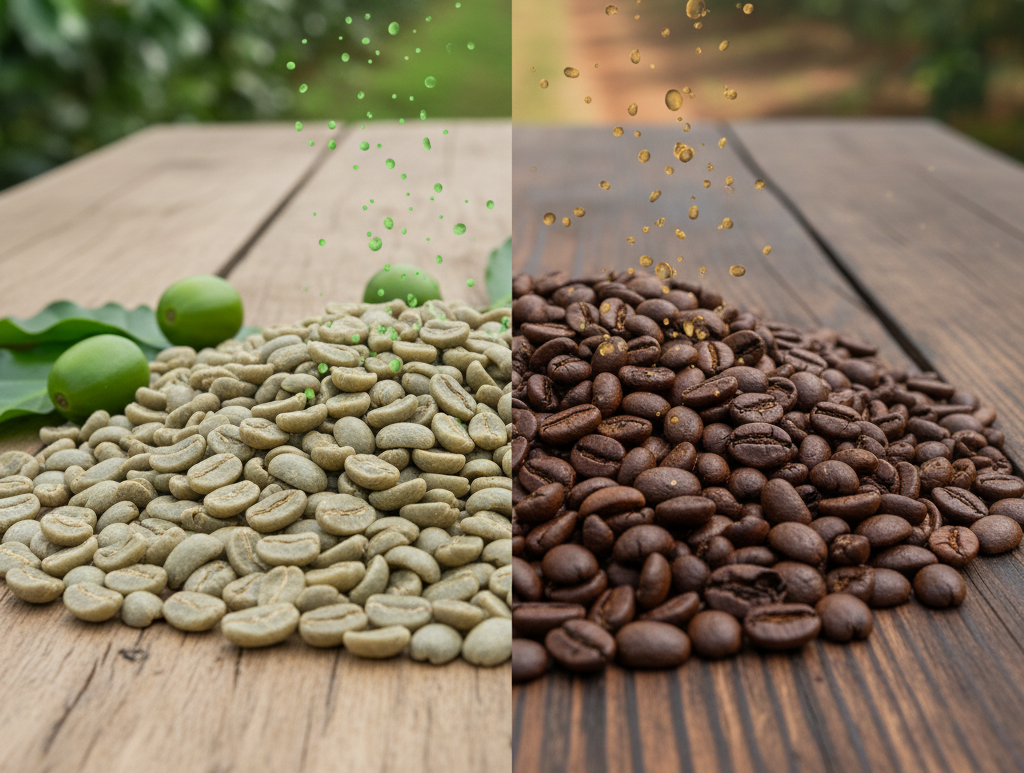
Green Coffee vs Roasted Coffee: The Nutrient Comparison
- Chlorogenic acids: Green coffee (up to 14.4%) dramatically higher than roasted (1–8% depending on roast level)
- Caffeine: Similar in both — caffeine is heat-stable
- Trigonelline: Higher in green coffee; converts to nicotinic acid during roasting
- Melanoidins: Absent in green coffee; created during roasting. These prebiotic compounds support gut health.
- Volatile aromatics: Absent in green coffee; created during roasting. All the flavor.
- Phenylindanes: Absent in green coffee; created during dark roasting. These neuroprotective compounds specifically protect against Alzheimer's protein buildup.
- Antioxidant profile overall: Green coffee has higher total polyphenol content; roasted coffee has a different antioxidant profile with melanoidins offsetting some CGA loss
Green Coffee Extract Supplements: What to Look For
If you're considering green coffee extract as a supplement — rather than as a beverage or culinary ingredient — here's what the evidence supports:
Effective Dosage
Research-supported dosages range from 400–800 mg per day of standardized green coffee extract (standardized to 45–50% chlorogenic acids). Some studies used 200–400 mg before each of two main meals. The 500 mg/day dose in the 2022 meta-analysis showed significant results. Taking before meals appears to optimize the glucose-management mechanism.
Quality Indicators
- Standardization percentage: Look for "standardized to 45% chlorogenic acids" or similar — this tells you the active compound concentration is controlled and verified
- Third-party testing: NSF International, USP, or Informed Sport certification indicates independent verification of label accuracy and absence of contaminants
- No proprietary blends: Products that specify exact CGA percentage are more reliable than those using proprietary blend language that obscures dosing
- Caffeine content: Check if the extract has been decaffeinated — green coffee extract can contribute significant caffeine depending on concentration and dose
Safety Considerations
The 2024 Nutrients systematic review found green coffee extract CGA to be generally well-tolerated with no significant toxicity at standard doses. At high doses (2g/day for 7 days), some research found moderate increases in plasma homocysteine levels of 11–12% — which may be relevant for people with cardiovascular risk factors who should monitor homocysteine. Most people consuming 400–800 mg/day do not approach this threshold.
Because green coffee extract contains caffeine, people sensitive to caffeine should factor this into their total daily intake. Pregnant people should follow standard caffeine guidelines (under 200 mg/day).
Can You Drink Green Coffee?
Yes — though it's an acquired taste that most people find significantly less enjoyable than roasted coffee. Green coffee beans can be:
- Brewed as a tea: Simmering green coffee beans in water for 5–10 minutes produces a light, slightly grassy, subtly fruity beverage with notable caffeine and high CGA content. The flavor has been compared to green tea — vegetal, slightly tannic, with herbal notes. Some people enjoy it; most do not.
- Cold-steeped: Green coffee beans steeped in cold water overnight produce a milder, slightly smoother result than hot brewing. Lower temperature extraction captures more delicate compounds.
- As green coffee extract powder: Added to smoothies, juices, or other beverages to avoid the flavor while obtaining the CGA benefits.
The most practical way for most people to consume the health benefits of green coffee CGAs is through green coffee extract supplements or by choosing light-roasted specialty coffee (which retains significantly more CGAs than dark roast) rather than attempting to make green coffee a palatable daily beverage.
Frequently Asked Questions
What is green coffee?
Green coffee refers to raw, unroasted coffee beans — the same seeds that become your morning roasted coffee before the roasting process transforms them. Green coffee beans are naturally green to blue-green in color and contain dramatically higher concentrations of chlorogenic acids (up to 14.4% by weight) than roasted coffee, because roasting destroys 50–95% of these antioxidant compounds. Green coffee is traded globally as the primary commodity form of coffee before local roasting, and is also used to produce green coffee bean extract supplements.
What does green coffee taste like?
Green coffee tastes nothing like roasted coffee. It is grassy, slightly vegetal, mildly bitter, and somewhat woody. Brewed green coffee is sometimes compared to green tea in its light, herbal quality. The hundreds of aromatic compounds that give roasted coffee its characteristic flavor — caramel, chocolate, fruit, floral notes — are created during roasting and do not exist in green coffee. Most people find green coffee significantly less enjoyable than roasted coffee as a beverage.
Is green coffee good for weight loss?
The current evidence suggests modest, genuine effects through specific mechanisms — not the dramatic "miracle" weight loss promoted in 2012. A 2022 meta-analysis found 500 mg/day of chlorogenic acid from green coffee extract reduced weight by approximately 1.3 kg versus placebo. A 2025 meta-analysis found approximately -2.47 kg body weight reduction. These effects come primarily from CGAs inhibiting glucose-6-phosphatase and alpha-glucosidase — reducing blood glucose and insulin response, which reduces fat storage signaling. Green coffee extract is a metabolic support tool with modest documented effects, not a dramatic weight loss solution.
Is green coffee healthier than regular coffee?
In terms of chlorogenic acid content specifically, yes — green coffee retains up to 14.4% CGA compared to 1–8% in roasted coffee depending on roast level. For blood sugar management, cardiovascular support, and antioxidant effects, green coffee extract provides more concentrated CGA than regular coffee. However, roasted coffee contains beneficial compounds that green coffee lacks — melanoidins (prebiotic), phenylindanes (neuroprotective against Alzheimer's), and the full range of roasting-derived antioxidants. Each has distinct health profiles rather than one being comprehensively "healthier."
What is green coffee bean extract?
Green coffee bean extract is a dietary supplement made from unroasted green coffee beans, concentrated and standardized to contain specific percentages of chlorogenic acids (typically 45–50%). It's used to provide CGA health benefits — blood sugar management, blood pressure support, antioxidant effects, and modest weight management support — without requiring consumption of unpalatable raw coffee. Research-supported dosages range from 400–800 mg per day. Look for third-party tested products standardized to specific CGA percentages.
How does green coffee differ from regular coffee?
Green coffee is unroasted; regular coffee is roasted. The roasting process creates hundreds of flavor compounds (making coffee taste like coffee) while destroying 50–95% of the chlorogenic acids present in the raw bean. Green coffee has dramatically higher CGA content but no flavor complexity; roasted coffee has the full flavor profile but reduced CGA content. Roasted coffee also contains melanoidins and phenylindanes (formed during roasting) that green coffee lacks. They have overlapping but distinct health profiles.
The Bottom Line
Green coffee is the raw form of the bean you brew every morning — before roasting transforms it into the aromatic, flavorful product we know as coffee. Its primary significance is its exceptional chlorogenic acid content: up to 14.4% by weight in unroasted beans, compared to 1–8% in roasted coffee. These CGAs are responsible for documented benefits in blood sugar management, blood pressure reduction, and modest weight management support — benefits that the 2023–2025 research wave has rehabilitated from the 2012 hype cycle with genuinely rigorous science.
For everyday coffee drinkers, the most practical implication is this: if you want to maximize your CGA intake from coffee, choose lighter roasts — light roast retains significantly more chlorogenic acids than dark roast. For more concentrated CGA intake, green coffee bean extract supplements (standardized, third-party tested, 400–800 mg/day) provide the most direct access to these compounds without requiring you to drink raw, grassy coffee.
And if you're a specialty coffee professional or enthusiast — green coffee is the form in which the world's most exceptional flavor potential travels from mountain farms in Colombia, Ethiopia, and Kenya to your local roaster. The quality decisions made at the green bean stage — altitude of cultivation, varietal selection, processing method, proper storage — determine the ceiling of what roasting and brewing can express. Green coffee is where the story begins.
If you'd like to read other articles similar to What Is Green Coffee? How Raw Beans Differ From Roasted — and What That Means for Your Health you can visit the category The Art and Science of Coffee: Guides, Reviews, and Expert Tips.
Does Coffee Affect Cortisol Levels? The Science Behind Caffeine and Your Stress Hormone

Is Coffee Good for Depression Risk? What the Research Actually Shows

Is Coffee Bad for Anxiety? What the Science Actually Shows
The 5 Elements of Coffee Tasting Every Coffee Lover Should Know
How Is Coffee Decaffeinated? The 4 Methods Explained — Including the One You Should Avoid
What Is Coffee Degassing? Why Fresh Roasted Beans Release CO2 — and Why It Matters
What Is a Coffee Cooperative? How They Help Farmers — and Why They Matter for Your Cup
How Altitude Affects Coffee Flavor: Why High-Grown Coffee Tastes Different
What Is a Coffee Cherry? The Fruit Behind Every Cup You Drink
Leave a Reply
Related post