

How to Make Coffee Less Acidic: 7 Methods That Actually Work
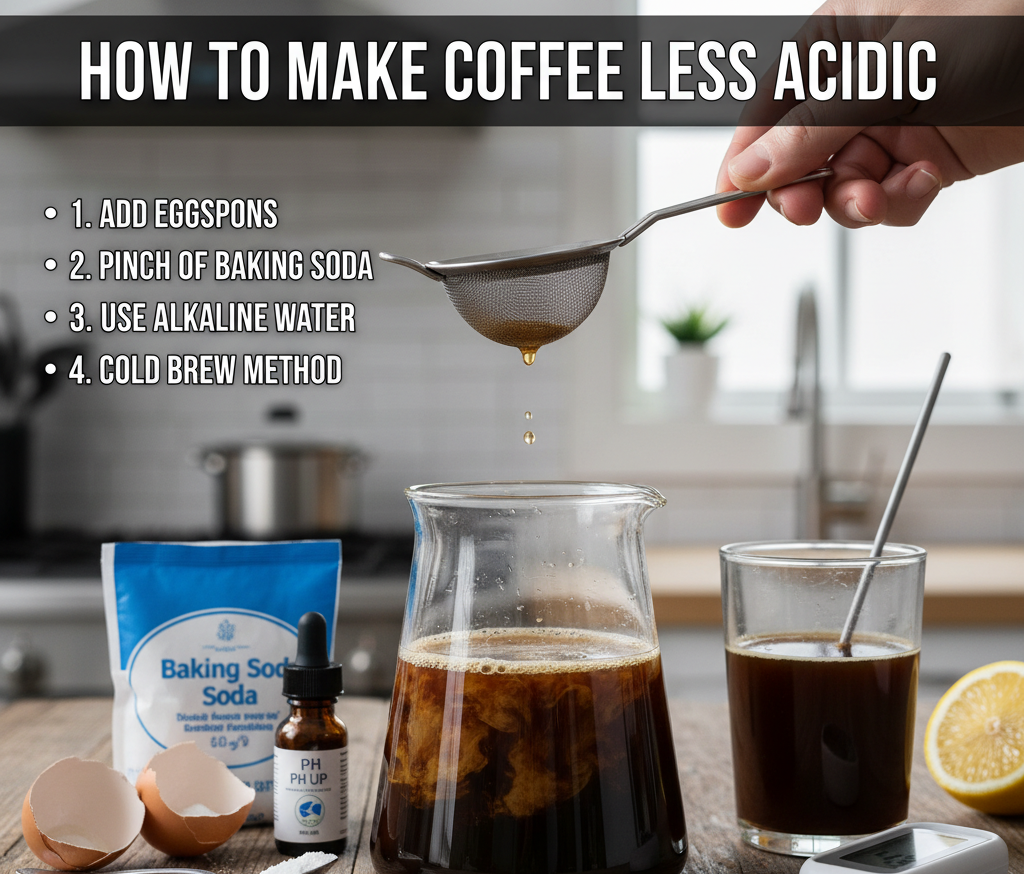
Coffee acidity affects two different things — and most guides confuse them. Some people want less acidity because their coffee tastes too sharp or sour. Others want less acidity because it causes stomach discomfort, heartburn, or acid reflux. These are related but not identical problems, and the best solutions depend on which one you're dealing with.
Here's the complete picture: the science of coffee acidity, the distinction between flavor acidity and stomach acidity, and seven genuinely effective methods for reducing both — ranked from most to least impactful.
Table of contents
- First: Understanding Two Types of Coffee Acidity
- Method 1: Switch to Cold Brew (Most Effective — 60–70% Acid Reduction)
- Method 2: Choose Dark Roast Beans (50–95% Less Chlorogenic Acid)
- Method 3: Choose Low-Acid Coffee Origins
- Method 4: Add Dairy or Plant-Based Milk
- Method 5: Use Coarser Grind and Lower Water Temperature
- Method 6: Add a Pinch of Salt or Baking Soda
- Method 7: Choose Fresh Beans and Drink Coffee Soon After Brewing
- Who Needs Low-Acid Coffee Most?
- The Methods Ranked by Effectiveness
- Frequently Asked Questions
- The Bottom Line
First: Understanding Two Types of Coffee Acidity
Before diving into solutions, it helps to understand the difference between what coffee people mean by "acidity" and what your stomach experiences:
Flavor Acidity (Brightness)
In specialty coffee, acidity is a positive quality — the bright, lively, refreshing character that makes coffee taste alive and complex rather than flat and dull. Think of the pleasant tartness of a ripe citrus fruit. This comes primarily from organic acids including citric acid, malic acid, and chlorogenic acids. Good acidity is integrated and sweet-edged. When people say they want "less acidic coffee" because of flavor, they usually mean they want less of this brightness — a smoother, more rounded cup with less tartness.
Digestive Acidity (Stomach Effects)
Coffee affects the stomach through two mechanisms: its actual pH (coffee averages pH 4.85 to 5.10, making it moderately acidic) and its stimulation of gastric acid production through caffeine and other compounds. For people with acid reflux, GERD, or sensitive stomachs, it's often the stimulated gastric acid — not the coffee's own pH — that causes the most discomfort. A 2024 gastroenterology study found that subjects reported 63% less reflux discomfort when drinking low-acid coffee versus conventional brewing. This is meaningful — but the solutions aren't always the same as solutions for flavor acidity.
☕ Recommended by cocondo.coffee
Cocondo Orgánico — The only certified organic coffee from Antioquia, Colombia
Reserve Your Bag →With that distinction clear, here are the seven most effective methods:
Method 1: Switch to Cold Brew (Most Effective — 60–70% Acid Reduction)
Cold brew is the single most effective method for reducing coffee acidity — by a significant margin. Multiple studies confirm that cold brew contains 60 to 70% less acid than hot-brewed coffee from the same beans.
The mechanism is temperature-dependent chemistry: many of coffee's acidic compounds require heat to fully extract from the grounds. Cold water, steeping for 12 to 24 hours, selectively extracts caffeine and flavor compounds while leaving most temperature-dependent acids — including chlorogenic acid lactones and quinic acid — behind. The result is a naturally sweet, smooth, chocolatey cup with a pH of 4.85 to 5.13 compared to 4.38 to 4.75 for hot-brewed coffee.
Cold brew is particularly effective for the digestive acidity problem because it also contains somewhat less caffeine per ounce than hot-brewed concentrate, reducing caffeine-stimulated gastric acid production.
The tradeoff: Cold brew requires 12 to 24 hours of steeping — you can't make it on the spot. Plan ahead: make a batch on Sunday night and it lasts 7 to 14 days in the refrigerator. Cold brew also suppresses the bright, floral, citrus notes of light roast specialty coffees — those volatile compounds don't extract well in cold water. If you love complex, bright specialty coffee, cold brew isn't the ideal method. If you prioritize stomach comfort and smooth flavor, it's the best option available.
How to optimize: Use medium to dark roast beans with natural chocolate and caramel notes. These origins and roast levels translate best to cold brew's flavor profile. Steep for 16 to 18 hours in the refrigerator for best results.
Method 2: Choose Dark Roast Beans (50–95% Less Chlorogenic Acid)
Roasting is the most powerful variable affecting coffee acidity — more powerful than brewing method, grind size, or water temperature. A 2023 study published in Current Research in Food Science confirmed that citric, malic, and chlorogenic acids decrease progressively as roast level darkens from light to dark.
The numbers are significant: dark roasts can contain 50 to 95% less chlorogenic acid than light roasts. A 2024 study in Scientific Reports found that total titratable acidity of coffee peaks at first crack during roasting, then returns toward baseline by second crack — meaning darker roasts have measurably lower acidity at both the pH and perceived levels.
During roasting, chlorogenic acids break down into quinic acid and caffeic acid. These compounds contribute to bitterness rather than brightness — which is why dark roasts taste bitter rather than bright. The trade-off is that as acidity decreases, you lose the fruity, floral, and citrus notes that define good specialty coffee. What remains is a roasty, chocolatey, bitter-forward cup. For people who prefer that profile anyway, dark roast is the simplest solution to acidity.
Best dark roast origins for low-acid coffee: Brazil (naturally lower altitude, naturally lower acidity, chocolate and nut notes), Sumatra (earthy, heavy-bodied, low-acid), and blends specifically designed for smooth, low-acid profiles.
Important nuance: Very dark roasts produce more quinic acid (from breakdown of chlorogenic acids during excessive roasting) — which is the compound responsible for the harsh, stomach-turning taste of over-roasted or stale coffee sitting on a warming plate. Going to a dark roast is good; going to an extremely dark roast introduces different acidic compounds. Medium-dark is typically the sweet spot for low-acid without introducing quinic acid problems.
Method 3: Choose Low-Acid Coffee Origins
Before roasting or brewing, the growing conditions of the coffee plant fundamentally determine its acid profile. Altitude is the biggest single factor — coffee grown at lower altitudes develops fewer organic acids because the cherries ripen faster with less time to accumulate complex acid compounds.
Low-acid origins to seek out:
- Brazil: Grown at relatively low altitude (600 to 1,200 masl) in flat terrain. Naturally lower citric and malic acid. Flavor profile: chocolate, nuts, caramel, low acidity, full body. The most widely recommended origin for stomach-sensitive coffee drinkers.
- Sumatra (Indonesia): Processed through a unique "wet hulling" method that produces earthy, low-acid, heavy-bodied cups. Very stomach-friendly. Flavor profile: cedar, dark chocolate, earthy, tobacco notes — polarizing but reliably low acid.
- Honduras and Peru: Mid-altitude Latin American origins with naturally milder acid profiles than Colombian or Ethiopian coffees. Good balance of flavor complexity without aggressive acidity.
- India: Indian coffees, particularly monsooned Malabar (beans exposed to monsoon moisture during processing), are among the lowest-acid coffees available. Earthy, spicy, very low brightness.
High-acid origins to moderate or avoid for acid-sensitive drinkers:
- Ethiopia (especially washed/light roast): Among the most acidic coffees — the bright citrus and floral notes come from high acid content. Delicious for those who tolerate it; challenging for sensitive stomachs.
- Kenya: Very high acidity — the blackcurrant intensity is largely an acid-driven flavor. Beautiful coffee, not ideal for sensitive stomachs.
- Colombia (high altitude, light roast): Colombian coffees from above 1,800 masl have notably higher acidity than lower-altitude Brazilian or Sumatran options. At medium roast, Colombian coffees are more manageable for most people.
The processing method also matters: Natural processed coffees (dried whole cherry) tend to have lower perceived acidity than washed coffees from the same origin, because the fermentation process during natural drying converts some acidic compounds into sweeter ones. If you see "natural process" or "dry process" on a bag, it will likely taste smoother and less bright than a washed version of the same bean.
Method 4: Add Dairy or Plant-Based Milk
Adding milk to coffee is one of the most effective and immediate ways to reduce perceived acidity — and the science behind it is well documented.
A 2025 study by Nan Chen published in the Journal of Dairy Science found that increasing milk protein concentration significantly reduced free acidic polyphenols and lowered perceived acidity, bitterness, and astringency while increasing sweetness and smoothness. The mechanism: milk proteins — particularly casein and whey — bind directly to acidic polyphenol compounds in coffee, neutralizing their effect on your palate and your stomach.
Dairy milk also buffers coffee's pH through its own alkalinity (raw cow's milk has a pH of 6.7 to 6.9, well above coffee's 4.85 to 5.10), physically diluting the acidity when added.
Plant-based milk alternatives also work — a 2024 study from Lutsk National Technical University found that most plant-based beverages (almond, oat, rice-almond, rice-coconut, soy) fall between pH 6.6 and 7.1, making them near-neutral and effectively buffering when added to coffee. Oat milk is particularly popular for this purpose — its neutral sweetness and relatively thick texture integrate well with coffee without curdling.
Practical tip: For maximum acid reduction, choose whole dairy milk (higher protein content = more acid-binding) or oat milk over thin, watery plant milks. The more milk protein, the more acidic polyphenol binding occurs.
Method 5: Use Coarser Grind and Lower Water Temperature
Your brewing parameters significantly affect how much acid is extracted from the grounds. Two specific adjustments reduce acid extraction without switching your entire brewing method:
Coarser Grind
A coarser grind reduces the total surface area of coffee exposed to water — meaning fewer compounds are extracted, including fewer acidic ones. Research suggests that coarser grinding extracts 15 to 20% fewer acids regardless of brewing technique. The caveat: going too coarse causes under-extraction (leading to sour, weak coffee — a different problem). The goal is finding a grind that extracts the sweet compounds fully while leaving some of the later-extracting acidic compounds behind.
If you currently drink pour-over or drip coffee at a medium grind and want less acidity, try going one to two notches coarser. Watch for under-extraction (the coffee tasting thin and sour) as the limit — you want to stay on the right side of balanced.
Lower Water Temperature
Higher water temperatures extract more acidic compounds from coffee grounds. Brewing at 88 to 92°C (190 to 198°F) rather than the standard 90 to 96°C (195 to 205°F) reduces acid extraction while still achieving full extraction of sweet and flavor compounds. This is particularly effective for dark roasts, which extract quickly anyway and don't need maximum temperature.
For AeroPress specifically: using water at 80 to 85°C (175 to 185°F) can reduce perceived acidity by 30 to 35% compared to standard temperature brewing — making AeroPress one of the most versatile methods for dialing in exactly the acid level you want.
Method 6: Add a Pinch of Salt or Baking Soda
This sounds unusual but has genuine scientific merit for two distinct mechanisms:
Salt (Sodium Chloride)
A tiny pinch of salt — a few grains, not a noticeable amount — suppresses the perception of both bitterness and sourness by partially blocking the relevant taste receptors. Research suggests this approach can reduce perceived acidity by 15 to 20%. Salt doesn't change the coffee's actual pH — it changes how your palate perceives it. This is most useful for already-brewed coffee that's too sharp, or when you're away from home and can't control your brewing variables. The amount needed is truly minimal — if you can taste the salt, you've added too much.
Baking Soda (Sodium Bicarbonate)
Baking soda is alkaline and actively neutralizes acid — unlike salt, it does actually raise the pH of the coffee. A standard recommendation is 1/8 teaspoon per pot (around 1 liter) of brewed coffee. This is genuinely effective for reducing stomach discomfort for people with acid reflux, as it neutralizes some of the acidic compounds before they reach the digestive system.
The tradeoff: baking soda can flatten the flavor of coffee — removing not just harsh acidity but also pleasant brightness and complexity. Use sparingly. For daily use, it's better to address acidity through beans, roast, and method rather than neutralizing it chemically after the fact.
Egg shells (the traditional method): Historically, people added crushed egg shells to coffee grounds before brewing. The calcium carbonate in eggshells works similarly to baking soda — neutralizing acids during extraction. It's effective and entirely food-safe, though less convenient than a pinch of baking soda. The technique is referenced as far back as old films — it's a legitimate practice, not a folk myth.
Method 7: Choose Fresh Beans and Drink Coffee Soon After Brewing
Here's a counterintuitive finding that most low-acid guides get completely wrong: stale coffee is actually more acidic than fresh coffee — not less.
As coffee ages after roasting, oxidation breaks down the protective oils and aromatic compounds in the beans, and some of the complex organic acids degrade into simpler, harsher compounds. Specifically, quinic acid — the compound most associated with stomach irritation and harsh sourness — increases as coffee ages and as brewed coffee sits on a warming plate.
This means:
- Beans roasted more than 6 weeks ago will produce more irritating, harsher acidity than fresh beans from the same origin
- Coffee left on a warming plate for 30+ minutes becomes progressively more acidic as compounds degrade with continued heat exposure — the classic "diner coffee" problem
- Pre-ground coffee, even if recently purchased, has already lost its protective oils and will extract more harshly than freshly ground beans
The practical implication: if you're experiencing stomach problems from coffee, checking the roast date before spending money on specialty low-acid beans is worthwhile. Switching from stale supermarket coffee to fresh specialty coffee — even if the specialty coffee is lighter roast — often produces a noticeably less irritating cup. Fresh beans from a specific roast date within the past 3 to 4 weeks, brewed immediately and consumed promptly, produce a gentler stomach experience than old coffee regardless of origin or roast level.
Always use a thermal carafe rather than a warming plate if you brew more than you'll drink immediately — this eliminates the quinic acid buildup from continued heat exposure.
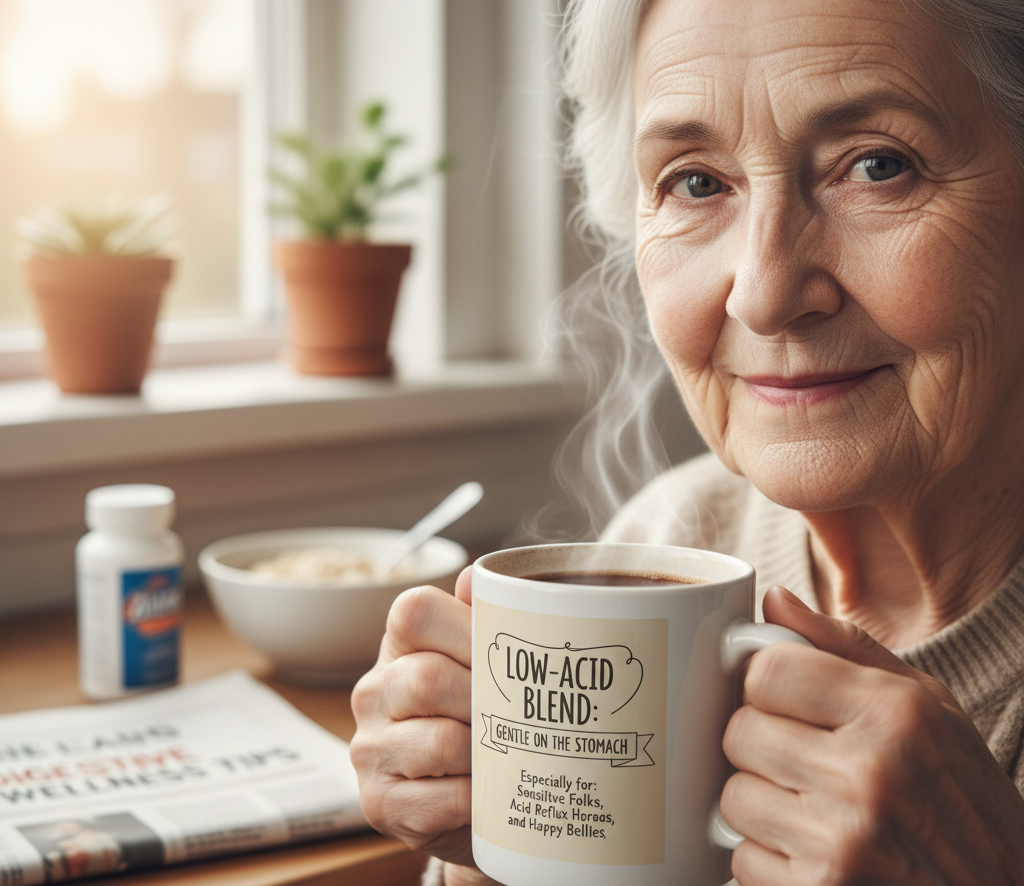
Who Needs Low-Acid Coffee Most?
Understanding your specific situation helps you choose the right combination of methods:
People with Acid Reflux or GERD
Focus on: cold brew (highest impact), dark roast, low-acid origins (Brazil, Sumatra), and decaf (caffeine directly stimulates gastric acid production — removing it is the single most effective change for GERD sufferers). Adding milk also helps significantly. A 2024 gastroenterology study confirmed 63% less reflux discomfort with properly prepared low-acid coffee versus conventional brewing.
People with Sensitive Stomachs (No Diagnosed GERD)
Focus on: fresh beans, darker roast, always drinking with food rather than on an empty stomach, and adding milk. Cold brew on difficult days. Drinking coffee on an empty stomach significantly amplifies gastric acid stimulation — eating something first makes a dramatic practical difference for most sensitive-stomach drinkers.
People Who Simply Prefer Less Bright Flavor
Focus on: medium-dark to dark roast, low-altitude origins (Brazil, Honduras), natural processed beans, and adding milk. You don't necessarily need cold brew — just a different bean and roast profile.
People with Tooth Sensitivity or Enamel Concerns
Focus on: cold brew (highest pH of any preparation method), drinking through a straw to reduce direct contact with teeth, rinsing with water after coffee, and waiting 30 minutes before brushing teeth after drinking coffee (brushing immediately after acid exposure accelerates enamel wear rather than preventing it).
The Methods Ranked by Effectiveness
- 1. Cold brew: 60–70% acid reduction. Highest impact. Requires planning ahead.
- 2. Dark roast: 50–95% less chlorogenic acid vs light roast. Most accessible change.
- 3. Low-acid origin (Brazil, Sumatra): Significant inherent acid reduction before any brewing adjustment.
- 4. Adding dairy or plant milk: Immediate, significant perceived acidity reduction through protein binding.
- 5. Lower water temperature + coarser grind: 15–35% reduction depending on method. No equipment cost.
- 6. Salt or baking soda: 15–20% perceived reduction (salt) or actual pH change (baking soda). Easy but affects flavor.
- 7. Fresh beans + thermal carafe: Prevents acidification from staleness and heat degradation. Underrated and free.
Frequently Asked Questions
How do I make my coffee less acidic?
The most effective single change is switching to cold brew — which reduces acidity by 60 to 70% compared to hot brewing. If you prefer hot coffee, switching to a dark roast from a naturally low-acid origin (Brazil or Sumatra) makes the biggest difference. Adding milk reduces perceived acidity significantly. Using slightly cooler water (88 to 92°C instead of 95°C) and a coarser grind reduces extraction of acidic compounds. Fresh beans used within 3 to 4 weeks of roasting also produce less harsh acidity than stale coffee.
What coffee is lowest in acid?
Cold brew from dark roast Brazilian or Sumatran beans is consistently the lowest-acid preparation. Among hot brewing options, dark roast espresso from low-altitude origins (Brazil, Sumatra, Indonesia) has the lowest pH and least perceived acidity. Natural processed coffees are lower acid than washed coffees from the same origin. Adding milk to any of these further reduces perceived acidity significantly.
Is dark roast coffee less acidic?
Yes — significantly so. A 2023 study confirmed that citric, malic, and chlorogenic acids decrease progressively as roast darkens. Dark roasts can contain 50 to 95% less chlorogenic acid than light roasts. The tradeoff is that very dark roasts also produce more quinic acid (from over-roasting) and lose most of the complex origin flavors. Medium-dark roast is typically the sweet spot for low acid with still-pleasant flavor.
Does adding milk to coffee reduce acidity?
Yes — effectively and immediately. A 2025 Journal of Dairy Science study confirmed that milk proteins (casein and whey) bind directly to acidic polyphenol compounds in coffee, reducing perceived acidity, bitterness, and astringency while increasing sweetness. The higher the milk protein concentration, the greater the effect. Whole dairy milk and oat milk both work well for this purpose.
Is coffee bad for acid reflux?
Coffee can worsen acid reflux through two mechanisms: its own moderate acidity (pH 4.85 to 5.10) and caffeine's stimulation of gastric acid production. For people with GERD or significant acid reflux, decaf cold brew from a dark roast low-acid origin is the most stomach-friendly option. Switching to this from regular hot-brewed coffee has produced 63% less reported reflux discomfort in research. Always drink with food rather than on an empty stomach. If reflux is severe, consult a doctor — coffee may need to be reduced regardless of preparation method.
Does cold brew coffee have less acid?
Yes — cold brew contains approximately 60 to 70% less acid than hot-brewed coffee from the same beans. The cold water extraction process doesn't activate many of the temperature-dependent chemical reactions that produce coffee's most acidic compounds. Cold brew's pH (4.85 to 5.13) is measurably higher (less acidic) than hot-brewed coffee's pH (4.38 to 4.75). This makes cold brew the most stomach-friendly preparation for acid-sensitive drinkers.
The Bottom Line
Making coffee less acidic doesn't require giving up great flavor — it requires matching your beans, roast, and brewing method to your sensitivity level. Cold brew eliminates the most acidity. Dark roast from a low-altitude origin eliminates acidity at the source. Adding milk reduces it immediately. Fresh beans prevent the extra acidity that comes from staleness and heat degradation.
The best approach for most acid-sensitive coffee drinkers: start with fresh, medium-dark roast beans from Brazil or Sumatra, brew at slightly lower temperature, add a splash of milk, and drink promptly without leaving it on a warming plate. These four combined changes address the problem from every angle and typically produce a dramatically more comfortable cup without sacrificing the pleasure of real coffee.
And if you love specialty coffee but wish it were gentler on your stomach — medium roast single-origin Colombian coffee, particularly from farms in Antioquia at moderate altitudes (1,200 to 1,500 masl), offers a balanced middle ground: enough complexity and sweetness to be genuinely interesting, with naturally milder acidity than high-altitude Ethiopian or Kenyan alternatives. The chocolate and caramel notes of well-grown Antioquian coffee are inherently less sharp and stomach-challenging than the bright citrus profiles of East African origins — making it one of the most approachable specialty origins for people navigating the acidity question.
If you'd like to read other articles similar to How to Make Coffee Less Acidic: 7 Methods That Actually Work you can visit the category The Art and Science of Coffee: Guides, Reviews, and Expert Tips.
Does Coffee Affect Cortisol Levels? The Science Behind Caffeine and Your Stress Hormone

Is Coffee Good for Depression Risk? What the Research Actually Shows

Is Coffee Bad for Anxiety? What the Science Actually Shows
The 5 Elements of Coffee Tasting Every Coffee Lover Should Know
What Is Green Coffee? How Raw Beans Differ From Roasted — and What That Means for Your Health
How Is Coffee Decaffeinated? The 4 Methods Explained — Including the One You Should Avoid
What Is Coffee Degassing? Why Fresh Roasted Beans Release CO2 — and Why It Matters
What Is a Coffee Cooperative? How They Help Farmers — and Why They Matter for Your Cup
How Altitude Affects Coffee Flavor: Why High-Grown Coffee Tastes Different
Leave a Reply
Related post