
What Are the 4 Enemies of Coffee? (And How to Stop Them From Ruining Your Cup)
You spend money on quality coffee beans. You brew carefully. And yet somehow, by the end of the week, your coffee tastes flat, dull, or vaguely cardboard-like. The beans didn't change. Your brewing method didn't change. So what happened?
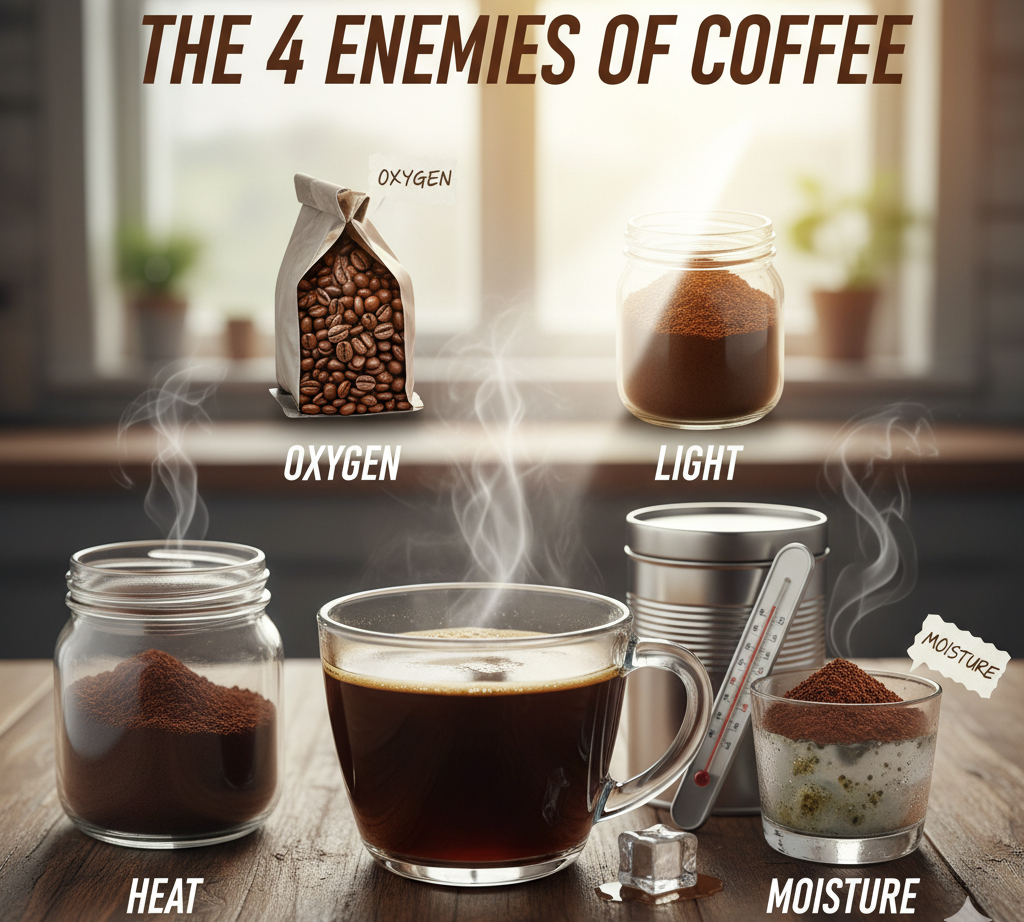
Almost certainly, one or more of the four enemies of coffee got to your beans before you did.
Every roasted coffee bean is in a slow, steady state of decay from the moment it leaves the roaster. It's not dramatic — it happens quietly, at room temperature, in your kitchen. But the result is the same: a cup that falls far short of what it could have been. Understanding the four enemies of coffee — and more importantly, how to defend against them — is the single most impactful thing most coffee drinkers can do to improve their daily cup without spending a penny more on beans.
Table of contents
- Why Roasted Coffee Is So Vulnerable
- Enemy #1: Oxygen (The Silent Staleness Maker)
- Enemy #2: Moisture (The Mold and Flavor Thief)
- Enemy #3: Heat (The Accelerator)
- Enemy #4: Light (The Hidden Destroyer)
- The Cumulative Effect: Why All Four Work Together Against You
- How Long Does Coffee Actually Stay Fresh?
- The Enemy Within: Time Itself
- Frequently Asked Questions
- The Bottom Line
Why Roasted Coffee Is So Vulnerable
Before diving into the four enemies, it helps to understand why roasted coffee is so fragile in the first place.
When green coffee beans are roasted, a cascade of chemical reactions transforms them. Sugars caramelize. Acids develop. Hundreds of volatile aromatic compounds are created — the compounds responsible for the complexity of coffee's aroma and flavor. Carbon dioxide (CO2) produced during roasting becomes trapped inside the bean structure.
Here's the key: those aromatic compounds are volatile by nature — meaning they want to escape. From the moment roasting ends, they begin degrading and evaporating. Around 40% of the CO2 stored in freshly roasted beans is released within the first 24 hours. Natural oils immediately begin rising to the bean surface. The clock starts ticking.
☕ Recommended by cocondo.coffee

Cocondo Orgánico — The only certified organic coffee from Antioquia, Colombia
Reserve Your Bag →When any of the four enemies — oxygen, moisture, heat, or light — makes contact with roasted coffee, they accelerate this natural decay dramatically. What might have taken weeks happens in days. What might have taken days happens in hours.
And there's one more number worth knowing: within 15 minutes of grinding, coffee loses up to 60% of its aromatic compounds. Ground coffee is exponentially more vulnerable than whole beans because grinding massively increases the surface area exposed to the enemies. This is why grinding immediately before brewing — not in advance — makes such a significant difference to the final cup.
Enemy #1: Oxygen (The Silent Staleness Maker)
Oxygen is arguably the most damaging of the four enemies — and the hardest to avoid entirely, since it's literally everywhere.
When oxygen comes into contact with the oils and aromatic compounds in roasted coffee, it triggers a chemical reaction called oxidation. This is the same process that turns a sliced apple brown or makes butter go rancid. In coffee, oxidation breaks down the essential oils that carry flavor and aroma, producing off-flavors that taste flat, stale, or vaguely papery.
The speed of oxidation depends on surface area. Whole beans oxidize slowly. Ground coffee oxidizes rapidly — the dramatically increased surface area means far more of the bean's interior is exposed to air at once. Pre-ground coffee left unsealed can become noticeably stale within hours. Whole beans sealed in an airtight container can stay fresh for several weeks.
This is also why quality coffee bags have one-way CO2 valves — those small circular vents you see on specialty coffee packaging. Freshly roasted beans continue releasing CO2 for days after roasting (a process called degassing). Without a valve, that CO2 would build up pressure and burst the bag. The one-way design lets CO2 escape while preventing oxygen from entering — a genuinely clever piece of packaging engineering that protects the coffee inside.
How to beat oxygen:
- Store beans in a truly airtight container — one with a rubber gasket seal, not just a loose-fitting lid
- Minimize how often you open the container; take out only what you need for each brew
- Consider a vacuum-sealed canister with a pump mechanism that removes air from the container
- Grind immediately before brewing — never grind in advance and store ground coffee
- If you buy in bulk, divide into smaller portions and keep the main supply sealed until needed
Enemy #2: Moisture (The Mold and Flavor Thief)
Coffee beans are highly porous — they readily absorb moisture from the surrounding environment. And moisture is devastating to coffee freshness in two distinct ways.
First, moisture accelerates the breakdown of flavor compounds through a process called hydrolysis — chemical reactions involving water that degrade the aromatic esters responsible for coffee's complex taste. Even ambient humidity (the moisture naturally present in kitchen air) is enough to initiate this degradation over time.
Second, significant moisture exposure can promote the growth of mold and bacteria on coffee beans, producing off-flavors that range from musty to sour and rendering the beans potentially unsafe to consume.
There's an important practical trap here: many people instinctively reach for the refrigerator or freezer as a storage solution, thinking "cold = fresh." This is one of the most common coffee storage mistakes. Refrigerators are humid environments — every time you take the coffee out and it warms up, condensation forms on the beans. Coffee also readily absorbs odors from other foods in the fridge, which profoundly affects flavor. The refrigerator is one of the worst places to store coffee you're actively using.
The freezer is a more nuanced case. Long-term freezing of a sealed, unopened bag of coffee that you won't touch for weeks actually works reasonably well. The problem is temperature cycling — every time you take frozen coffee out, warm it up, use some, and put it back, you're introducing moisture through condensation. If you do freeze coffee, divide it into single-week portions, freeze each separately, and only thaw what you plan to use that week. Never refreeze.
How to beat moisture:
- Store coffee in a cool, dry location — a kitchen cabinet away from the stove and sink is ideal
- Never store coffee in the refrigerator for everyday use
- Avoid storing near the dishwasher, kettle, or any steam-producing appliance
- In very humid climates, consider adding a food-safe silica gel desiccant to your storage container
- Use an opaque, airtight container that minimizes temperature fluctuation
Enemy #3: Heat (The Accelerator)
Heat is the accelerator. It doesn't introduce new forms of damage — it speeds up all the other forms of degradation simultaneously. Oxidation, moisture absorption, volatile compound loss — all of these happen faster at higher temperatures.
This creates a specific problem for kitchen storage, because kitchens are warm by design. Countertops near stoves, ovens, and even bright windows can reach temperatures significantly higher than the rest of the house, especially during cooking. Coffee stored on a counter near the stove is exposed to repeated heat spikes throughout the day.
There's also the question of brewed coffee and heat. Keeping brewed coffee on a warming plate or in a heated carafe for extended periods continues to break down the compounds that make it taste good. The bitter, burnt taste of coffee that's been sitting on a warming plate for an hour is a direct result of heat-accelerated degradation of the aromatic compounds. The same coffee served immediately after brewing would taste dramatically better.
Heat also matters during the brewing process itself. Water that's too hot (above 96°C/205°F) over-extracts bitter compounds from the coffee grounds. Water that's too cool under-extracts, producing weak, sour coffee. The ideal brewing temperature — 90 to 96°C (195 to 205°F) — exists precisely because coffee's compounds are heat-sensitive and extract at different rates depending on temperature.
How to beat heat:
- Store beans in a cool cabinet away from heat sources — not on the counter near the stove or oven
- Never store coffee in direct sunlight, which heats the container as well as damaging with light
- Avoid keeping a large batch of brewed coffee on a warming plate — brew what you'll drink immediately, or transfer to a thermal carafe to maintain temperature without continued heating
- Let your kettle cool slightly after boiling before pouring — boiling water (100°C) is slightly too hot for most coffee brewing
Enemy #4: Light (The Hidden Destroyer)
Light — particularly UV light — is the most underestimated of the four enemies. It's also the one most easily controlled with the right storage choice.
When roasted coffee is exposed to light, a process called photodegradation occurs. UV rays break down the natural lipids (oils) in coffee beans, causing them to oxidize and surface prematurely. Three-time national barista champion Ishan Natalie explains it this way: light speeds up the rate at which natural oils in coffee are brought to the surface, causing the beans to dry up, making flavor and aroma go flat, and producing rancid, bitter notes in the cup.
Research on Central American coffees found a direct correlation between lipid content and cup quality — coffees with higher percentages of intact lipids were rated higher quality by professional cuppers. Light destroys those lipids.
Darker roasts are particularly vulnerable to light damage. Dark roast beans have a weaker, more porous cellular structure than light roasts, meaning their oils reach the surface faster and are more exposed. A dark roast stored in a clear glass jar on a sunny windowsill can become noticeably stale within days.
The insidious thing about light damage is that it happens silently, at room temperature, without any obvious sign — until you taste the flat, rancid result in your cup.
How to beat light:
- Store coffee in an opaque container — one that lets no light through at all
- Never use clear glass jars for coffee storage, regardless of how nice they look on the counter
- If you display your coffee in a transparent canister, keep it inside a cabinet or away from any light source
- Choose coffee bags with UV-blocking materials — most quality specialty coffee packaging is designed with this in mind
- Keep your storage container away from windows, even if direct sunlight doesn't hit it — ambient light still contributes to photodegradation over time
The Cumulative Effect: Why All Four Work Together Against You
Here's something most coffee guides don't mention: the four enemies compound each other. A storage environment that exposes coffee to heat also tends to be bright (countertops near windows). Moisture problems tend to come with temperature fluctuations (opening and closing the fridge). Oxygen exposure is worst when the container is opened frequently, which also introduces moisture from the ambient air.
The ideal storage environment protects against all four simultaneously. That means:
- Airtight (against oxygen and moisture)
- Opaque (against light)
- Cool (against heat)
- Dry (against moisture)
- Stable in temperature (prevents condensation cycles)
The best practical solution is an opaque, airtight canister stored in a cool kitchen cabinet — away from the stove, away from the dishwasher, away from the window. Stainless steel or ceramic with a rubber gasket lid is ideal. Avoid clear containers and countertop display regardless of aesthetic appeal.
How Long Does Coffee Actually Stay Fresh?
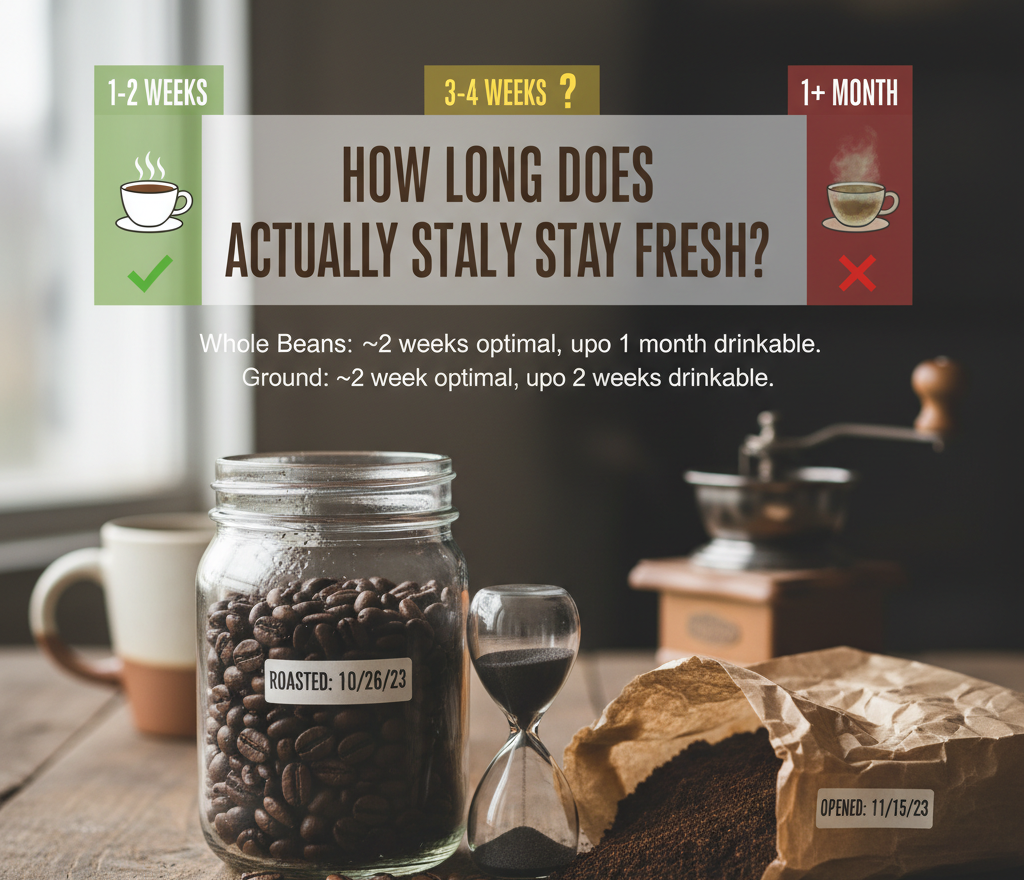
With proper storage against all four enemies, here's a realistic freshness timeline:
- Whole beans (sealed, unopened bag): 3 to 6 months from roast date for acceptable quality; ideally consumed within 6 to 8 weeks of roast date for peak flavor
- Whole beans (opened, properly stored): 2 to 4 weeks from when the bag was opened
- Ground coffee (properly stored): 1 to 2 weeks maximum; significant flavor loss begins within days
- Ground coffee (exposed to air): Noticeable staleness within hours; essentially flat within 1 to 2 days
- Brewed coffee (in a thermal carafe): Best within 30 minutes; acceptable for up to 4 hours; avoid warming plates entirely
The Enemy Within: Time Itself
The fifth enemy that doesn't make the classic list is simply time. Even with perfect storage — airtight, dark, cool, dry — roasted coffee naturally degrades. The volatile aromatics that give specialty coffee its complexity are unstable by nature; they exist in a state of ongoing chemical change from the moment roasting ends.
This is why roast date matters more than most coffee buyers realize. A bag with a "best by" date tells you relatively little — it only indicates when the coffee will become undrinkable, not when it's at peak quality. A bag with a roast date tells you exactly how fresh it is. Most specialty coffee is at its best between 5 and 30 days after the roast date, with different brewing methods having different optimal windows (espresso often benefits from 7 to 14 days of rest; pour-over is often best at 10 to 21 days).
Commercial coffee sold in supermarkets typically has no roast date — because if it did, most consumers wouldn't buy it. That coffee may have been roasted months before it reaches your shelf. By the time you open the bag, the four enemies have already done substantial damage regardless of how well you store it from that point forward.
Frequently Asked Questions
What are the 4 enemies of coffee?
The four enemies of roasted coffee are oxygen, moisture, heat, and light. Each one degrades coffee through different mechanisms — oxygen causes oxidation that flattens flavor, moisture promotes hydrolysis and mold, heat accelerates all degradation processes, and light causes photodegradation of the natural oils responsible for aroma and taste. Protecting your coffee from all four simultaneously is the key to preserving freshness.
What are the two biggest enemies of coffee?
If forced to rank them, oxygen and moisture are generally considered the two most damaging enemies of coffee freshness. Oxygen causes the most immediate and widespread flavor degradation through oxidation of essential oils. Moisture causes both rapid flavor deterioration and potential mold growth. Both can be addressed primarily through airtight storage in a dry environment.
Should you store coffee in the fridge?
No — for everyday use, the refrigerator is actually one of the worst places to store coffee. Refrigerators are humid environments, and the temperature cycling (taking coffee out and putting it back) causes condensation to form on the beans. Coffee also absorbs odors from other foods in the fridge, dramatically affecting flavor. Store coffee in a cool, dry kitchen cabinet in an airtight, opaque container instead.
Can you freeze coffee beans?
Yes, but only if done correctly. Freezing works for long-term storage of an unopened, sealed bag you won't touch for weeks. The key is to portion coffee into single-week servings before freezing, freeze each separately, and thaw only what you need — never refreeze. Temperature cycling through repeated freeze-thaw cycles introduces moisture through condensation and rapidly degrades quality.
How long do coffee beans stay fresh after opening?
Whole beans stored in an airtight, opaque container in a cool, dry cabinet stay acceptably fresh for 2 to 4 weeks after the bag is opened. For peak specialty coffee flavor, aim to consume within 2 weeks of opening. Ground coffee stored the same way degrades much faster — noticeably within days, significantly within a week. Grind immediately before brewing whenever possible.
The Bottom Line
The four enemies of coffee — oxygen, moisture, heat, and light — are always working against the freshness of your beans. The good news is that protecting against all four requires nothing more than the right container, the right storage location, and the right habits.
Buy freshly roasted beans with a visible roast date. Store them in an opaque, airtight container in a cool, dry cabinet. Grind immediately before brewing. And brew what you'll drink without leaving it on a heat source.
Those four practices, applied consistently, will make a more noticeable difference to the quality of your daily cup than almost any other change you could make — including spending more money on a fancier coffee maker.
Of course, all the perfect storage in the world can't rescue beans that weren't worth protecting in the first place. Starting with freshly roasted, specialty-grade coffee — ideally single-origin beans from high-altitude farms where the beans were grown with care — gives you something worth preserving. The four enemies are inevitable. Great beans, stored well, give you the best possible starting point before the battle even begins.
If you'd like to read other articles similar to What Are the 4 Enemies of Coffee? (And How to Stop Them From Ruining Your Cup) you can visit the category The Art and Science of Coffee: Guides, Reviews, and Expert Tips.
Does Coffee Affect Cortisol Levels? The Science Behind Caffeine and Your Stress Hormone

Is Coffee Good for Depression Risk? What the Research Actually Shows

Is Coffee Bad for Anxiety? What the Science Actually Shows
The 5 Elements of Coffee Tasting Every Coffee Lover Should Know
What Is Green Coffee? How Raw Beans Differ From Roasted — and What That Means for Your Health
How Is Coffee Decaffeinated? The 4 Methods Explained — Including the One You Should Avoid
What Is Coffee Degassing? Why Fresh Roasted Beans Release CO2 — and Why It Matters
What Is a Coffee Cooperative? How They Help Farmers — and Why They Matter for Your Cup
How Altitude Affects Coffee Flavor: Why High-Grown Coffee Tastes Different
Leave a Reply
Related post