

What Is Coffee Extraction? The Science Behind Every Cup You've Ever Made
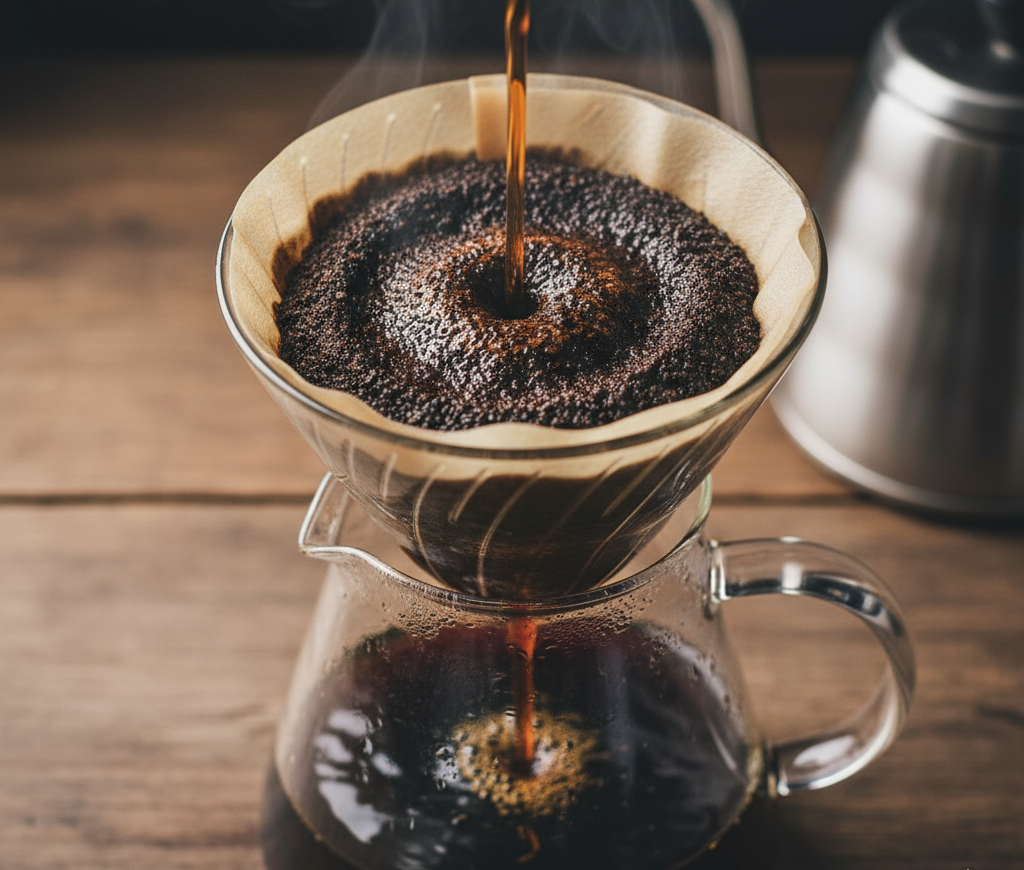
Every time you brew coffee, you're running a chemistry experiment. The outcome — whether your cup tastes sweet and balanced, sharp and sour, or harsh and bitter — is determined almost entirely by a single concept: extraction. Understanding what extraction is and how it works gives you a complete framework for diagnosing any brewing problem, making any adjustment, and consistently producing the cup you want.
This is the foundation of everything in coffee brewing. Once you understand extraction, grind size, water temperature, brew time, and dose all make perfect sense — because you understand why each variable matters, not just that it does.
Table of contents
- What Is Coffee Extraction?
- The History: Where This Science Comes From
- The Two Critical Numbers: TDS and Extraction Yield
- The Critical Distinction: Strength ≠ Extraction
- The Extraction Sequence: What Dissolves When
- The Five Variables That Control Extraction
- The Brewing Control Chart: Visualizing Extraction
- Even vs Uneven Extraction: The Hidden Quality Factor
- Extraction by Brewing Method: What's Actually Happening
- How to Apply Extraction Science to Fix Your Coffee
- Frequently Asked Questions
- The Bottom Line
What Is Coffee Extraction?
Coffee extraction is the process by which hot water dissolves soluble compounds from roasted coffee grounds and carries them into the liquid. When you brew coffee, water acts as a solvent — it pulls flavor compounds, acids, sugars, oils, caffeine, and other molecules out of the ground coffee and into suspension in the liquid. The resulting solution is what you drink.
The word "extraction" refers to this transfer of compounds from the solid (coffee grounds) into the liquid (your brew). Not all compounds in the grounds are water-soluble — some remain in the spent grounds regardless of how long or hot you brew. Of the approximately 28 to 30% of roasted coffee's mass that is water-soluble (the extractable fraction), different compounds dissolve at different rates and at different points in the brewing process.
This sequential extraction — different compounds dissolving at different times — is the fundamental mechanism behind why brewing variables like grind size, temperature, and time have such a direct impact on flavor.
☕ Recommended by cocondo.coffee
Cocondo Orgánico — The only certified organic coffee from Antioquia, Colombia
Reserve Your Bag →The History: Where This Science Comes From
The scientific framework for understanding coffee extraction was established in 1957 by Dr. Earnest Earl Lockhart at MIT, in a landmark paper titled "The Soluble Solids in Beverage Coffee as an Index to Cup Quality." Lockhart proposed that the quality of a brewed cup of coffee could be objectively measured by the amount of coffee grounds dissolved in the liquid — what we now call Total Dissolved Solids (TDS).
Building on Lockhart's work, the Coffee Brewing Center (precursor to today's Specialty Coffee Association) developed the Coffee Brewing Control Chart — a visual diagram mapping the relationship between extraction yield and brew strength, with a defined "ideal" zone for balanced flavor. This chart, refined over decades, remains the foundation of modern coffee brewing science and is used by the SCA as the basis for its quality standards.
In the 1990s and 2000s, the specialty coffee movement brought this academic framework into daily barista practice — making concepts like extraction yield and TDS standard vocabulary in professional coffee training. Today, coffee scientists including Jonathan Gagné (author of The Physics of Filter Coffee) and researchers at institutions like UC Davis continue refining our understanding of extraction chemistry at the molecular level.
The Two Critical Numbers: TDS and Extraction Yield
Understanding extraction requires understanding two distinct measurements — and crucially, the difference between them:
TDS — Total Dissolved Solids (Coffee Strength)
TDS measures how concentrated your brewed coffee is — what percentage of the liquid in your cup is dissolved coffee material rather than water.
- Filter coffee (pour-over, drip): 1.15% to 1.45% TDS — optimal range per SCA Golden Cup Standard
- Espresso: 8% to 12% TDS — dramatically more concentrated
- Strong filter coffee: Up to 1.7% TDS — noticeably more intense
- Weak filter coffee: Below 1.0% TDS — watery, lacking body
TDS is measured with a refractometer — a device that measures how much light bends when passing through the coffee liquid, which correlates with dissolved solid concentration. Professional refractometers like the VST LAB COFFEE III are considered the gold standard in specialty coffee; consumer models like the Difluid R2 are increasingly accessible for serious home brewers.
TDS = Strength. A high TDS coffee is strong (concentrated). A low TDS coffee is weak (dilute). Strength tells you how much coffee is in your cup, not whether it was extracted correctly.
Extraction Yield (EY) — How Much of the Coffee Was Dissolved
Extraction yield measures what percentage of the coffee grounds' soluble mass ended up in your cup. It tells you how thoroughly the water extracted from the coffee — not how concentrated the result is.
The formula is: EY% = (TDS% × Beverage Weight) / Coffee Dose
The SCA's ideal extraction yield range is 18% to 22%:
- Below 18% (under-extracted): Not enough compounds dissolved — the desirable sugars and complex flavor molecules haven't fully dissolved yet. The cup tastes sour, sharp, thin, and underdeveloped.
- 18% to 22% (well-extracted): The sweet spot — acids, sugars, and aromatic compounds are all present in balanced proportions. The cup tastes sweet, complex, and balanced.
- Above 22% (over-extracted): Too much has dissolved — including the late-stage bitter compounds (tannins, quinic acid, phenolics) that make coffee harsh and drying. The cup tastes bitter, astringent, and unpleasant.
EY = Extraction quality. A high EY doesn't automatically mean good — it means thorough. Whether it's too thorough (over-extracted) or just right depends on where in the 18-22% range you land.
The Critical Distinction: Strength ≠ Extraction
This is the most important conceptual clarification in all of brewing science — and the one most often confused:
You can have strong, under-extracted coffee. You can have weak, over-extracted coffee. These seem contradictory but they're not.
Consider two scenarios:
Strong, under-extracted coffee: Use a very high dose of coffee (say, 30g) with very little water (200ml) and a very short brew time (90 seconds). Your TDS will be high — lots of coffee material in a small amount of liquid. But your EY will be low — you only dissolved the early-stage compounds (acids). Result: an intense, concentrated cup that tastes sharply sour. Strong AND sour. The solution is longer brew time or finer grind — not less coffee.
Weak, over-extracted coffee: Use a small amount of coffee (10g) with a large amount of water (1,000ml) and allow extended brew time. Your TDS will be low — very little coffee material in a lot of water. But your EY will be high — you extracted everything possible from the grounds, including bitter compounds. Result: a thin, watery cup that tastes bitter. Weak AND bitter. The solution is more coffee and shorter time — not the obvious adjustment of adding more time.
This distinction is why tasting is essential for diagnosis. When your coffee tastes off, ask:
- Sour/sharp/thin? → Under-extracted (low EY). Extract more.
- Bitter/harsh/drying? → Over-extracted (high EY). Extract less.
- Weak/watery but balanced? → Correct EY but low TDS (too much water or too little coffee). Adjust ratio.
- Strong but balanced? → Correct EY, high TDS. If you want it less intense, add more water after brewing (Americano-style).
The Extraction Sequence: What Dissolves When
Coffee compounds don't all dissolve simultaneously — they dissolve in sequence, with the most soluble compounds extracting first. This sequential dissolution is what makes extraction controllable:
Early Extraction (0% to ~18% yield)
The first compounds to dissolve are the most soluble — primarily organic acids (citric, malic, acetic, chlorogenic acids). These are responsible for coffee's brightness and perceived acidity. They extract rapidly and are present in even brief contact between water and grounds. When extraction stops here, you get sour, sharp, underdeveloped coffee — all acidity, no sweetness, no complexity.
Middle Extraction (~18% to ~22% yield)
As extraction continues, sugars and Maillard reaction products dissolve — the caramel compounds, melanoidins, and sweetness-producing molecules formed during roasting. These are less soluble than acids and require longer contact time or higher temperature to extract. This is the range where balanced coffee lives — acids and sweetness in proportion, body developing, aromatic complexity present. The target zone.
Late Extraction (beyond ~22% yield)
Extended extraction begins pulling tannins, quinic acid, and phenolic compounds — the compounds responsible for harsh bitterness, drying astringency, and the papery or chalky quality of over-extracted coffee. These are the least soluble compounds and require the most contact time and heat to extract. They're always present to some degree, but become dominant when extraction goes past the 22% threshold.
The Five Variables That Control Extraction
Every brewing adjustment you make affects extraction by changing one or more of these five variables:
1. Grind Size — The Most Powerful Lever
Grind size controls the surface area of coffee exposed to water. Finer grinding creates more surface area — dramatically increasing the rate and completeness of extraction. Coarser grinding reduces surface area — slowing extraction.
- Grind finer → more extraction (longer EY, risk of over-extraction if too far)
- Grind coarser → less extraction (shorter EY, risk of under-extraction if too far)
Grind size is typically the first variable to adjust when diagnosing extraction problems because its effect is the most direct and the most dramatic. A single notch difference on a quality burr grinder can move EY by 1 to 3 percentage points — enough to shift from under-extracted to balanced.
Grind consistency matters equally. A burr grinder produces particles within a controlled size range — predictable surface area, predictable extraction. A blade grinder produces particles ranging from powder (over-extracts) to large chunks (under-extracts) simultaneously, producing a cup that's both bitter (from the fines) and sour (from the boulders). This is why burr grinders produce dramatically better results than blade grinders regardless of price point.
2. Water Temperature — The Speed Controller
Water temperature controls the kinetic energy of the extraction — how quickly compounds dissolve. Hot water extracts compounds faster; cooler water extracts more slowly and selectively.
- Higher temperature (92–96°C / 198–205°F): Faster extraction of all compounds including bitter ones. Best for light, dense beans that need maximum energy to extract properly.
- Lower temperature (88–92°C / 190–198°F): Slower, more selective extraction. Better for darker, more porous beans that extract quickly. Also the range used for cold brew (room temperature to 4°C), which extracts selectively and avoids many bitter compounds entirely.
The SCA optimal range is 90–96°C (195–205°F) for most hot brewing methods. Within this range, roast-specific adjustments matter: light roasts benefit from the high end (93–96°C); dark roasts benefit from the lower end (88–92°C).
3. Brew Time — Contact Duration
Brew time controls how long water and grounds are in contact — directly affecting how much can be extracted. Longer contact time extracts more (risk of over-extraction); shorter contact time extracts less (risk of under-extraction).
Target brew times by method:
- Espresso: 25–30 seconds (under 9 bars pressure)
- AeroPress: 1–2 minutes steep + 20-30 second press
- Pour-over: 3–4 minutes total
- French press: 4 minutes steep
- Drip machine: 4–6 minutes (determined by machine design)
- Cold brew: 12–24 hours (cold water extracts much more slowly)
4. Coffee-to-Water Ratio — Concentration Control
The ratio controls TDS (strength) more directly than EY, but affects both. More coffee relative to water produces a more concentrated brew (higher TDS); less coffee produces a more dilute brew (lower TDS). However, an extreme ratio also affects EY — very high doses with little water can restrict water access to ground surfaces, while very low doses with excess water can extend contact time beyond optimal.
Target ratios:
- Filter coffee (pour-over, drip, French press): 1:15 to 1:17 (grams coffee to grams water)
- Espresso: 1:2 to 1:2.5 (dose to yield)
- Cold brew concentrate: 1:4 to 1:5
- Cupping (SCA standard): 1:18.18 (8.25g per 150ml)
5. Water Quality — The Invisible Variable
Water chemistry directly affects extraction because water is the solvent — its mineral composition determines how effectively it dissolves coffee compounds. Research in the Journal of Agricultural and Food Chemistry has shown that dissolved cations (particularly magnesium and calcium) play a significant role in coffee extraction by interacting with specific coffee molecules and affecting their solubility.
- Magnesium (Mg²⁺): Enhances extraction of flavor compounds — particularly aromatic esters and acids. Higher magnesium water tends to produce brighter, more complex cups.
- Calcium (Ca²⁺): Binds to certain coffee acids, reducing brightness and producing fuller body. Higher calcium water tends to produce softer, rounder cups.
- Bicarbonate (HCO₃⁻): Acts as a buffer — neutralizes acids in coffee, reducing perceived brightness and acidity. Very high bicarbonate (hard water) can flatten coffee significantly.
- Distilled/RO water (no minerals): Under-extracts flavor compounds and tastes flat — some minerals are necessary for proper extraction.
The SCA recommends water with total dissolved solids of 75 to 250 ppm, magnesium content of 10 mg/L or above, and bicarbonate under 40 mg/L for optimal extraction. For most home brewers, filtered tap water (removing chlorine and reducing hardness) is sufficient. Water specifically formulated for coffee is increasingly available for those who want maximum control.
The Brewing Control Chart: Visualizing Extraction
Dr. Lockhart's 1957 framework produced what is now called the SCA Coffee Brewing Control Chart — a diagram that plots TDS (strength, on the vertical axis) against Extraction Yield (EY, on the horizontal axis), with a shaded "ideal zone" where balanced coffee lives.
The chart shows several important relationships:
- The ideal zone is roughly 18–22% EY and 1.15–1.45% TDS for filter coffee — a relatively small target area
- Moving along a diagonal line (changing ratio while maintaining similar extraction): increases or decreases both TDS and EY proportionally
- Moving horizontally (changing extraction at constant strength): adjusting brew time or grind without changing the ratio
- Moving vertically (changing strength at constant extraction): adjusting ratio without changing extraction parameters
The chart is a map — and every brewing adjustment moves you somewhere on that map. Understanding the chart means understanding that "good coffee" isn't just one setting, but a target zone that can be approached from multiple directions.
Importantly, as coffee scientist Jonathan Gagné notes, the ideal zone boundaries are not absolute laws — they're useful starting points. A high-quality grinder producing uniform particles can produce excellent coffee above 22% EY because uniform extraction means the extracted compounds are proportionally balanced rather than chaotically mixed. A poor grinder may produce unpleasant coffee at 20% EY because the uneven particle distribution means simultaneously over and under-extracting different ground sizes.
Even vs Uneven Extraction: The Hidden Quality Factor
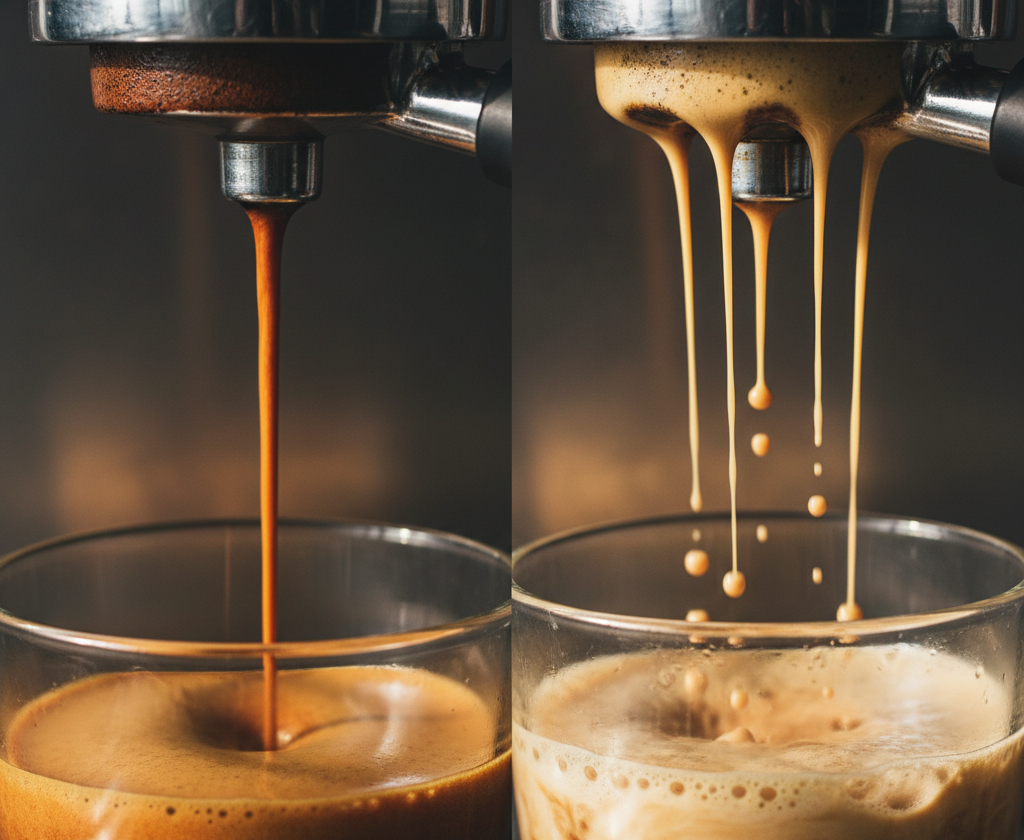
Extraction yield is a single average number — but it conceals whether extraction was even across all particles. Uneven extraction is one of the most common quality problems in home brewing.
In a poorly extracted batch, different particles extract at dramatically different rates:
- Fine particles (fines): Over-extract — contributing bitter, harsh compounds
- Coarse particles (boulders): Under-extract — contributing sour, sharp compounds
- Result: A cup that is simultaneously sour AND bitter — a confusing, muddled flavor that doesn't fit the simple "sour = under-extracted, bitter = over-extracted" framework
The three main causes of uneven extraction:
- Blade grinders: Produce wildly inconsistent particle sizes — the fundamental problem of the blade grinder
- Channeling (espresso): Water finds paths of least resistance through the coffee puck, flowing more through some areas than others — producing simultaneously over-extracted channels and under-extracted zones in the same puck
- Clumping: Ground coffee clumping together before brewing creates dense zones that under-extract and loose zones that over-extract
The solutions are burr grinding (most impactful single change), WDT (Weiss Distribution Tool) for espresso to break up clumps and distribute grounds evenly, careful bloom to saturate all grounds before extraction begins, and consistent pour technique in pour-over to maintain even water distribution.
Extraction by Brewing Method: What's Actually Happening
Espresso — High Pressure, Short Time, Extreme Concentration
Espresso uses 9 bars of pressure to force near-boiling water through very finely ground coffee in 25–30 seconds. The pressure dramatically increases extraction rate — achieving high EY in a fraction of the time required by gravity-fed methods. The result is coffee at 8–12% TDS — 10 times more concentrated than filter coffee. Espresso's thick body and intense flavor come from the pressure-forced extraction of oils and colloids that wouldn't fully extract in gravity brewing.
Pour-Over — Controlled, Sequential Extraction
Water is poured in a controlled stream through a bed of coffee grounds and flows through by gravity. Extraction happens progressively as water contacts grounds — early pour extracts early-stage compounds, later pour continues extraction. The paper filter removes most oils and colloids, producing a clean, clear cup that highlights acid and aromatic compounds.
French Press — Immersion, Unfiltered
Coffee steeps fully submerged in water — immersion brewing. All grounds are in contact with all the water simultaneously, rather than water progressively washing through. This produces more even initial extraction than percolation methods but allows sediment and oils through the metal mesh filter, contributing to French press's characteristic heavy body.
Cold Brew — Time-Based Selective Extraction
Cold water extracts coffee compounds very slowly over 12–24 hours. The low temperature means many temperature-dependent chemical reactions don't occur — particularly the formation of quinic acid and chlorogenic acid lactones that contribute to hot coffee's bitterness and acidity. The result is a naturally sweeter, lower-acid coffee that achieves high EY through time rather than heat.
AeroPress — Pressure-Assisted Immersion
Combines immersion (coffee steeps in water) with pressure (the plunger forces water through the grounds). The pressure provides some espresso-like concentration and body without requiring the extreme grind fineness of true espresso. Highly adjustable — one of the most versatile brewing methods for experimenting with extraction parameters.
How to Apply Extraction Science to Fix Your Coffee
Here's the practical framework for using extraction understanding to solve any brewing problem:
Step 1: Identify the Problem
- Sour, sharp, thin → Under-extracted (EY below 18%)
- Bitter, harsh, drying → Over-extracted (EY above 22%)
- Weak, watery but not sour or bitter → Good EY, low TDS (ratio problem)
- Strong but balanced → Good EY, high TDS (fine if you like it — dilute if not)
- Simultaneously sour AND bitter → Uneven extraction (grinder problem)
Step 2: Choose the Right Adjustment
- Under-extracted → Extract more: Grind finer (most effective), raise water temperature, extend brew time, add agitation
- Over-extracted → Extract less: Grind coarser (most effective), lower water temperature, shorten brew time, reduce agitation
- Good EY, low TDS → Increase concentration: Add more coffee, or reduce water (then add water to taste after brewing)
- Uneven extraction → Improve consistency: Upgrade to a burr grinder, improve distribution before brewing, ensure bloom is complete before main pour
Step 3: Change One Variable at a Time
This is non-negotiable. If you change grind size AND water temperature AND brew time simultaneously, you can't know which change produced which effect. Change one variable, brew, taste, assess. This is how professionals dial in — methodically, not chaotically.
Frequently Asked Questions
What is coffee extraction?
Coffee extraction is the process by which hot water dissolves soluble compounds from roasted coffee grounds and carries them into the liquid. The flavor of brewed coffee depends entirely on which compounds were extracted and in what proportions. The SCA's ideal extraction yield is 18–22% — meaning 18–22% of the coffee grounds' soluble mass ends up in your cup. Below this range the coffee tastes sour and underdeveloped; above it the coffee tastes bitter and harsh.
What is extraction yield in coffee?
Extraction yield (EY) is the percentage of coffee grounds' soluble mass that dissolved into your brewed coffee. It's calculated as: (TDS% × Beverage Weight) / Coffee Dose. The SCA's optimal range is 18–22%. Below 18% is under-extraction (sour, thin); above 22% is over-extraction (bitter, harsh). EY measures extraction quality — how thoroughly the coffee was extracted — as distinct from TDS, which measures concentration (strength).
What is TDS in coffee?
TDS (Total Dissolved Solids) is the percentage of brewed coffee that is dissolved coffee material rather than water. It measures coffee strength or concentration. Filter coffee typically targets 1.15–1.45% TDS; espresso reaches 8–12% TDS. TDS is measured with a refractometer. TDS and extraction yield are related but distinct — you need both numbers to fully understand whether a coffee was brewed correctly.
Why does grind size affect coffee extraction?
Grind size controls the surface area of coffee exposed to water. Finer grinding creates dramatically more surface area — increasing extraction rate and completeness. Coarser grinding reduces surface area — slowing extraction. A finer grind also slows water flow (in pour-over and espresso), increasing contact time. Together, these two effects make grind size the most powerful single variable in controlling extraction yield.
Why does my coffee taste both sour and bitter?
Simultaneously sour AND bitter coffee is the signature of uneven extraction — where some particles are over-extracted (contributing bitterness) while others are under-extracted (contributing sourness) in the same cup. This is most commonly caused by inconsistent grind particle size — typically from a blade grinder that produces both extremely fine "fines" and coarse "boulders." The fix is upgrading to a burr grinder, which produces much more consistent particle sizes and therefore more even extraction.
What is the ideal extraction yield for coffee?
The SCA's recommended ideal extraction yield for filter coffee is 18–22%. However, coffee scientist Jonathan Gagné and others note these are useful starting points rather than universal laws — a high-quality grinder producing uniform particles can produce excellent coffee slightly above 22%, while poor particle consistency can produce mediocre coffee at the "ideal" 20%. The numbers are a guide; your palate is the final arbiter.
The Bottom Line
Coffee extraction is the fundamental science of brewing — the framework that explains every variable, every adjustment, and every flavor outcome. Hot water dissolves coffee compounds in sequence, acids first and bitter compounds last. The sweet spot — balanced, complex, sweet coffee — lives in the 18–22% extraction yield range. Everything you adjust in brewing changes where on that spectrum your cup lands.
Understanding extraction transforms brewing from a ritual you repeat hoping for the best into a system you control deliberately. When coffee tastes sour, you know to extract more. When it tastes bitter, you know to extract less. When it's balanced but weak, you know to adjust your ratio. When it's simultaneously sour and bitter, you know your grinder needs upgrading.
The variables are grind size, temperature, time, ratio, and water quality — in roughly that order of impact. The diagnostic tool is your palate. And the foundation everything rests on is the quality of what you put in the grinder. Fresh, specialty-grade beans from carefully farmed, high-altitude origins — like Colombian Arabica from Antioquia's volcanic soils — give you a richer range of extractable compounds to work with. Better raw material means a larger, more forgiving target zone — and when you hit it, something genuinely worth the science.
If you'd like to read other articles similar to What Is Coffee Extraction? The Science Behind Every Cup You've Ever Made you can visit the category The Art and Science of Coffee: Guides, Reviews, and Expert Tips.
Does Coffee Affect Cortisol Levels? The Science Behind Caffeine and Your Stress Hormone

Is Coffee Good for Depression Risk? What the Research Actually Shows

Is Coffee Bad for Anxiety? What the Science Actually Shows
The 5 Elements of Coffee Tasting Every Coffee Lover Should Know
What Is Green Coffee? How Raw Beans Differ From Roasted — and What That Means for Your Health
How Is Coffee Decaffeinated? The 4 Methods Explained — Including the One You Should Avoid
What Is Coffee Degassing? Why Fresh Roasted Beans Release CO2 — and Why It Matters
What Is a Coffee Cooperative? How They Help Farmers — and Why They Matter for Your Cup
How Altitude Affects Coffee Flavor: Why High-Grown Coffee Tastes Different
Leave a Reply
Related post