
What Does Coffee Taste Like for the First Time? An Honest, No-Fluff Guide
You've smelled it a thousand times — in kitchens, in cafés, drifting from a colleague's mug. Coffee has one of the most recognizable aromas on the planet. But you've never actually tasted it. Or maybe you tried it once as a kid and hated it, and now you're wondering if you should give it another shot as an adult.
Either way, you want to know what you're actually getting into before you commit to that first sip.
Here's the completely honest answer — including why coffee almost certainly won't taste the way it smells, why your first reaction is completely normal, and how to make that first experience genuinely enjoyable rather than something you grit your teeth through.
Table of contents
- The First Thing You Need to Know: It Won't Taste Like It Smells
- What Does Coffee Actually Taste Like? Breaking It Down
- The Physical Experience: What Coffee Does to Your Body the First Time
- Why Your First Coffee Probably Won't Be Your Best Coffee
- What Different Types of Coffee Taste Like for a First-Timer
- The First-Timer's Flavor Scale: What to Expect Based on What You Order
- How to Make Your First Coffee Experience Better
- Why Some People Love Coffee Immediately — and Others Need Time
- Frequently Asked Questions
- The Bottom Line
The First Thing You Need to Know: It Won't Taste Like It Smells
This surprises almost everyone who tries coffee for the first time. The aroma of freshly brewed coffee is deeply inviting — warm, rich, slightly sweet, complex. Most people who love coffee will tell you the smell is one of their favorite things in the world.
Then you take your first sip and it's... not that. It's more bitter, more intense, more confrontational than the smell suggested. This gap between aroma and taste is real, and it's not you — it's chemistry.
Coffee's aroma is driven by hundreds of volatile organic compounds that evaporate easily and reach your nose before you even lift the cup. These aromatic molecules signal sweetness, complexity, and warmth. But when you actually drink the coffee, your tongue encounters a completely different set of compounds — including chlorogenic acids, quinic acid, and caffeine, all of which register as bitter or sharp on your palate. The compounds that make coffee smell amazing are largely not the same compounds that make it taste the way it does.
☕ Recommended by cocondo.coffee
Cocondo Orgánico — The only certified organic coffee from Antioquia, Colombia
Reserve Your Bag →So: expect a gap. Expect the taste to be more challenging than the smell. That gap closes over time as you develop familiarity with coffee's flavor — but on your first sip, it's almost universal.
What Does Coffee Actually Taste Like? Breaking It Down
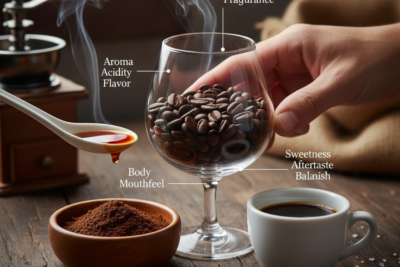
Coffee's flavor is made up of several distinct elements that your brain processes simultaneously. Understanding each one separately makes the experience less confusing.
Bitterness
This is the most dominant flavor most first-time drinkers notice — and it's the one that puts people off. Coffee is genuinely bitter. Bitterness comes primarily from caffeine, tannins, and compounds formed during roasting called chlorogenic acid lactones. It's not a flaw — bitterness is a natural part of coffee's flavor profile, the same way hops make beer bitter and cacao makes dark chocolate bitter.
The key thing to understand is that not all coffee is equally bitter — and some coffee, when done right, is barely bitter at all. Dark roasted commercial coffee (think gas station coffee, most instant coffee, or heavily roasted chain coffees) is intensely bitter. Lightly roasted specialty coffee can be surprisingly sweet and bright with very little bitterness. The first coffee you try will likely determine how "bitter" you think coffee is — which is why your first cup matters more than most people realize.
Acidity
After bitterness, the second thing most first-timers notice is a brightness or slight sharpness — this is acidity. Coffee naturally contains organic acids: citric acid, malic acid, and others that give it a lively, almost fruity quality.
Acidity in coffee is not the same as sourness. Good coffee acidity feels like the refreshing tartness of a ripe apple or a bright citrus — pleasant, clean, and enlivening. Bad acidity (usually from under-extraction or stale beans) feels harsh and sour, like something fermented that went wrong. Most first-timers encounter some acidity and interpret it as sourness — but with better coffee, you'll learn to recognize it as a positive quality.
Sweetness
Here's the one that genuinely surprises people: good coffee has natural sweetness. Coffee beans are seeds inside a fruit — the coffee cherry — and they carry natural sugars. When roasted properly and brewed correctly, those sugars create real sweetness in the cup without anything being added.
You probably won't notice this sweetness on your very first cup, especially if you're drinking dark-roasted or commercial coffee, where the natural sugars have been largely converted by the roasting process. But with a well-made medium or light roast specialty coffee, there's a genuine sweetness — like caramel, brown sugar, or ripe fruit — that requires no sugar added. This revelation is often what turns skeptics into coffee lovers.
Body
Body refers to how coffee feels in your mouth — its weight and texture. A full-bodied coffee feels rich and thick, almost coating your tongue. A light-bodied coffee feels clean and watery, more like tea in texture. This isn't about flavor exactly — it's about mouthfeel. Most beginners are used to dark-roasted coffee with a heavy body. Light roast specialty coffee can feel surprisingly delicate and thin, which can be disorienting the first time.
Aftertaste
The finish — what lingers after you swallow — is often the most memorable part of a first coffee experience. A good coffee has a pleasant aftertaste: a warmth, a soft sweetness, or a gentle chocolate note that fades slowly. A bad coffee has an unpleasant aftertaste: harsh, drying, astringent, or sour. If your first coffee leaves an aftertaste that makes you want to drink water immediately to wash it away, that's a sign of a poorly made or low-quality coffee — not a sign that all coffee tastes that way.
The Physical Experience: What Coffee Does to Your Body the First Time
For first-time drinkers, the flavor is only part of the story. Coffee also triggers physical responses that can be surprising — especially if you have low caffeine tolerance.
The Warmth
The immediate physical sensation of a hot coffee is comforting — warmth spreading through your chest and stomach. This is universal and pleasant for almost everyone, regardless of whether they like the flavor.
The Alertness
Within 30 to 45 minutes of your first cup, if you have low caffeine tolerance, you'll feel caffeine's effects more strongly than a regular coffee drinker would. Increased heart rate, heightened alertness, sharper focus, slightly elevated mood — all normal and typically pleasant in moderate amounts.
The Jitters (Maybe)
If you're particularly sensitive to caffeine or drink a strong coffee on an empty stomach, you may experience jitteriness — a shaky, slightly anxious feeling. This is caffeine's stimulant effect working more strongly than your system is used to. It fades within an hour or two and is harmless. To avoid it on your first try, drink coffee with food and opt for a smaller amount.
The Stomach Response
Coffee stimulates stomach acid production and gut motility. For some first-timers, this means a slightly unsettled stomach or a need to use the bathroom. This is normal and tends to diminish as your body adapts to regular coffee consumption. Drinking coffee with food almost entirely prevents this for most people.
Why Your First Coffee Probably Won't Be Your Best Coffee
Here's something important that no one usually tells first-time coffee drinkers: the coffee you try first is almost certainly not representative of what coffee can actually taste like.
Most people's first cup comes from:
- A drip coffee machine at work or home with old, stale beans
- Instant coffee — the furthest thing from fresh, quality coffee
- A fast-food or gas station coffee — mass-produced, over-roasted, sitting on a warming plate
- A chain café — often dark-roasted to a bitter extreme to mask inconsistencies
All of these experiences give you a reasonable introduction to what commercial coffee tastes like — but they bear little resemblance to what quality specialty coffee tastes like. The difference is as large as the difference between fast food and a proper restaurant meal. Both are food. They don't taste remotely similar.
If your first experience with coffee is negative, the honest question to ask isn't "do I like coffee?" — it's "did I try a good version of coffee?" For most people who tried it once and hated it, the answer is no.
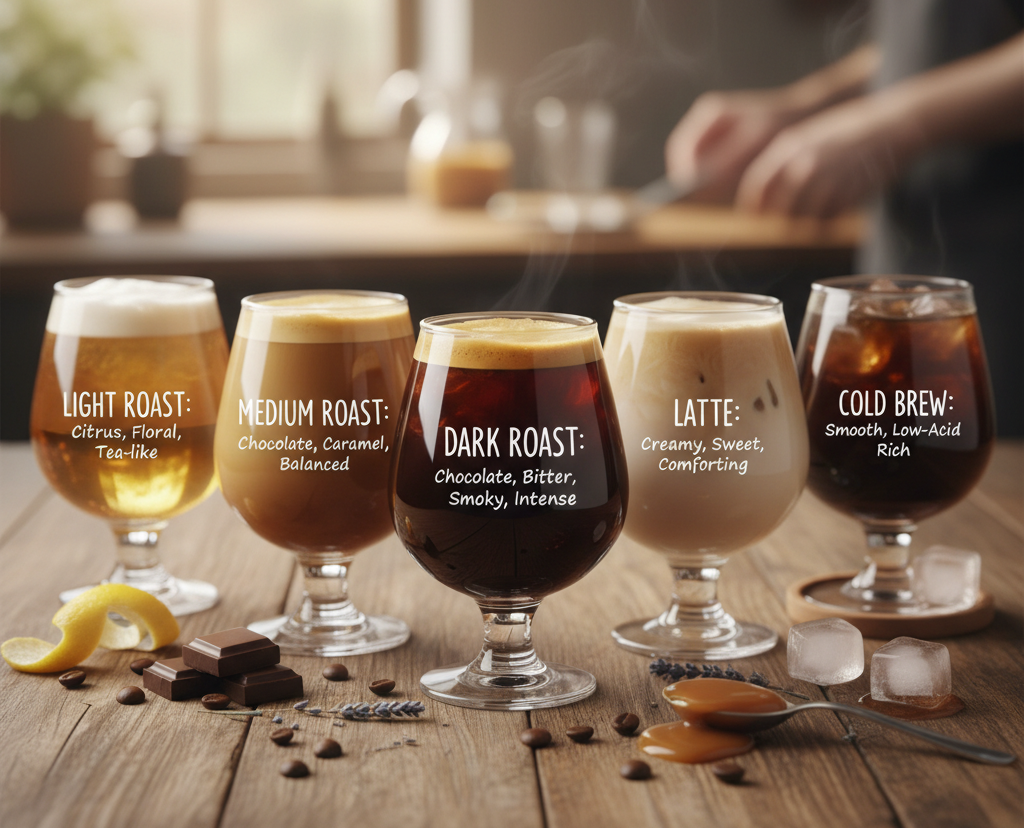
What Different Types of Coffee Taste Like for a First-Timer
The type of coffee you try first dramatically shapes your initial experience. Here's what to expect from each:
Black Drip Coffee (Most Common First Experience)
What it tastes like: The most "coffee-forward" flavor — bitter, slightly acidic, earthy or roasty depending on the beans. No sweetness unless the beans are good quality and freshly roasted. This is what most people think of when they picture "coffee." For a first-timer, black drip coffee is one of the more challenging introductions because there's nothing softening the intensity.
Espresso
What it tastes like: Intensely concentrated — like black coffee but compressed into a small volume. Powerful bitterness, a thick syrupy body, and a layer of crema (the reddish-brown foam on top). Espresso from a good source is rich and complex; espresso from a bad source is harsh and burned. Not recommended as your very first coffee experience — the intensity can be overwhelming before you have any reference point.
Cappuccino or Latte
What it tastes like: The most beginner-friendly introduction to real coffee. Steamed milk softens and sweetens the espresso, creating a creamy, warm drink with coffee flavor in the background. The milk's natural lactose adds sweetness, the foam adds texture, and the overall experience is far gentler than black coffee. If you want to ease into coffee, a latte or flat white is the place to start.
Cold Brew
What it tastes like: Surprisingly smooth and sweet compared to hot coffee. Cold brewing extracts fewer acidic compounds and bitter chlorogenic acid lactones than hot brewing, producing a naturally sweeter, lower-acid cup. Many people who find hot coffee too bitter discover they enjoy cold brew. If bitterness is your main concern, cold brew is worth trying early.
Specialty Pour-Over or Filter Coffee
What it tastes like: This is where coffee gets genuinely surprising. A well-made pour-over from quality, freshly roasted single-origin beans can taste like fruit, flowers, chocolate, citrus, brown sugar — sometimes with very little bitterness at all. If you try a light roast Ethiopian pour-over at a good specialty café, you may be genuinely shocked that it's coffee. This is the experience that converts skeptics.
The First-Timer's Flavor Scale: What to Expect Based on What You Order
Think of it this way — from gentlest to most intense for a coffee beginner:
- Latte or flat white with whole milk — Very gentle, creamy, mildly coffee-flavored. The easiest entry point.
- Cold brew with milk — Smooth, low acid, naturally sweet. Great for people who worry about bitterness.
- Cold brew, black — Smooth and rich without milk. Still low acid and lower bitterness than hot coffee.
- Light roast filter coffee, black — Bright, fruity, sometimes tea-like. Can be surprisingly sweet. Challenging but rewarding.
- Medium roast drip coffee, black — The classic coffee experience. Balanced bitterness and body. A solid benchmark.
- Dark roast coffee, black — Strong, bitter, roasty. The most intense common coffee experience.
- Espresso, straight — Maximum intensity. Best saved until you have some coffee reference points built up.
How to Make Your First Coffee Experience Better
A few practical tips that will dramatically improve your first experience:
- Don't start with black coffee if you're unsure. There's nothing wrong with adding milk — it softens bitterness and acidity significantly, making it much easier to enjoy while you develop your palate. You can always go blacker over time as you build familiarity.
- Avoid instant coffee for your first experience. Instant coffee is heavily processed and gives you the most bitter, least nuanced version of what coffee can be. If your first cup is instant, you're not really tasting coffee at its best.
- Eat something first. Coffee on an empty stomach amplifies bitterness and can cause stomach discomfort. A small meal or snack beforehand makes the experience significantly more pleasant.
- Try a specialty café, not a chain. If you're genuinely curious about what coffee can taste like, find a local specialty coffee shop — the kind with a pour-over bar, single-origin beans, and baristas who know what they're doing. Ask them to recommend something for a first-time drinker. The experience will be different from anything you've imagined.
- Let it cool slightly before your first real sip. At boiling or near-boiling temperatures, your taste buds can't fully detect flavor. Coffee tastes best — and shows its complexity — between about 55°C and 70°C (130°F to 160°F). Waiting two or three minutes before drinking reveals the full flavor profile.
- Try smelling it before you sip. Coffee's aroma activates much of what you'll interpret as "flavor" — the combination of smell and taste is what makes coffee so complex. Taking a slow breath before your first sip primes your sensory system.
Why Some People Love Coffee Immediately — and Others Need Time
Bitterness sensitivity varies significantly between people. Roughly 25% of the population are "supertasters" — people with a higher density of taste buds who experience bitterness much more intensely than average. If you're in this group, your first coffee experience will be noticeably more challenging than it is for the average person, and it may take longer to develop an appreciation for coffee's flavor.
For most people, coffee is an acquired taste — meaning repeated exposure gradually shifts your perception. The bitterness that was overwhelming in week one starts feeling balanced by week four. The complexity you couldn't detect initially becomes something you actively seek. This acquisition process is so reliable that it's one of the most studied examples of flavor preference change in food science research.
The short version: if you don't love coffee on the first try, that's normal and expected. Most people who now drink coffee daily didn't like it immediately. Give it a few more tries with different preparations before forming a conclusion.
Frequently Asked Questions
What does coffee taste like for the first time?
For most first-time drinkers, coffee tastes primarily bitter — often more bitter than expected, especially given how pleasant the aroma is. There's usually a noticeable sharpness or acidity, and the flavor is intense compared to other common drinks. The specific experience depends heavily on what kind of coffee you try: dark roasted commercial coffee is harsh and very bitter; lightly roasted specialty coffee can be surprisingly fruity and sweet. Black coffee is more challenging than milk-based drinks like lattes, which are much gentler introductions.
Why does coffee taste bad the first time?
Coffee tastes challenging on first exposure primarily because bitterness is an unfamiliar and intense flavor that humans are evolutionarily primed to be cautious about. Unlike sweetness (which signals safe energy) or saltiness (which signals electrolytes), bitterness historically signaled potential toxins — so your brain initially resists it. Coffee is also likely to taste bad if the first cup is poor quality, stale, over-roasted, or over-extracted — all of which amplify bitterness beyond coffee's natural baseline. Most people who dislike coffee have mostly experienced low-quality coffee.
Does coffee taste like it smells?
No — and this surprises almost every first-time drinker. Coffee's aroma is rich, complex, and inviting because of hundreds of volatile aromatic compounds that evaporate easily and stimulate your smell receptors. But your taste buds encounter a different set of compounds — primarily bitter and acidic ones — when you actually drink it. The gap between coffee's smell and taste is one of the most famous sensory mismatches in food. Over time, as you become familiar with coffee's flavor, your brain integrates the aroma and taste into a single rewarding experience — which is why coffee lovers find the smell and taste inseparable.
What is the easiest coffee to try for the first time?
A latte or flat white is the gentlest introduction to coffee for most beginners — the steamed milk softens bitterness and adds natural sweetness that makes the coffee flavor approachable. Cold brew with a small amount of milk is another excellent choice for people specifically concerned about bitterness, as cold brew is naturally lower in acidity and bitterness than hot-brewed coffee. Avoid starting with straight espresso or black dark-roast drip coffee, which are the most intense and challenging versions of coffee for someone with no previous exposure.
Will I like coffee if I try it for the first time?
Possibly not immediately — and that's completely normal. Coffee is one of the most widely studied examples of an acquired taste. Most adults who now drink coffee daily didn't like it on their first exposure. The more important question is whether you're trying a good version of coffee (fresh, quality beans, well-prepared) and whether you're giving it more than one attempt. Many people who "don't like coffee" have only experienced low-quality commercial or instant coffee — not what coffee actually tastes like at its best.
The Bottom Line
Your first cup of coffee will probably be more bitter and less sweet than you expected — especially if the aroma has already raised your expectations. That's normal. The flavor gap between what coffee smells like and what it tastes like is real, and almost universal among first-timers.
What's also true: the coffee you try first is unlikely to be the best version of what coffee can offer. Commercial, mass-produced, dark-roasted, or instant coffee gives you the harshest, most bitter expression of the beverage. Specialty coffee — single-origin, freshly roasted, carefully brewed — can taste genuinely surprising: sweet, bright, fruity, complex, and nothing like the harsh dark liquid most people associate with the word "coffee."
If you want to give coffee a real chance, find a good specialty café and ask for a recommendation for a first-time drinker. Try a latte first if you want ease, a light roast pour-over if you want to be surprised. Either way, drink it with food, let it cool slightly, and give it at least two or three attempts before deciding it's not for you.
The world's most widely consumed psychoactive beverage probably deserves at least that much of a fair trial.
If you'd like to read other articles similar to What Does Coffee Taste Like for the First Time? An Honest, No-Fluff Guide you can visit the category The Art and Science of Coffee: Guides, Reviews, and Expert Tips.
Does Coffee Affect Cortisol Levels? The Science Behind Caffeine and Your Stress Hormone

Is Coffee Good for Depression Risk? What the Research Actually Shows

Is Coffee Bad for Anxiety? What the Science Actually Shows
The 5 Elements of Coffee Tasting Every Coffee Lover Should Know
What Is Green Coffee? How Raw Beans Differ From Roasted — and What That Means for Your Health
How Is Coffee Decaffeinated? The 4 Methods Explained — Including the One You Should Avoid
What Is Coffee Degassing? Why Fresh Roasted Beans Release CO2 — and Why It Matters
What Is a Coffee Cooperative? How They Help Farmers — and Why They Matter for Your Cup
How Altitude Affects Coffee Flavor: Why High-Grown Coffee Tastes Different
Leave a Reply
Related post