

How to Read a Coffee Bag Label: What Every Term Actually Means
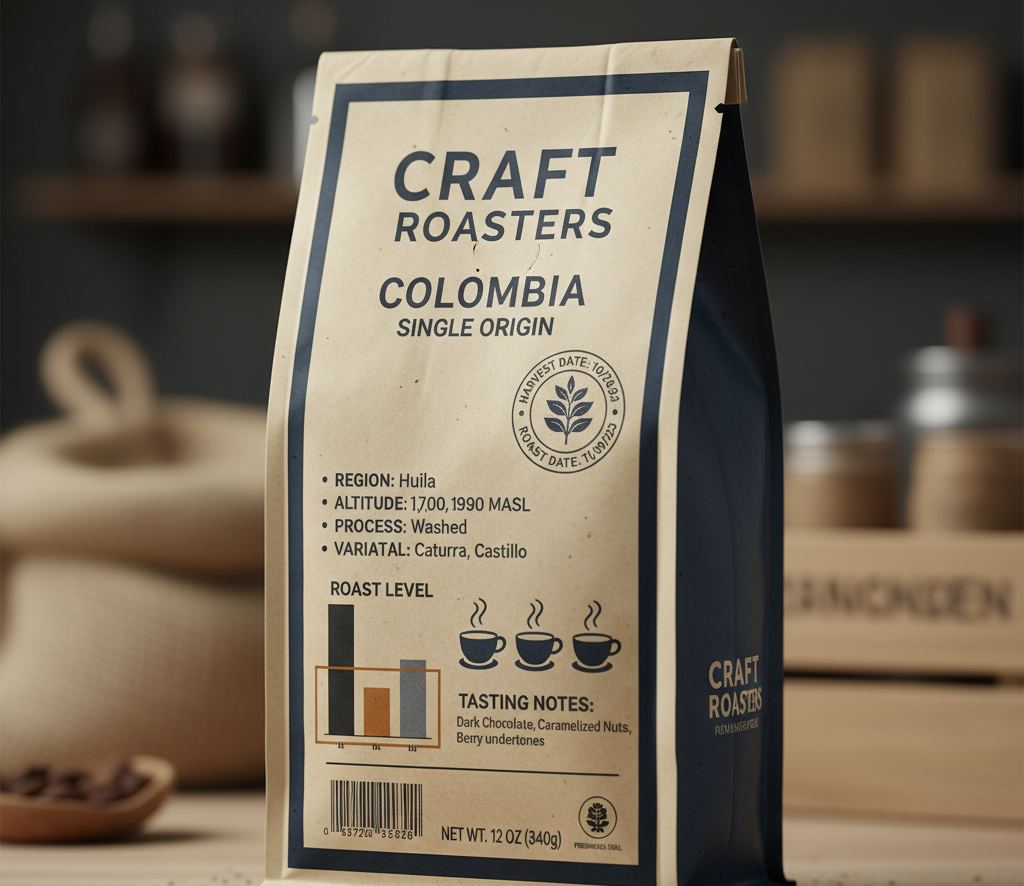
You pick up a bag of specialty coffee and the label reads: "Ethiopia Yirgacheffe. Washed. 2,100 masl. Varietal: Heirloom. Tasting notes: jasmine, bergamot, lemon curd." If you're new to specialty coffee, that might as well be another language. Even if you've been buying coffee for years, you might be guessing at what half of it means.
Here's the thing: every word on a quality coffee bag label is there for a reason. Specialty roasters put that information on the bag because it tells you something real and useful about what's inside — what it will taste like, how fresh it is, how it was grown, and whether it's worth the price. Learning to read it fluently takes about ten minutes and changes how you shop for coffee forever.
This guide walks through every element you'll encounter on a specialty coffee bag label, explains what it means, what it tells you about the coffee, and — crucially — what red flags to watch for.
Table of contents
- The Single Most Important Thing on Any Coffee Label: The Roast Date
- Origin: Country, Region, Farm — Why Specificity Matters
- Roast Level: Light, Medium, Dark — and What They Actually Mean
- Processing Method: The Single Biggest Flavor Variable You Can Control at Purchase
- Altitude (MASL): Why Higher Is Usually Better
- Varietal: The Coffee's Genetic Identity
- Tasting Notes: What They Mean (and What They Don't)
- Certifications: What Each One Actually Guarantees
- Other Label Elements Worth Understanding
- How to Quickly Evaluate a Coffee Bag in 30 Seconds
- Red Flags on a Coffee Bag Label
- Green Flags on a Coffee Bag Label
- Frequently Asked Questions
- The Bottom Line
The Single Most Important Thing on Any Coffee Label: The Roast Date
Before anything else, look for the roast date. Not the best-by date. The roast date.
Here's why this distinction matters so much: coffee is a perishable food. The aromatic compounds, natural oils, and Maillard reaction products that make specialty coffee taste complex and vibrant degrade rapidly after roasting — primarily through oxidation. A coffee roasted six months ago and a coffee roasted two weeks ago are fundamentally different products in terms of flavor, even if the bag looks the same.
Roast date tells you exactly when the beans were roasted. It gives you full control over freshness. Best-by date tells you when the manufacturer considers the product shelf-stable enough to sell — typically set 9 to 18 months after roasting. A bag with a best-by date of February 2027 and no roast date might have been roasted in March 2025. You have no way of knowing.
☕ Recommended by cocondo.coffee
Cocondo Orgánico — The only certified organic coffee from Antioquia, Colombia
Reserve Your Bag →The practical freshness windows, based on roast date:
- Days 1 to 4: Too fresh for most brewing — beans are still actively degassing CO2 and may taste metallic or sharp
- Days 5 to 21: Peak flavor window for most coffees — buy this range whenever possible
- Days 22 to 42: Still good, gradually declining from peak — acceptable for everyday drinking
- Beyond 6 weeks: Noticeable flavor loss — flat, dull, lacking complexity
- 3+ months: Significantly degraded — tastes like generic "coffee" rather than the specific origin it came from
Red flag: No roast date on the label, only a best-by date. This almost always means the coffee was roasted months before you're buying it. Most supermarket coffee falls into this category. Specialty roasters who care about quality display their roast date prominently because they're proud of it. If a roaster hides the roast date, they're hiding something.
Origin: Country, Region, Farm — Why Specificity Matters
Origin information on a coffee label tells you where the beans were grown. The more specific, the better — and specificity is a reliable proxy for quality and traceability.
Country Level
"Colombia," "Ethiopia," "Guatemala" — this is the minimum. It gives you a general flavor profile expectation based on that country's growing conditions, but countries are large and diverse. A Colombian coffee from Huila and one from Nariño can taste dramatically different. Country-level information is better than nothing but less useful than regional detail.
Region Level
"Colombia, Antioquia" or "Ethiopia, Yirgacheffe" — this is much more useful. Regions within coffee-producing countries have distinct microclimates, altitudes, and soil profiles that produce consistent flavor characteristics. Yirgacheffe is known for floral, citrusy, tea-like cups. Antioquia produces coffees with balanced acidity and chocolate-to-fruit profiles depending on altitude and process. Region-level origin lets you predict flavor with reasonable accuracy.
Farm or Producer Level
"Colombia, Antioquia — Finca La Esperanza" or "Ethiopia — Worka Cooperative" — this is the gold standard for traceability. You know exactly whose land grew these beans. This level of specificity typically indicates the roaster has a direct relationship with the producer, which usually means better quality control, fairer pricing to the farmer, and a more interesting story to tell.
Microlot
A microlot is a very small, specific lot of coffee from a single field, harvest date, or processing batch within a farm. Microlots are typically the highest-expression coffees a farm produces — selected for exceptional cup quality. If you see "microlot" on a bag, it's a premium signal. Expect a higher price and a more unique flavor profile.
Single Origin vs. Blend
Single origin coffee comes from one geographic location — typically one country, region, or farm. The flavor reflects that specific place and its unique growing conditions. Single origin coffees are the best way to experience coffee as an agricultural product with regional character. Blends combine beans from multiple origins (and sometimes multiple roast levels) to create a consistent, balanced profile year-round. Blends are not inferior — they serve a different purpose, prioritizing consistency over terroir expression. Espresso blends, for example, are often specifically designed for the forgiving, sweet profile needed for milk-based drinks.
Roast Level: Light, Medium, Dark — and What They Actually Mean
Roast level is one of the most misunderstood labels in coffee. Here's what the terms actually correspond to:
Light Roast
- Appearance: Light to medium brown, no surface oil
- Internal temperature at end of roast: ~196–205°C (385–401°F)
- Flavor profile: High acidity, bright, fruity or floral, complex, lighter body
- Caffeine: Slightly higher per bean weight (more caffeine survives lighter roasting)
- Antioxidants: Higher chlorogenic acid content (less degraded by heat)
- Best for: Pour-over, filter, Aeropress — methods that highlight nuance and clarity
Medium Roast
- Appearance: Medium brown, minimal surface oil
- Internal temperature: ~210–220°C (410–428°F)
- Flavor profile: Balanced acidity and body, caramel sweetness, chocolate notes, more rounded
- Best for: Versatile — works well for pour-over, drip, and espresso
Dark Roast
- Appearance: Dark brown to nearly black, oily surface
- Internal temperature: ~225–240°C (437–464°F)
- Flavor profile: Low acidity, heavy body, smoky, bitter-chocolate, roasty flavors dominate over origin character
- Antioxidants: Lower chlorogenic acids but higher melanoidins and phenylindanes
- Best for: Espresso, French press, moka pot — methods that work with bold, heavy-bodied profiles
Important nuance: In specialty coffee, the trend has been toward lighter roasts because they better express the coffee's origin character. A well-grown Ethiopian natural at light roast will taste like blueberry, jasmine, and dark chocolate in ways that a dark roast of the same bean simply won't — because the roasting process overrides those delicate origin flavors with roasty, bitter notes. If a bag only says "dark roast" with no origin detail, the darkness may be obscuring mediocre beans. If a bag says "light roast" with specific origin and farm information, the roaster is confident enough in the bean quality to let it speak for itself.
Processing Method: The Single Biggest Flavor Variable You Can Control at Purchase
After origin, the processing method is the most important flavor predictor on a coffee label. Processing refers to how the coffee cherry is transformed from a ripe fruit on the tree into the dry, green bean that gets roasted. Different methods produce dramatically different flavor profiles from the same origin.
Washed (Wet Process)
The fruit skin and pulp are removed from the coffee bean before drying. The beans are fermented in water to remove the remaining mucilage (sticky fruit layer), then washed clean and dried. Flavor result: Clean, bright, high-clarity cups. The coffee's origin character — terroir, altitude, varietal — comes through most clearly because the fruit doesn't interfere. Washed coffees often have citrus, floral, and tea-like notes. Acidity tends to be pronounced and precise. Most Colombian and Kenyan specialty coffees are washed.
Natural (Dry Process)
The whole coffee cherry is dried in the sun with the fruit still intact around the bean — sometimes for weeks. During drying, sugars from the fruit ferment and migrate into the bean. Flavor result: Sweet, heavy-bodied, intensely fruity — often with blueberry, strawberry jam, wine, or tropical fruit notes. Higher sweetness and body than washed coffees. Lower clarity. Natural processing is common in Ethiopia and Brazil, and is increasingly used for specialty lots worldwide. Natural coffees are more unpredictable — when done well, they're extraordinary; when done poorly, they can taste fermented or off.
Honey Process
A middle ground. The fruit skin is removed but some or all of the mucilage is left on the bean during drying. The amount of mucilage left determines the "honey" level: yellow honey (least), red honey, black honey (most). Flavor result: Balanced sweetness and acidity, syrupy body, stone fruit or caramel notes. More complexity than washed, more clarity than natural. Common in Costa Rica and increasingly popular globally. If you like the brightness of washed but want more sweetness, honey process is your entry point.
Anaerobic / Experimental Processes
Newer processing methods where coffee cherries or beans ferment in sealed, oxygen-free tanks before or during drying. These methods produce unusual, highly distinctive flavor profiles — often tropical fruit, kombucha-like, or intensely boozy notes. Anaerobic coffees are polarizing: specialty enthusiasts often love their uniqueness; others find them overwhelming. If you see "anaerobic," "carbonic maceration," or "extended fermentation" on a label, expect something unusual.
Altitude (MASL): Why Higher Is Usually Better
MASL stands for Meters Above Sea Level — the elevation at which the coffee was grown. It's one of the most reliable quality indicators on a label.
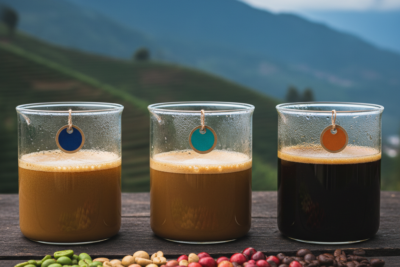
Why does altitude matter? At higher elevations, temperatures are cooler. Coffee cherries develop more slowly, spending more time on the tree before ripening. This extended development allows the bean to accumulate more sugars, more complex acids, and a denser cellular structure — all of which translate to a more nuanced, complex flavor in the cup. High-altitude coffee also tends to have higher antioxidant content, as the plant produces more protective polyphenols in response to the stresses of higher elevation growing.
General altitude quality guide:
- Below 1,200 masl: Lower elevation, faster development, simpler flavor profile — typical of commercial-grade coffee
- 1,200 to 1,500 masl: Good quality range — decent complexity and balance
- 1,500 to 1,800 masl: Specialty range — more complexity, better acidity, more pronounced origin character
- Above 1,800 masl: High-altitude specialty — exceptional complexity and clarity, often the best lots from regions like Colombia, Ethiopia, and Guatemala
- Above 2,000 masl: Very high altitude — found in parts of Ethiopia, Colombia, and Yemen — exceptional when available
Colombia's Antioquia region, for example, produces coffee at 1,500 to 2,100 masl depending on the specific farm. Titiribí and surrounding areas in Antioquia — where some of the region's finest organic specialty farms operate — fall in the 1,400 to 1,800 masl range, firmly in the specialty quality zone.
Varietal: The Coffee's Genetic Identity
Coffee varietal refers to the specific cultivar or genetic variety of the Coffea arabica plant. Just as wine grapes have Cabernet Sauvignon and Pinot Noir, coffee has dozens of recognized varieties, each with distinct flavor tendencies.
Common varietals you'll see on labels:
- Bourbon: One of the oldest Arabica varieties. Sweet, balanced, with notes of chocolate and caramel. Moderate acidity. Common in Colombia and Rwanda.
- Caturra: A natural mutation of Bourbon, compact and productive. Bright acidity, clean cup, good sweetness. Very common in Colombia.
- Castillo: A hybrid developed by Colombia's Cenicafé research center for disease resistance. Clean, balanced, versatile. Widely grown in Colombia.
- Tabi: A newer Colombian hybrid with excellent cup quality — often described as having Bourbon-like sweetness with added complexity.
- Typica: One of the original Arabica varieties. Complex, sweet, low acidity. Lower yielding than modern varieties but often exceptional quality.
- Gesha/Geisha: Originally from Ethiopia's Gori Gesha forest. Produces intensely floral, tea-like, jasmine-forward cups. Among the most prized (and expensive) specialty varietals.
- SL-28 / SL-34: Kenyan varieties known for their distinctive blackcurrant and citrus acidity. Found almost exclusively in Kenya.
- Heirloom: Used for Ethiopian coffees where the exact variety is unknown or a mix of native cultivars — Ethiopia has hundreds of wild and indigenous varieties that haven't been formally catalogued.
For everyday buying, varietal information helps you understand what flavor tendencies to expect. If you love chocolate-forward coffees, look for Bourbon or Caturra. If you want something unique and floral, seek out Gesha.
Tasting Notes: What They Mean (and What They Don't)
This is the element most often misunderstood by new specialty coffee buyers. Tasting notes on a coffee bag — "blueberry," "jasmine," "dark chocolate," "brown sugar" — are not ingredients. Nothing has been added to the coffee.
Tasting notes describe naturally occurring flavor compounds in the coffee itself — aromatic esters, aldehydes, and other volatile molecules that your palate and nose recognize as similar to other flavors you know. An Ethiopian natural that says "blueberry" contains compounds that taste like blueberry to trained tasters; the blueberry character developed during the fermentation of the coffee cherry's fruit sugars. No blueberry was added.
This is a fundamentally different category from flavored coffee — a separate product where artificial or natural flavor extracts (vanilla, hazelnut, caramel) are applied to roasted beans after roasting. Specialty roasters don't typically produce flavored coffee; it's considered a mass-market product that obscures rather than expresses the bean's natural character.
How to use tasting notes: Think of them as directional rather than literal. "Citrus, jasmine, bergamot" tells you the cup will be bright, floral, and acidic. "Dark chocolate, caramel, hazelnut" tells you it will be sweet, rich, and low-acid. Use tasting notes to navigate toward coffees that match your preference profile, not as a promise of exactly what you'll taste — tasting is subjective, and your palate may perceive those notes differently than the cupper who wrote them.
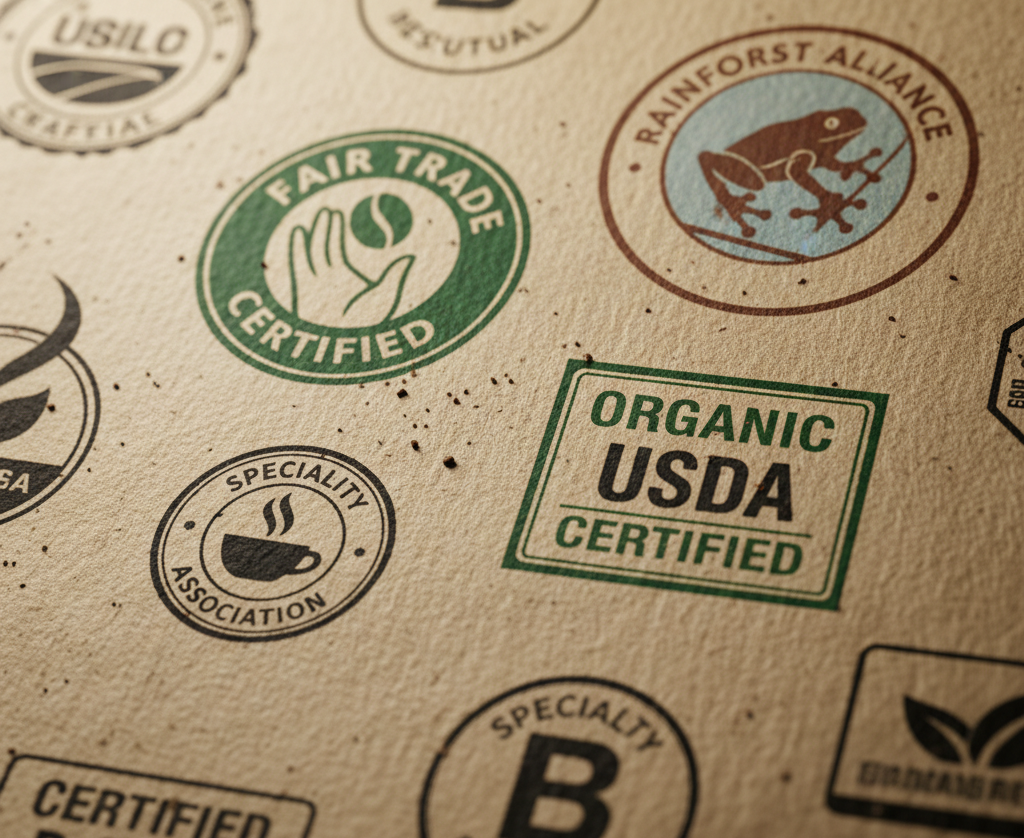
Certifications: What Each One Actually Guarantees
Certifications on coffee bags range from highly meaningful to largely marketing. Here's what the major ones actually require:
USDA Organic / Canada Organic (COR)
Rigorous and legally enforced. Requires no synthetic pesticides, herbicides, or fertilizers for at least three years before certification. Annual third-party inspections. The 2024 Strengthening Organic Enforcement Rule (US) added mandatory import certificates and traceability for all organic coffee entering the US, significantly reducing fraud. Meaningfulness: Very high.
Rainforest Alliance
Focuses on environmental sustainability, biodiversity protection, and worker rights. Requires farms to meet standards on ecosystem protection, worker welfare, and responsible farming practices. Uses a tiered certification with bronze, silver, and gold levels. Does not require organic growing practices but prohibits many harmful pesticides. Meaningfulness: High for environmental and social standards.
Ecocert
A French organic certification body with international recognition. Requires organic farming practices similar to USDA Organic. Respected in European markets and increasingly recognized globally. Meaningfulness: High — rigorous organic standards.
Fair Trade
Focuses on ensuring minimum prices to farmers and community development premiums. Does not require organic growing practices. Meaningful for farmer economics but does not directly indicate cup quality or growing practices. Meaningfulness: High for farmer welfare, not directly for cup quality.
Direct Trade
Not a certification — a sourcing philosophy. Means the roaster buys directly from the farmer, bypassing importers and exporters. Typically implies higher prices paid to farmers, closer relationships, and better traceability. No third-party verification. Quality and ethics of "direct trade" vary by roaster. Meaningfulness: High when the roaster is transparent about the relationship — check their website for sourcing stories.
Bird-Friendly (Smithsonian)
Requires both organic certification AND shade-grown cultivation under a canopy that meets specific biodiversity standards. The most rigorous environmental certification for coffee. Rare but highly meaningful — both for ecosystem impact and often for cup quality (shade-grown coffees develop more slowly and tend to have better flavor complexity). Meaningfulness: Very high for environmental impact.
Other Label Elements Worth Understanding
Whole Bean vs. Ground
Always choose whole bean if you have a grinder. Whole beans maintain freshness dramatically longer than pre-ground coffee — ground coffee begins losing aromatic compounds within minutes of grinding. Pre-ground coffee trades convenience for quality in a way that's hard to justify once you understand the chemistry involved.
One-Way CO2 Valve
The small circular vent on quality coffee bags. Allows CO2 (which freshly roasted beans continue releasing for days) to escape without letting oxygen in. Its presence indicates a roaster who cares about freshness and has invested in proper packaging. Its absence is a minor red flag for specialty coffee.
Grind Recommendation
Some bags suggest a grind setting or brewing method. This can be helpful for beginners but shouldn't constrain you — the right grind is the one that produces the best extraction for your specific setup.
Lot Number or Harvest Year
High-end specialty coffees sometimes include a lot number or harvest year. This level of traceability indicates the roaster tracks each batch from source to sale — a strong quality signal.
How to Quickly Evaluate a Coffee Bag in 30 Seconds
When you're standing in a shop or browsing online, here's the rapid evaluation process:
- Find the roast date. If there's no roast date, only a best-by date, that's your first and biggest signal. Move on or accept you're buying unknown-age coffee.
- Check the roast date range. Ideally within 5 to 21 days of today. Up to 4 to 6 weeks is acceptable. More than 6 weeks and you're past peak quality.
- Look at origin specificity. Country + region minimum. Farm name is better. No origin information at all is a red flag for specialty quality.
- Check the processing method. Washed = clean and bright. Natural = fruity and sweet. Honey = balanced. Use this to match to your flavor preference.
- Look at altitude. Above 1,500 masl is specialty range. Above 1,800 masl is excellent.
- Read the tasting notes directionally. Citrus/floral = bright and acidic. Chocolate/caramel = sweet and low-acid. Use as a flavor guide, not a guarantee.
Red Flags on a Coffee Bag Label
- 🚩 No roast date — only a best-by date set months in the future
- 🚩 Country-only origin with no regional or farm information on a "specialty" bag
- 🚩 Vague flavor descriptors like "rich" or "smooth" with no specific tasting notes
- 🚩 No processing method listed on a bag claiming specialty quality
- 🚩 No altitude information when origin specificity is otherwise high
- 🚩 "Premium," "artisan," or "gourmet" without any verifiable information to back those claims
- 🚩 Pre-ground coffee in a large bag without a roast date — stale by the time you open it
Green Flags on a Coffee Bag Label
- ✅ Roast date clearly printed — within the past 2 to 3 weeks
- ✅ Farm or producer name — full traceability
- ✅ Specific region and altitude — shows quality sourcing
- ✅ Processing method named — washed, natural, or honey
- ✅ Varietal listed — shows the roaster knows and cares about the genetics
- ✅ One-way CO2 valve on the bag — proper freshness packaging
- ✅ Organic or Rainforest Alliance certification — verified growing standards
- ✅ Specific tasting notes that correspond to the origin and process
Frequently Asked Questions
What do the numbers on coffee bags mean?
Numbers on coffee bags most commonly refer to: the roast date (when the coffee was roasted), altitude in MASL (meters above sea level — higher is generally better quality), lot number (a batch identifier for traceability), or score (specialty coffees are graded on a 100-point SCA scale — 80+ is specialty grade, 85+ is excellent, 90+ is exceptional). If you see a number without context, look for a unit or label nearby.
What does "masl" mean on a coffee bag?
MASL stands for Meters Above Sea Level — the altitude at which the coffee was grown. Higher altitude means cooler temperatures, slower cherry development, and typically more complex, nuanced flavor. Specialty coffee generally comes from above 1,200 masl, with the best lots often from 1,500 to 2,100 masl.
Are tasting notes on coffee bags real?
Yes — but not in the way most people assume. Tasting notes on specialty coffee bags describe naturally occurring flavor compounds in the beans themselves, not added ingredients. "Blueberry" means the coffee contains compounds your palate recognizes as blueberry-like. Nothing has been added to the coffee. Tasting notes are developed by professional cuppers and Q Graders using the SCA Flavor Wheel as a reference. They're directional — your palate may perceive them differently.
What is the difference between roast date and best by date on coffee?
Roast date is when the coffee was roasted — it tells you exactly how fresh the coffee is. Best-by date is a manufacturer's shelf-life estimate, typically set 9 to 18 months after roasting — it tells you when the coffee is no longer considered safe to sell, not when it tastes best. Coffee is typically at peak flavor within 5 to 21 days of roasting. A bag showing only a best-by date with no roast date could contain coffee roasted months ago.
What does "washed" mean on a coffee bag?
Washed (also called wet process) means the coffee cherry's fruit skin and pulp were removed before the beans were dried. This produces clean, bright, high-clarity cups where the coffee's origin character — terroir, altitude, and varietal — comes through clearly without the influence of fruit fermentation. Washed coffees typically have pronounced acidity and clarity compared to natural or honey process coffees.
The Bottom Line
A specialty coffee bag label is a concentrated summary of everything that happened between a seed in the ground and the beans in your hand. Roast date tells you freshness. Origin tells you terroir. Process tells you flavor direction. Altitude tells you quality level. Certifications tell you farming practices. Tasting notes give you a flavor preview.
Once you can read these labels fluently, you stop buying coffee by brand recognition or package design and start buying by information. You can stand in a specialty shop, scan a label in 30 seconds, and know whether the coffee is worth the price before you open the bag.
The best labels tell a complete story: a specific farm you can look up, a roast date that proves freshness, an altitude that signals quality, a process that explains the flavor direction, and certifications that verify the growing practices. When all of those elements are present and honest — as they are on the best specialty coffees from high-altitude, organically farmed origins — the label is an invitation to understand exactly what you're about to drink.
If you'd like to read other articles similar to How to Read a Coffee Bag Label: What Every Term Actually Means you can visit the category The Art and Science of Coffee: Guides, Reviews, and Expert Tips.
Does Coffee Affect Cortisol Levels? The Science Behind Caffeine and Your Stress Hormone

Is Coffee Good for Depression Risk? What the Research Actually Shows

Is Coffee Bad for Anxiety? What the Science Actually Shows
The 5 Elements of Coffee Tasting Every Coffee Lover Should Know
What Is Green Coffee? How Raw Beans Differ From Roasted — and What That Means for Your Health
How Is Coffee Decaffeinated? The 4 Methods Explained — Including the One You Should Avoid
What Is Coffee Degassing? Why Fresh Roasted Beans Release CO2 — and Why It Matters
What Is a Coffee Cooperative? How They Help Farmers — and Why They Matter for Your Cup
How Altitude Affects Coffee Flavor: Why High-Grown Coffee Tastes Different
Leave a Reply
Related post