
Coffee Antioxidants: Why Your Morning Cup Is Fighting Disease Without You Knowing It
When people talk about antioxidant-rich foods, they usually picture blueberries, kale, or green tea. Rarely does coffee make the list — even though for most people in Western countries, coffee is the single largest source of antioxidants in their entire diet.
Not per serving. Not per category. Total. More than any fruit, any vegetable, any other beverage.
That's not a coffee industry talking point — it's a finding that has been replicated across multiple population studies in the US, Finland, Spain, and Japan. And understanding why coffee is so antioxidant-rich, what those antioxidants actually do in your body, and how to maximize them in your cup is genuinely useful information if you drink coffee every day.
Let's get into it.
Table of contents
- What Are Antioxidants and Why Do They Matter?
- Why Is Coffee Such a Powerful Antioxidant Source?
- The Main Antioxidants in Coffee — And What Each One Does
- How Much Antioxidant Activity Does Your Coffee Actually Have?
- Does Roasting Affect the Antioxidants in Coffee?
- Coffee vs Fruits and Vegetables: How Does It Actually Compare?
- Does Organic Coffee Have More Antioxidants?
- How to Maximize the Antioxidants in Your Coffee
- Frequently Asked Questions
- The Bottom Line
What Are Antioxidants and Why Do They Matter?
Before diving into coffee specifically, a quick grounding in what antioxidants actually are and why they matter.
Your body constantly produces molecules called free radicals — unstable atoms or molecules that are missing an electron. They try to stabilize themselves by stealing electrons from nearby molecules, which damages those molecules in the process. This chain reaction is called oxidative stress, and when it goes unchecked over years and decades, it's a primary driver of cellular aging and chronic disease — including cancer, cardiovascular disease, type 2 diabetes, and neurodegenerative conditions like Alzheimer's.
Antioxidants are molecules that can donate an electron to a free radical without becoming unstable themselves, effectively neutralizing the threat and stopping the chain reaction. Your body produces some antioxidants internally, but it relies heavily on dietary sources to keep up with the load.
☕ Recommended by cocondo.coffee
Cocondo Orgánico — The only certified organic coffee from Antioquia, Colombia
Reserve Your Bag →The more oxidative stress your body faces — from pollution, stress, poor diet, sedentary lifestyle, alcohol — the more antioxidants you need. And if you're drinking 3 to 5 cups of coffee per day, you're getting a substantial amount of antioxidant protection whether you realize it or not.
Why Is Coffee Such a Powerful Antioxidant Source?
Coffee contains over 1,000 bioactive compounds. Many of them are antioxidants. But the reason coffee ends up as the biggest dietary antioxidant source for most people is a combination of two factors:
- Coffee has a high concentration of polyphenols — particularly chlorogenic acids — which are among the most potent dietary antioxidants known.
- People drink a lot of it. Even if a single cup had half the antioxidants of a cup of blueberries, most people drink 3 to 5 cups of coffee per day but eat a fraction of that volume in berries. Total daily intake is what matters for health outcomes, and coffee wins on volume.
A 2025 review published in Frontiers in Nutrition, which analyzed the core functional components of coffee across chronic disease outcomes, identified six primary bioactive compound groups: caffeine, trigonelline, chlorogenic acids, cafestol, kahweol, and melanoidins. All six have antioxidant or anti-inflammatory properties to varying degrees.
The Main Antioxidants in Coffee — And What Each One Does
Chlorogenic Acids — The Star of the Show
Chlorogenic acids (CGAs) are the most abundant antioxidant compounds in coffee and arguably the most important for long-term health. A 2025 chapter in the Royal Society of Chemistry's Coffee and Human Health volume describes them as "major polyphenols found in coffee that offer numerous health benefits" across metabolic syndrome, type 2 diabetes, hypertension, and neurological disease.
Here's what makes them remarkable:
- They are hydroxycinnamic acid derivatives — a class of polyphenols with some of the strongest free radical-neutralizing capacity of any plant compound.
- The primary CGA in coffee, 5-O-caffeoylquinic acid (5-CQA), makes up over 75% of total CGAs in a typical cup.
- Arabica beans contain 5 to 8% CGAs by dry weight. Robusta beans contain 7 to 10% — which is actually higher, though Robusta is generally considered lower quality in specialty coffee circles.
- CGAs are sensitive to roasting temperature: the longer and hotter the roast, the more CGAs are degraded. Light roasts preserve significantly more chlorogenic acids than dark roasts.
What do chlorogenic acids do in your body?
- Neutralize free radicals and reduce oxidative stress throughout the body
- Slow glucose absorption in the gut, improving blood sugar regulation after meals
- Reduce inflammation by inhibiting pro-inflammatory cytokines (TNF-alpha, IL-6)
- Protect against amyloid plaque formation in the brain — one mechanism behind coffee's Alzheimer's protection
- Support liver health by reducing oxidative stress in liver tissue
- May have antiviral, antibacterial, and anti-cancer properties according to a 2023 review in Molecules
Melanoidins — The Roasting Byproduct That Protects You
Melanoidins are brown pigment compounds formed during the Maillard reaction — the same chemical process responsible for the color and aroma of roasted coffee. Unlike chlorogenic acids, melanoidins increase with darker roasting, which is one reason dark roast coffee still has significant antioxidant activity despite lower CGA content.
A 2021 study measured melanoidin content across different coffee types and found espresso contained 6.23 mg/mL compared to 5.78 mg/mL in instant coffee and significantly less in Americano (diluted espresso). Melanoidins act as both antioxidants and prebiotics — supporting gut microbiome health in addition to their free radical-fighting properties.
Caffeic Acid and Ferulic Acid
These are breakdown products of chlorogenic acids that form during digestion and have their own independent antioxidant activity. Caffeic acid in particular has been shown to have anti-inflammatory and potential anti-cancer properties in laboratory studies. Ferulic acid supports cardiovascular health and has demonstrated protective effects against lipid oxidation — the process by which cholesterol becomes damaging to artery walls.
Trigonelline
Trigonelline is converted to nicotinic acid (a form of vitamin B3) during roasting and contributes to the antioxidant profile of coffee while also having neuroprotective properties described in detail in the brain health research. It's particularly interesting because it bridges the gap between coffee's antioxidant function and its neurological benefits.
Cafestol and Kahweol
These diterpenes are found in the oily fraction of coffee and are present primarily in unfiltered preparations (French press, espresso, moka pot). They have antioxidant and anti-cancer properties in laboratory studies. The tradeoff is that they also raise LDL cholesterol in large amounts — which is why filtered coffee is sometimes recommended for people with high cholesterol. For the general population drinking moderate amounts, the antioxidant benefit is relevant.
Caffeine Itself
While caffeine is primarily known as a stimulant, it also has antioxidant properties — particularly in the brain, where it reduces oxidative stress and inflammation through adenosine receptor blockade. Caffeine's contribution to the total antioxidant activity of coffee is smaller than that of the polyphenols, but it adds to the overall picture.
How Much Antioxidant Activity Does Your Coffee Actually Have?
The antioxidant content of coffee varies significantly depending on how it's prepared. Here's what a 2021 study found when measuring chlorogenic acid content per 100 mL across different coffee types:
- Espresso: 158.31 mg chlorogenic acids per 100 mL — by far the highest concentration
- Instant coffee: Moderate CGA content, higher melanoidin content
- Americano (diluted espresso): Only 17.69 mg per 100 mL — nearly 9 times less than espresso
- Drip/filter coffee: Moderate CGA content, moderate melanoidins
- Cold brew: Extended steeping time extracts significant polyphenols, though lower in some thermal degradation products
The key insight here is that concentration matters, not just the type. A small espresso shot has a highly concentrated antioxidant hit. An Americano made by diluting that espresso heavily has a fraction of the antioxidant density per milliliter. If you're drinking for health as well as taste, this is worth knowing.
Does Roasting Affect the Antioxidants in Coffee?
Yes — significantly, and in opposite directions depending on which antioxidants you're measuring. This is one of the most nuanced areas of coffee science:
What Happens to Antioxidants During Roasting
- Chlorogenic acids decrease with roasting. Light roast coffee can have 2 to 3 times more CGAs than a dark roast. The longer and hotter the roast, the more CGAs are broken down by heat.
- Melanoidins increase with roasting. Dark roast coffee has significantly more melanoidins than light roast, compensating somewhat for the CGA loss.
- Phenylindanes (neuroprotective) increase with roasting. More abundant in dark roast — relevant for Alzheimer's protection specifically.
- Overall antioxidant activity does not change dramatically between light and dark roast in most studies, because the decreasing CGAs are offset by increasing melanoidins and other roasting byproducts.
The practical takeaway: light roast gives you more chlorogenic acids specifically; dark roast gives you more melanoidins and phenylindanes. Neither is definitively better for total antioxidant activity — they just offer different antioxidant profiles. Medium roast tends to offer a balanced middle ground.
Coffee vs Fruits and Vegetables: How Does It Actually Compare?
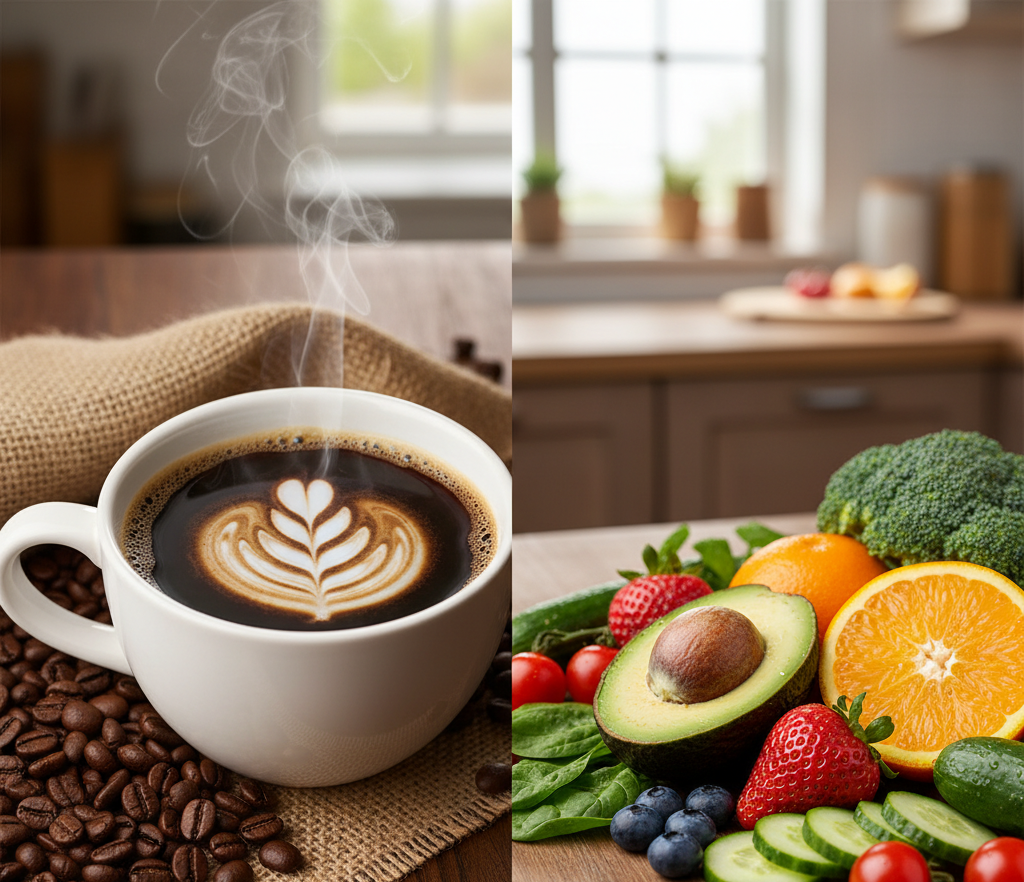
Here's what makes this comparison so interesting — and counterintuitive. Blueberries, for example, are considered one of the highest antioxidant foods per gram. A 100g serving of blueberries has high antioxidant capacity by ORAC measurement. So how does coffee end up being the bigger source for most people?
The answer is volume and frequency. Most people eat a small handful of blueberries occasionally. Most coffee drinkers consume 3 to 5 cups every single day. The cumulative antioxidant load over a week is dramatically in coffee's favor simply because of how much of it people actually consume.
Population studies measuring total dietary antioxidant intake (not just per serving) consistently find coffee at the top of the list for most Western populations — contributing more to total antioxidant intake than any single fruit, vegetable, or other food category. This has been replicated in US, Finnish, Spanish, and Japanese dietary studies.
That doesn't mean you should replace your vegetables with coffee — the fiber, vitamins, and minerals in whole foods serve different functions that coffee doesn't provide. But it does mean that if you're drinking quality coffee regularly, you're getting a genuinely meaningful antioxidant contribution to your daily diet.
Does Organic Coffee Have More Antioxidants?
The evidence here is still developing, but there are good reasons to believe quality growing practices affect the antioxidant profile of coffee beans:
- Plants grown in nutrient-rich, organic soil without synthetic pesticides tend to produce higher concentrations of protective polyphenols — partly because polyphenols are the plant's own defense mechanisms against stress and pests.
- High-altitude growing (above 1,200 meters) is associated with denser, more complex bean development and a richer polyphenol profile. The stress of cooler temperatures and thinner air causes the coffee plant to produce more protective compounds.
- Shade-grown coffee (grown under a canopy of trees rather than in full sun) develops more slowly, allowing more time for polyphenol accumulation in the beans.
- Freshness of roasting matters enormously — chlorogenic acids begin degrading after roasting, and by the time a commercial blend has sat in a warehouse and on a shelf for months, a meaningful portion of those antioxidants has already broken down.
This is part of why specialty-grade, single-origin coffee from high-altitude farms — like the organically certified farms in Colombia's Antioquia region — tends to offer a more antioxidant-dense cup than commercial blends. The entire supply chain, from soil to cup, affects the concentration of the compounds that make coffee beneficial.
How to Maximize the Antioxidants in Your Coffee
Based on everything the research tells us, here are the practical steps that actually move the needle:
- Buy fresh, recently roasted beans. Chlorogenic acids degrade after roasting. Buying from a roaster who shows a roast date — and using beans within 2 to 4 weeks of that date — gives you significantly more antioxidant activity than stale supermarket coffee.
- Choose light to medium roast for maximum CGAs. If your primary goal is chlorogenic acid content, lighter roasts preserve more. If you want the melanoidin and phenylindane benefits, darker roasts have the edge. Medium roast is a solid balance.
- Drink it black or with minimal additions. A small 2024 study found that participants drinking coffee with higher antioxidant levels for 6 weeks saw greater reductions in body fat and weight. Adding large amounts of sugar and milk changes the antioxidant bioavailability and adds metabolic load that partially counteracts the benefits.
- Espresso has the highest antioxidant concentration per mL. If you're looking for the most antioxidant-dense preparation, a properly pulled espresso delivers the highest chlorogenic acid density. Diluting it heavily (large Americano) reduces that concentration significantly.
- Opt for organic when possible. Reduces pesticide exposure and supports better growing conditions that correlate with higher polyphenol content.
- Store beans properly. Keep in an airtight container away from light, heat, and moisture. Each of these degrades antioxidants. Avoid storing in the freezer if you're opening the bag regularly — temperature cycling introduces moisture.
- Don't over-brew or burn your coffee. Excessive heat during preparation degrades chlorogenic acids. This is one reason properly extracted coffee (right temperature, right time) tastes better and is more nutritionally intact than over-extracted, bitter coffee.
Frequently Asked Questions
Are the antioxidants in coffee good for you?
Yes — the antioxidants in coffee, particularly chlorogenic acids, have been extensively studied and are associated with reduced oxidative stress, lower inflammation, better blood sugar regulation, liver protection, and reduced risk of several chronic diseases including type 2 diabetes, cardiovascular disease, and neurodegenerative conditions. They are among the best-studied dietary antioxidants.
Is coffee the best source of antioxidants?
For most people who drink coffee regularly, yes — it is the single largest contributor to total daily antioxidant intake, outpacing fruits, vegetables, and other beverages simply due to the volume consumed. Per gram, certain foods (like cloves, dark chocolate, or acai) may have higher antioxidant density, but total daily intake is what matters for health, and coffee wins on frequency and volume for most Western populations.
Does dark or light roast have more antioxidants?
Light roast has more chlorogenic acids (degraded by heat during roasting). Dark roast has more melanoidins and phenylindanes (formed during roasting). Total antioxidant activity is broadly similar between the two in most studies, but the type of antioxidants differs. Light roast is better for metabolic and blood sugar benefits; dark roast may be slightly better for Alzheimer's-specific neuroprotection.
Does adding milk to coffee reduce its antioxidants?
The evidence is mixed. Some studies suggest milk proteins may bind to certain polyphenols and reduce their bioavailability slightly. However, the effect is modest for small amounts of milk. Adding large quantities of milk, cream, or sugar has a greater overall negative health impact than any reduction in antioxidant bioavailability from milk itself. A splash of milk in your coffee is not a meaningful concern.
Is decaf coffee high in antioxidants?
Yes — decaf coffee retains most of its polyphenols, chlorogenic acids, and melanoidins. The decaffeination process removes caffeine but leaves the majority of the other bioactive compounds intact. Decaf drinkers still get substantial antioxidant benefits, though they miss caffeine's specific contributions to alertness and certain neuroprotective effects.
The Bottom Line
Your morning coffee is doing more work than you probably realize. Every cup delivers a meaningful dose of polyphenols and other antioxidant compounds that reduce oxidative stress, fight chronic inflammation, protect your cells, and lower your risk of multiple serious diseases — without any conscious effort on your part beyond making a good cup.
The antioxidant case for coffee is one of the strongest in nutritional science: consistent, replicated across populations, understood at the molecular level, and applicable to both caffeinated and decaffeinated versions. It's not hype.
What you can do is make sure you're getting the most out of it. Fresh beans, quality sourcing, appropriate roast, and minimal additives — those four factors determine whether your cup delivers its full antioxidant potential or a diminished version of it. For something you're drinking every single day, that difference adds up to a lot over the course of a year.
If you'd like to read other articles similar to Coffee Antioxidants: Why Your Morning Cup Is Fighting Disease Without You Knowing It you can visit the category The Art and Science of Coffee: Guides, Reviews, and Expert Tips.
Does Coffee Affect Cortisol Levels? The Science Behind Caffeine and Your Stress Hormone

Is Coffee Good for Depression Risk? What the Research Actually Shows

Is Coffee Bad for Anxiety? What the Science Actually Shows
The 5 Elements of Coffee Tasting Every Coffee Lover Should Know
What Is Green Coffee? How Raw Beans Differ From Roasted — and What That Means for Your Health
How Is Coffee Decaffeinated? The 4 Methods Explained — Including the One You Should Avoid
What Is Coffee Degassing? Why Fresh Roasted Beans Release CO2 — and Why It Matters
What Is a Coffee Cooperative? How They Help Farmers — and Why They Matter for Your Cup
How Altitude Affects Coffee Flavor: Why High-Grown Coffee Tastes Different
Leave a Reply
Related post