
Decaf vs Regular Coffee: What Really Happens to Your Body
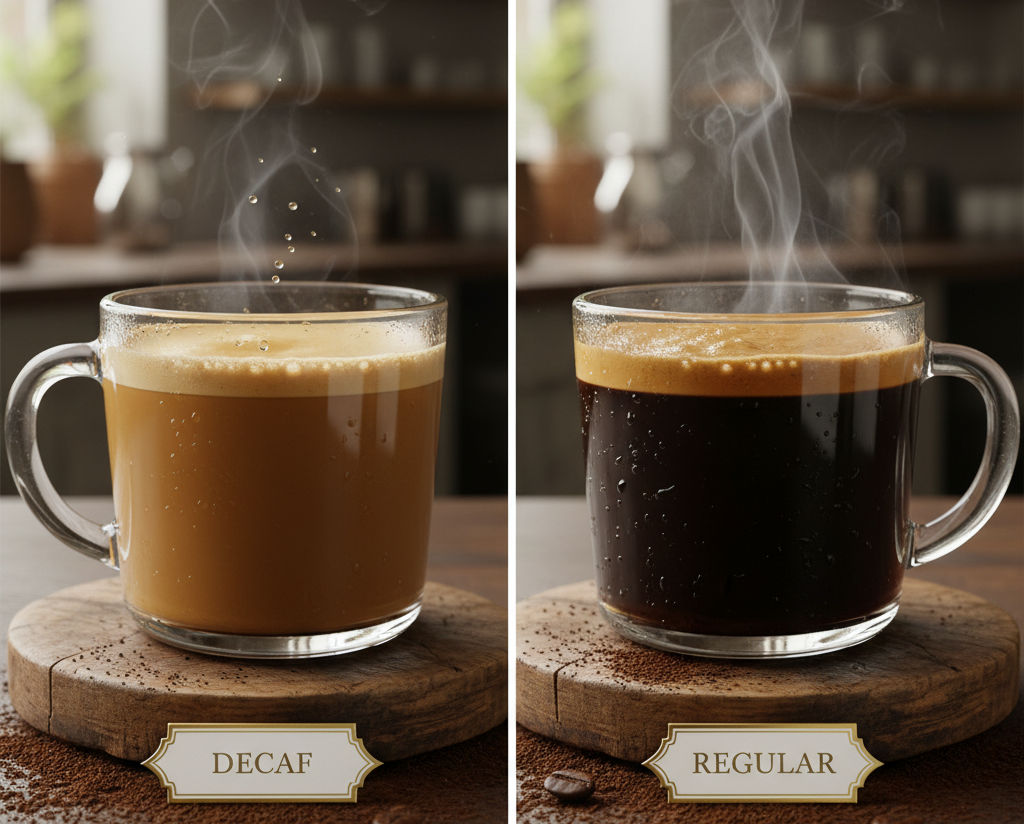
You switch to decaf and wonder: am I still getting any of the health benefits, or just the taste? Or you stick with regular coffee and wonder whether the caffeine is actually doing you more harm than good. Either way, the comparison between decaf and regular coffee is more interesting — and more nuanced — than most people realize.
Here's the complete picture: what's actually different between them, what the research says about their respective health effects, who should choose which, and — something almost no one talks about — why the method used to remove the caffeine matters as much as anything else.
Table of contents
- The Core Difference: It's More Than Just Caffeine
- What the Research Says: Where Decaf Matches Regular Coffee
- Where Regular Coffee Pulls Ahead
- Where Decaf Has the Advantage
- The Decaffeination Methods — Why This Matters More Than People Realize
- Does Decaf Really Have Zero Caffeine?
- The Complete Comparison at a Glance
- Who Should Drink Decaf?
- Frequently Asked Questions
- The Bottom Line
The Core Difference: It's More Than Just Caffeine
The obvious difference between decaf and regular coffee is caffeine content:
- Regular coffee (8 oz): 70–140 mg caffeine (average ~95 mg)
- Decaf coffee (8 oz): 2–15 mg caffeine — the decaffeination process removes approximately 97% of caffeine, leaving a small but non-zero residual amount
But caffeine isn't the only thing that changes during decaffeination. The process also affects the antioxidant profile of the beans — specifically chlorogenic acids, polyphenols, and other compounds that are responsible for many of coffee's health benefits. Understanding how much changes — and why — is essential to comparing the two honestly.
The good news: decaf coffee retains roughly 85% of the antioxidant benefits of regular coffee. Most of the healthy compounds found in regular coffee — chlorogenic acids, melanoidins, trigonelline, phenylindanes, magnesium, potassium — remain present in meaningful amounts after decaffeination. Decaf is not a nutritional ghost of regular coffee. It's closer to a slightly reduced version of it.
☕ Recommended by cocondo.coffee

Cocondo Orgánico — The only certified organic coffee from Antioquia, Colombia
Reserve Your Bag →What the Research Says: Where Decaf Matches Regular Coffee
The most important finding in the decaf vs regular research is how many benefits they share. Independent scientific evidence from the National Coffee Association (2025) confirms that drinking decaf coffee, like all coffee, is associated with:
- Increased longevity
- Decreased risk of multiple cancers
- Reduced risk of chronic diseases
- Improved memory, cognition, and mood
- Reduced risk of heart disease and type 2 diabetes
These benefits — shared between decaf and regular — tell us something important: caffeine is not the primary driver of most of coffee's health effects. The polyphenols, chlorogenic acids, and other bioactive compounds do the heavy lifting for most chronic disease protection, and those largely survive decaffeination.
Type 2 Diabetes
A 2014 meta-analysis of 28 different studies found that both decaf and regular coffee drinkers had a reduced risk of developing type 2 diabetes. The more coffee a person drank per day, the lower their risk — and this held for decaf as well as regular. The mechanism is primarily chlorogenic acids slowing glucose absorption and improving insulin sensitivity — both non-caffeine effects that survive decaffeination.
Liver Health
The liver-protective effects of coffee — reduced cirrhosis risk, lower liver enzyme levels, protection against liver cancer — appear to extend to decaf as well. Studies tracking both decaf and regular coffee drinkers show liver health benefits across both groups, reinforcing that the compounds responsible are not caffeine-dependent.
Alzheimer's Protection
The landmark Krembil Brain Institute study that tested light roast, dark roast, and decaffeinated dark roast coffee found that all three offered protection against the Alzheimer's-associated protein buildups that characterize the disease — including the decaf version. This finding was pivotal: it proved that the neuroprotective effects of coffee against Alzheimer's are driven by phenylindanes and other roasting compounds, not caffeine.
Cardiovascular Disease
A major 2022 study published in the European Journal of Preventive Cardiology tracked 449,563 participants over 12.5 years and found reduced risk of cardiovascular disease and death in all coffee drinkers — including people who drank decaf. Both regular and decaf drinkers showed better cardiovascular outcomes than non-coffee drinkers.
Where Regular Coffee Pulls Ahead
Despite the shared benefits, regular coffee does have advantages in certain specific areas:
Cognitive Performance and Alertness
This is caffeine's domain. Regular coffee's ability to sharpen focus, improve reaction time, boost working memory, and fight mental fatigue is primarily driven by caffeine blocking adenosine receptors. Decaf provides none of this short-term cognitive enhancement. If you need to be sharp for a presentation, a workout, or a demanding morning — regular coffee delivers something decaf simply cannot replicate.
Physical Performance
Caffeine is one of the few ergogenic (performance-enhancing) compounds with consistent scientific support. It improves endurance, strength output, and fat mobilization during exercise. Decaf provides essentially none of this athletic benefit.
Parkinson's Disease Protection
Unlike Alzheimer's protection (which decaf shares), Parkinson's protection appears to be more dependent on caffeine specifically. The mechanism involves caffeine's adenosine A2A receptor antagonism in the brain's basal ganglia — an effect decaf cannot replicate. Studies show significantly stronger Parkinson's protection in regular coffee drinkers than decaf drinkers.
Heart Arrhythmia Protection
The 2022 European Journal of Preventive Cardiology study of 449,563 people found one critical distinction: decaffeinated coffee was NOT associated with a reduction in arrhythmias, while regular coffee was. The 2025 UCSF/JAMA study showing a 39% reduction in atrial fibrillation recurrence was specifically for caffeinated coffee. For heart rhythm specifically, caffeine appears to be the active ingredient — likely through its adenosine receptor effects on cardiac tissue.
Mood and Depression Risk
Regular coffee's association with lower depression risk is thought to involve caffeine's stimulation of dopamine and serotonin pathways. Decaf shares some mood benefit through its polyphenol content and ritualistic use, but the evidence for depression risk reduction is stronger for caffeinated coffee.
Total Antioxidant Load
Regular coffee retains its full polyphenol and antioxidant profile. Decaf loses roughly 15% of antioxidant activity through the decaffeination process. Over 3 to 5 cups per day, this difference adds up to a meaningful reduction in total daily antioxidant intake.
Where Decaf Has the Advantage
Decaf isn't just "regular coffee minus caffeine." For certain people and situations, it's the genuinely better choice:
Anxiety and Stress Sensitivity
For people who experience anxiety, jitteriness, heart palpitations, or stress amplification from caffeine — decaf eliminates the trigger while preserving most of the ritualistic and antioxidant benefits of coffee. This is not a minor population: caffeine sensitivity affects a significant portion of people, and for them, regular coffee's stimulant benefits come with real psychological costs.
Sleep Quality
Caffeine's 5 to 6 hour half-life means afternoon or evening regular coffee disrupts sleep quality even when you don't feel it consciously. Decaf in the afternoon or evening allows you to maintain the coffee ritual without paying the sleep debt. Given how central sleep is to health — cognitive function, immune response, metabolic health, cardiovascular repair — protecting sleep quality is a legitimate health priority that decaf serves.
Pregnancy
Medical guidelines recommend limiting caffeine to under 200 mg per day during pregnancy. Decaf, with its 2 to 15 mg per cup, allows pregnant people to enjoy coffee without approaching those limits. Since many of coffee's non-caffeine benefits (antioxidants, mineral content) are preserved in decaf, it's a genuinely sensible choice during pregnancy.
Acid Reflux and GERD
Interestingly, both regular and decaf coffee stimulate stomach acid production — but regular coffee has a stronger effect through both caffeine and other compounds. Some studies suggest decaf is slightly gentler on the stomach for people with acid reflux, though this varies individually.
High Blood Pressure (Uncontrolled)
If your blood pressure is poorly managed and you're sensitive to caffeine's short-term pressure-raising effects, decaf eliminates this variable entirely while preserving most other benefits.
Late-Day Coffee Enjoyment
One of the most practical advantages of decaf: you can enjoy coffee after dinner without destroying your sleep. The sensory experience, the social ritual, the taste — all preserved. The sleep disruption — eliminated.
The Decaffeination Methods — Why This Matters More Than People Realize
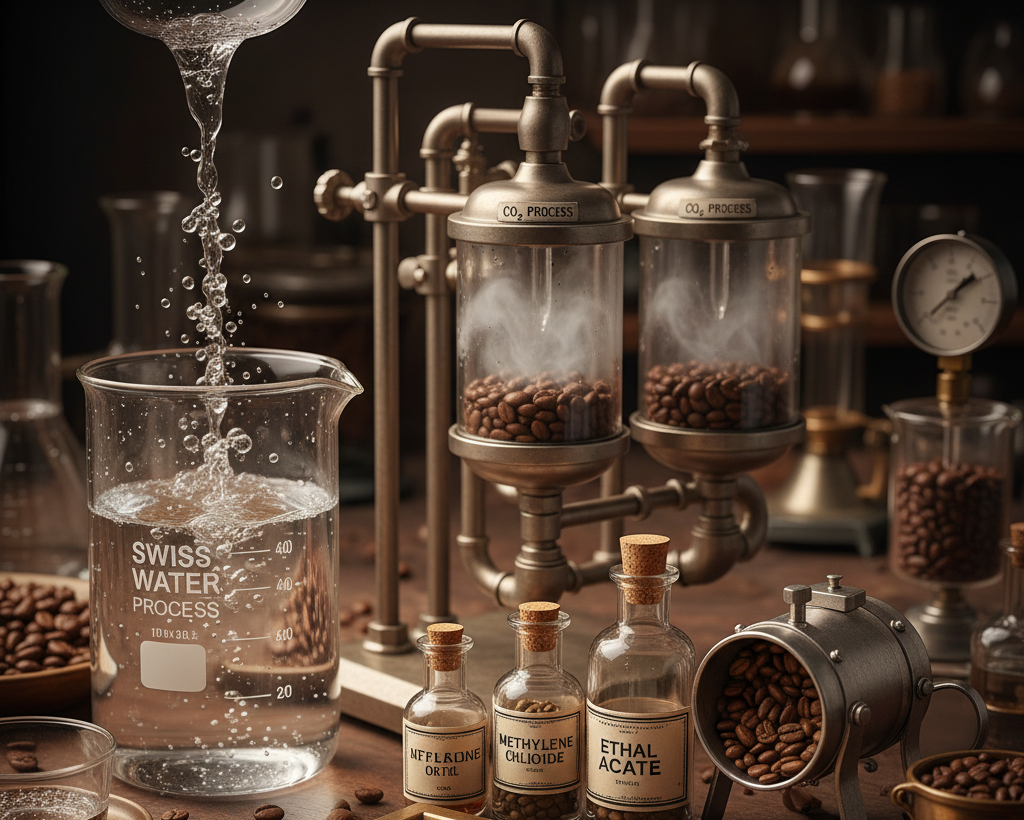
Here's the part that most articles skip, and it's genuinely important: not all decaf is made the same way, and the method used significantly affects both what's left in your cup and whether you're being exposed to chemical residues.
Method 1: Swiss Water Process
The cleanest and most consumer-friendly method. Green (unroasted) coffee beans are soaked in hot water, which dissolves both caffeine and flavor compounds. The water is then passed through activated charcoal filters that trap caffeine molecules (which are larger) while allowing flavor compounds to pass through. The caffeine-free "flavor charged water" is used to soak a new batch of beans, extracting only caffeine this time while preserving flavors. No chemicals involved. 99.9% caffeine-free. Preserves antioxidants well. This is the gold standard for health-conscious decaf drinkers. Swiss Water process is certified organic and commonly used by specialty roasters.
Method 2: CO2 Process (Supercritical Carbon Dioxide)
Liquid CO2 at high pressure selectively dissolves caffeine from green beans while leaving most flavor compounds and antioxidants intact. Highly effective, no chemical residues, excellent flavor preservation, and strong antioxidant retention — arguably the best method for quality and health, though more expensive. Used by premium specialty roasters. If you see "CO2 decaffeinated" on a label, it's a positive quality signal.
Method 3: Direct Solvent Process (Methylene Chloride or Ethyl Acetate)
Green beans are soaked in a chemical solvent — either methylene chloride (DCM) or ethyl acetate — that binds to caffeine and removes it when the solvent is drained. The beans are then steamed to remove residual solvent before roasting. This is the most common method used for commercial decaf production and the most concerning from a health perspective. Methylene chloride is a probable human carcinogen (classified by the EPA). While most residues are removed during steaming and roasting, trace amounts can remain. The FDA allows up to 10 parts per million of methylene chloride in decaf coffee — a threshold that most experts consider low risk for adults but that some toxicologists dispute. Ethyl acetate is naturally occurring (found in fruit) and generally considered safer, though still a solvent. If health is your priority, avoid decaf processed with methylene chloride. Check the label or the roaster's website.
Method 4: Water Process (Generic/Mountain Water)
Similar to Swiss Water but without the proprietary filtration system. Uses water and osmosis to remove caffeine. Generally chemical-free but may result in more flavor loss than Swiss Water or CO2 methods. Preserves antioxidants reasonably well. Acceptable from a health standpoint — better than solvent methods, not quite as good as Swiss Water or CO2 for flavor preservation.
Practical guide: Look for Swiss Water or CO2 processed decaf when possible. Avoid methylene chloride processed decaf if health is your primary concern. The label or the roaster's website will usually specify the method used — and if they don't, that's a signal worth noting.
Does Decaf Really Have Zero Caffeine?
No — and this is worth knowing clearly. The decaffeination process removes approximately 97% of caffeine, but a residual 2 to 15 mg per cup remains. For most people avoiding caffeine for sleep or mild sensitivity reasons, this trace amount is inconsequential. But for people with extreme caffeine sensitivity, certain medical conditions, or those taking medications that interact with caffeine, even this small amount can matter.
The caffeine content in decaf varies by brand and method:
- Swiss Water process: typically 1–2 mg per cup
- CO2 process: typically 1–3 mg per cup
- Solvent methods: typically 5–15 mg per cup
If you need to minimize caffeine to near-zero for medical reasons, Swiss Water process decaf is your best option. And always confirm with your doctor if caffeine elimination is medically critical for your situation.
The Complete Comparison at a Glance
- Alertness and focus: Regular coffee wins clearly
- Physical performance: Regular coffee wins clearly
- Parkinson's protection: Regular coffee wins
- Heart arrhythmia protection: Regular coffee wins
- Depression risk reduction: Regular coffee wins
- Alzheimer's protection: Tie — both protect through non-caffeine compounds
- Type 2 diabetes protection: Tie — both effective
- Liver health: Tie — both protective
- Cardiovascular disease protection: Tie — both reduce risk
- Longevity: Tie — both associated with reduced all-cause mortality
- Anxiety management: Decaf wins
- Sleep quality: Decaf wins
- Pregnancy safety: Decaf wins
- Afternoon/evening enjoyment: Decaf wins
- Sensitive stomach: Decaf wins (slightly)
Who Should Drink Decaf?
Decaf is the right primary choice — or a valuable complement to regular coffee — for:
- Pregnant or breastfeeding people who need to limit caffeine
- People with anxiety disorders or high caffeine sensitivity
- Anyone with sleep problems who wants an afternoon or evening coffee ritual
- People with uncontrolled high blood pressure sensitive to caffeine spikes
- Anyone who wants to reduce total caffeine intake without giving up coffee entirely
- Coffee lovers over 65 whose caffeine metabolism has slowed and who find they sleep better with less caffeine
- People who love the taste and ritual of coffee but simply don't want or need the stimulation
Frequently Asked Questions
Is decaf coffee better for you than regular coffee?
Neither is comprehensively "better" — they have different strengths. Decaf is better for sleep, anxiety, pregnancy safety, and late-day enjoyment. Regular coffee is better for cognitive performance, physical performance, Parkinson's protection, and heart arrhythmia protection. For most of coffee's chronic disease protection — diabetes, liver health, Alzheimer's, cardiovascular disease — both beverages offer significant and roughly comparable benefits.
What happens to your body when you switch to decaf?
You lose caffeine's stimulant effects — alertness, focus boost, athletic performance enhancement — and any caffeine dependence you've built up (which means a few days of mild withdrawal headaches and fatigue as your body readjusts). You retain roughly 85% of coffee's antioxidant benefits. You'll likely sleep better, especially if you were drinking coffee in the afternoon or evening. Anxiety symptoms, if caffeine was contributing to them, typically improve within a week.
Does decaf coffee have health benefits?
Yes — significant ones. Decaf coffee is associated with reduced risk of type 2 diabetes, liver disease, Alzheimer's disease, cardiovascular disease, and several cancers. It contributes meaningfully to daily antioxidant intake. The National Coffee Association's 2025 review of independent scientific evidence confirms that decaf drinkers experience many of the same health benefits as regular coffee drinkers.
Is decaf coffee okay for GERD?
Decaf is generally easier on the stomach than regular coffee because it has somewhat less stimulatory effect on stomach acid production. However, coffee itself — both regular and decaf — is acidic and can trigger reflux in sensitive individuals. Cold brew coffee (available in decaf versions) is naturally lower in acidity than hot-brewed coffee and tends to be the gentlest option for people with GERD. Drinking coffee with food rather than on an empty stomach also reduces irritation significantly.
What is the healthiest decaffeination method?
Swiss Water Process and CO2 (supercritical carbon dioxide) process are the healthiest methods — both are chemical-free, preserve antioxidants well, and leave no concerning residues. Avoid decaf processed with methylene chloride (also called DCM or dichloromethane) if health is your priority. Check the label or roaster's website for the decaffeination method used.
The Bottom Line
Decaf is not a compromise or a consolation prize. It's a genuinely valuable beverage that delivers most of coffee's chronic disease protection — without caffeine's sleep disruption, anxiety amplification, or stimulant dependency.
Regular coffee has clear advantages for anyone who tolerates caffeine well and wants maximum cognitive performance, athletic support, Parkinson's protection, and total antioxidant load. For most healthy adults with no caffeine sensitivity, regular coffee in the morning and early afternoon remains the evidence-supported choice.
The smartest approach for many people is actually a combination: regular coffee in the morning for the full caffeinated experience, decaf in the afternoon or evening to protect sleep while maintaining the coffee ritual. That combination gives you caffeine's short-term benefits when you need them, the shared long-term health benefits throughout the day, and preserved sleep quality — arguably the most underrated health variable of all.
One thing both decaf and regular coffee drinkers benefit from equally: quality beans. Single-origin specialty coffee — whether you choose the caffeinated or decaf version — delivers a richer polyphenol and antioxidant profile than commercial blends. The freshness of roasting, the altitude of growing, and the care of processing all affect what ends up in your cup regardless of whether the caffeine is there or not.
If you'd like to read other articles similar to Decaf vs Regular Coffee: What Really Happens to Your Body you can visit the category The Art and Science of Coffee: Guides, Reviews, and Expert Tips.
Does Coffee Affect Cortisol Levels? The Science Behind Caffeine and Your Stress Hormone

Is Coffee Good for Depression Risk? What the Research Actually Shows

Is Coffee Bad for Anxiety? What the Science Actually Shows
The 5 Elements of Coffee Tasting Every Coffee Lover Should Know
What Is Green Coffee? How Raw Beans Differ From Roasted — and What That Means for Your Health
How Is Coffee Decaffeinated? The 4 Methods Explained — Including the One You Should Avoid
What Is Coffee Degassing? Why Fresh Roasted Beans Release CO2 — and Why It Matters

What Is a Coffee Cooperative? How They Help Farmers — and Why They Matter for Your Cup

How Altitude Affects Coffee Flavor: Why High-Grown Coffee Tastes Different
Leave a Reply
Related post