

What Is Single Origin Coffee? Why It Tastes Different — And Why That Matters
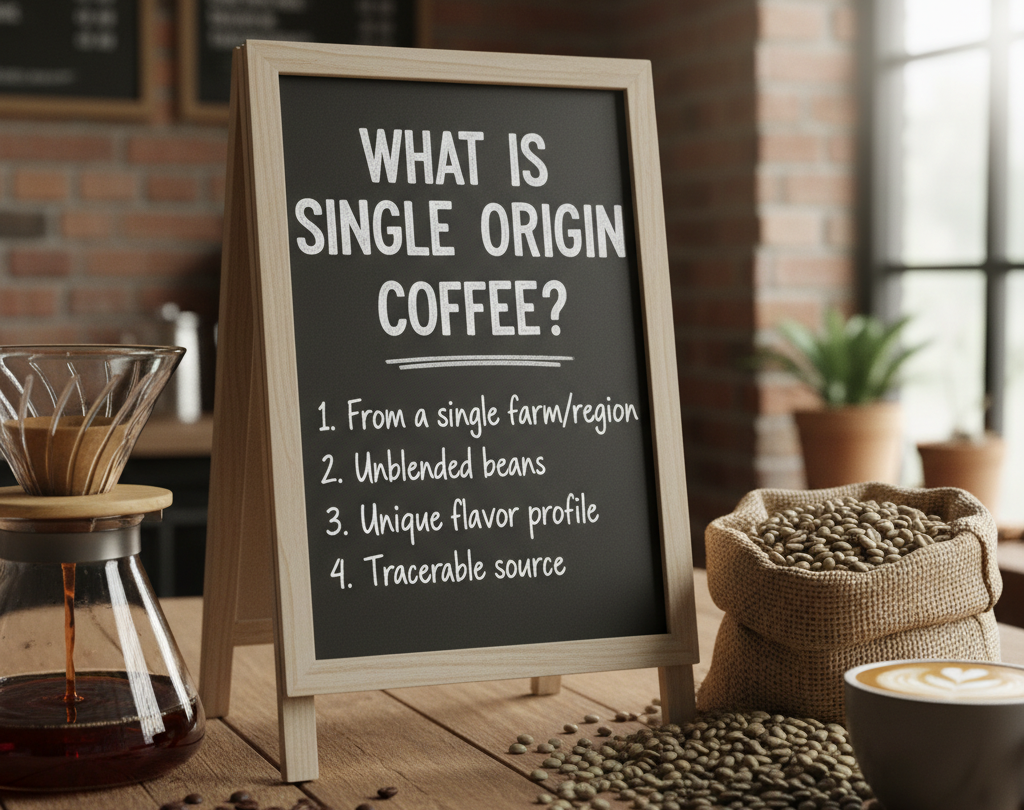
Pick up two bags of specialty coffee at a good roaster. One says "Ethiopia Yirgacheffe — washed, 2,000 masl." The other says "House Espresso Blend." Both are excellent coffees. Both will taste great. But they represent two completely different philosophies about what coffee should be — and understanding the difference changes how you buy, brew, and experience every cup.
Single origin coffee is one of the central ideas in modern specialty coffee. Here's what it actually means, where the concept comes from, what it does to flavor, and how to decide whether it's right for you.
Table of contents
- What Is Single Origin Coffee?
- The Core Idea: Terroir
- Single Origin vs Blend: The Complete Comparison
- Why "Tasting a Moment in Time" Matters
- Does Single Origin Mean Higher Quality?
- The Origins That Define Single Origin Coffee
- Which Brewing Methods Work Best for Single Origin Coffee?
- How to Read a Single Origin Coffee Label
- Why Colombian Single Origin Deserves Special Attention
- Frequently Asked Questions
- The Bottom Line
What Is Single Origin Coffee?
Single origin coffee is coffee that comes from one specific, traceable geographic location — as opposed to a blend, which combines beans from multiple origins. The defining characteristic is traceability: you can follow the coffee back to a specific place, and that place has a direct, meaningful influence on what the coffee tastes like.
The Specialty Coffee Association (SCA) defines single origin coffee as coffee that is fully traceable to a single producer, estate, or crop. But in practice, "single origin" exists on a spectrum of specificity — from broad to highly specific — and understanding that spectrum helps you understand what you're buying:
The Traceability Spectrum
- Country: The broadest level. "Colombian coffee" or "Ethiopian coffee." You know the country of origin, which gives you general flavor expectations, but tells you nothing specific about the farm, altitude, or processing. Better than no information, but not what the specialty coffee community means by genuine single origin.
- Region: More meaningful — "Colombia, Antioquia" or "Ethiopia, Yirgacheffe." Regions have distinct microclimates, altitudes, and soil profiles that produce consistent flavor characteristics. Regional origin lets you predict flavor with reasonable accuracy and speaks to terroir in a meaningful way.
- Farm or Estate: A significant step in specificity — "Colombia, Antioquia, Finca Las Flores" or "Kenya, Nyeri, Gatura Estate." You know exactly whose land grew these beans. This level usually indicates a direct relationship between the roaster and the producer, which correlates strongly with quality and ethical sourcing.
- Cooperative: Instead of a single farm, a group of smallholder farmers who pool their production. "Ethiopia, Yirgacheffe, Kochere Cooperative" means you know the specific cooperative and its member farmers. Cooperatives are particularly important in origins where most farms are too small to generate exportable quantities individually.
- Microlot: The most specific level. A tiny, curated harvest from a single plot or processing batch within a farm — sometimes just a few hundred pounds of green coffee worldwide. "Colombia, Cauca, Granja El Paraíso 92, Wilton Benitez, Pink Bourbon" is a microlot: a specific varietal, grown by a specific farmer, at a specific property, in a specific region. These are the most traceable and typically the most exceptional coffees available.
When a serious specialty roaster says "single origin," they typically mean farm level or above — not just country. When the label only says the country name without further detail, that's the lowest end of the spectrum.
☕ Recommended by cocondo.coffee
Cocondo Orgánico — The only certified organic coffee from Antioquia, Colombia
Reserve Your Bag →The Core Idea: Terroir
The concept that makes single origin coffee meaningful isn't just traceability for its own sake. It's terroir — the French wine term that describes how geography shapes the flavor of an agricultural product.
In wine, terroir is well established: the same grape variety grown in Burgundy and Bordeaux produces wines that taste completely different, because the soil composition, drainage, microclimate, slope orientation, and surrounding vegetation all imprint themselves on the grape. Winemakers spend centuries mapping these differences and communicating them to consumers.
Coffee works exactly the same way — the specialty coffee community just took longer to articulate it.
Every factor in a coffee's growing environment affects its flavor:
- Altitude: Higher altitude means cooler temperatures, slower cherry development, and more complex sugar and acid development — producing brighter, more nuanced flavors
- Soil composition: Volcanic soils (Guatemala, Costa Rica, parts of Colombia) contribute mineral complexity. Red clay soils (Kenya, parts of Ethiopia) produce distinct flavor profiles. The soil is literally in the bean.
- Microclimate: Rainfall patterns, morning mist, wind exposure, shade cover — all affect how the cherry develops and how the plant responds to stress
- Native vegetation: Coffee grown near banana trees absorbs volatile aromatic compounds from them. Coffee grown in forest systems with diverse native flora develops differently than coffee in monoculture
- Varietal: The genetic identity of the coffee plant interacts with the environment to produce specific compound profiles
- Processing method: How the cherry is removed after harvest fundamentally changes the flavor — and that method is often specific to the origin's tradition and infrastructure
Put all of these together and you get a flavor that is genuinely, unreproducibly specific to that place and that season. An Ethiopian Yirgacheffe tastes like Yirgacheffe — jasmine, bergamot, lemon, tea-like brightness — not because of roasting or brewing technique, but because of what the Yirgacheffe growing environment does to the coffee plant. A Colombian coffee from Antioquia tastes like Antioquia — chocolate, caramel, soft citrus, balanced sweetness — for the same reason.
Blend those coffees together and both identities disappear into the combination. The terroir is gone. That's not a criticism of blends — it's just a description of what you gain and lose in each model.
Single Origin vs Blend: The Complete Comparison
Understanding both models clearly is more useful than treating one as superior:
Single Origin Coffee
What it does well:
- Expresses terroir — the specific character of a place and season
- Rewards attentive brewing and tasting — there's more to discover
- Tells a complete story — you know the farm, the farmer, the altitude, the process
- Supports direct and transparent supply chains — easier to trace payment to farmers
- Develops your palate — tasting different origins builds flavor vocabulary and sensory discrimination
- Reflects seasonal variation — each harvest is slightly different, which means every bag is a new experience
Its limitations:
- Seasonal — when the harvest is gone, it's gone until the next crop
- Variable — flavor changes year to year with harvest conditions, which some people find inconsistent
- Can be unforgiving — very light roast single origins reward precise brewing and are less tolerant of technique errors
- Can be polarizing — a very high-acidity Ethiopian natural isn't for everyone
- Sometimes less suited to milk-based drinks — bright, delicate single origins can be overwhelmed by milk
Coffee Blends
What they do well:
- Consistency — blends are designed to taste the same year-round, regardless of harvest variation
- Balance — combining multiple origins creates a harmonious profile where each contribution complements the others
- Espresso performance — most classic espresso blends are specifically engineered for espresso brewing: body from Brazil, brightness from Colombia, crema structure from a small Robusta component
- Milk compatibility — a well-designed espresso blend cuts through milk beautifully, maintaining character in lattes and cappuccinos
- Approachability — a balanced blend is rarely challenging; it's designed to be widely enjoyable
Their limitations:
- Terroir is lost — you're tasting the roaster's design choices rather than a specific place
- Less traceable — while good roasters disclose component origins, you typically don't know the specific farms
- Can hide lower-quality beans — blending allows mediocre beans to be masked by better ones
- Less educational — you can't learn about specific origins from a blend
Why "Tasting a Moment in Time" Matters
One of the most distinctive things about single origin coffee — and something blends fundamentally can't offer — is seasonality.
Coffee is an agricultural product. It has harvests. The coffee cherries from a specific farm ripen once per year (some origins twice), are processed, exported, roasted, and eventually sell through. When that lot is gone, it's gone. Next year's harvest from the same farm will be similar — but not identical. The weather was slightly different. The rainfall pattern shifted. The cherry ripened two weeks earlier than last year. The farmer tried a new fermentation approach.
This means that a genuinely good single origin coffee is, in a very real sense, a specific moment in time preserved in a bag. When you buy a 2025 harvest lot from a family farm in Colombia's Antioquia region, you are tasting that family's land, that year's growing season, and that harvest's specific conditions. Next year's coffee from the same farm will be close but different.
This is what the specialty coffee community means when they say single origin lets you "taste a place." The terroir isn't abstract — it's the accumulated result of a specific piece of land, specific growing conditions, specific farming practices, and a specific seasonal harvest. Blends deliberately eliminate that specificity to create something consistent and reproducible. Neither approach is wrong. They serve different purposes.
Does Single Origin Mean Higher Quality?
This is one of the most persistent misconceptions about single origin coffee — and it's worth addressing directly.
Single origin does not automatically mean higher quality than a blend. It means higher traceability and terroir expression. A mediocre single origin is still mediocre. A masterfully crafted blend using exceptional beans is exceptional.
What single origin coffee does offer that blends typically don't is transparency — which correlates with quality in the specialty market because roasters who care enough to source traceable, farm-level coffee also typically care enough to source good coffee. Traceability is a proxy for quality, not a guarantee of it.
The most reliable quality indicator remains the same regardless of whether you're buying single origin or blend: the roast date (ideally within 5 to 21 days), the roaster's reputation and sourcing transparency, and the presence of specific origin details rather than vague marketing language.
The Origins That Define Single Origin Coffee
Different coffee-growing regions produce distinctive single origin profiles. Understanding these archetypes helps you navigate the world of single origin coffee:
Ethiopia — The Birthplace of Coffee
Ethiopia's wild and semi-wild Arabica varieties — collectively called "heirlooms" — produce some of the most complex and distinctive coffees in the world. Yirgacheffe is the most celebrated sub-region: light, floral (jasmine, bergamot), tea-like, intensely bright. Natural processed Ethiopian coffees from regions like Sidama and Guji produce wildly fruity cups — blueberry, strawberry, wine, tropical fruit — that surprise people who've only experienced commercial coffee. Ethiopian single origins are the go-to recommendation for showing coffee skeptics what specialty coffee can actually taste like.
Colombia — Balance and Sweetness
Colombia produces one of the most consistent and widely enjoyed single origin profiles: balanced acidity, medium body, natural sweetness, chocolate and caramel notes, often with stone fruit or citrus brightness. The country's high-altitude growing regions — Huila, Nariño, Antioquia, Cauca — each have distinct microclimate variations within this general profile. Antioquia coffees in particular are known for a chocolate-to-fruit balance that works across multiple brewing methods. Colombian single origins are arguably the most accessible introduction to the world of single origin specialty coffee — complex enough to be interesting, balanced enough to be approachable.
Kenya — Vibrant and Distinctive
Kenyan single origins are among the most immediately identifiable in the world. The SL-28 and SL-34 varieties, combined with Kenya's red clay soils and high-altitude growing, produce a specific flavor signature: intense blackcurrant or dark fruit acidity, full body, syrupy texture, wine-like complexity. Kenyan coffees are not subtle — they announce themselves. If you love high-acidity, full-bodied single origins, Kenya is essential exploration.
Guatemala and Costa Rica — Clean and Structured
Central American single origins tend toward clean, structured cups with chocolate, caramel, and stone fruit notes. Guatemala's volcanic highlands produce balanced, full-bodied coffees. Costa Rica's honey-processed coffees are particularly celebrated for combining natural sweetness with the clarity of a washed profile. These origins are accessible and crowd-pleasing without being one-dimensional.
Indonesia (Sumatra, Sulawesi) — Earthy and Distinctive
Indonesian single origins occupy a completely different flavor territory than the above. Sumatran coffees — processed through a unique "wet hulling" method — produce heavy-bodied, earthy, syrupy cups with cedar, dark chocolate, mushroom, and sometimes herbal notes. This is polarizing: many people love the distinct character; others find it too earthy. If you've heard someone describe their favorite coffee as "deep, dark, and earthy," they've probably had a Sumatran single origin.
Which Brewing Methods Work Best for Single Origin Coffee?
Single origin coffees — particularly light roasts — reward brewing methods that preserve clarity and allow individual flavor notes to express themselves. Here's a practical guide:
Best for Single Origin
- Pour-over (V60, Chemex, Kalita): The gold standard for single origin expression. Clean, clear, transparent cups that let terroir speak. Best for light to medium roast, high-complexity origins like Ethiopian and Kenyan.
- Aeropress: Versatile and forgiving. Can produce clean, filter-like clarity or richer, more concentrated cups depending on recipe. Excellent for exploring single origins at different strengths.
- Cold brew: Best with medium roast single origins that have chocolate and caramel notes (Colombian, Brazilian, Guatemalan). Cold extraction suppresses the bright acids and florals that make light roast singles interesting — those notes don't translate well to cold brew.
Works Well but Requires Precision
- Single origin espresso: Increasingly popular in specialty coffee — but demanding. Light roast single origin espresso can be transcendent (intense florals, vibrant fruit, complex sweetness) or disastrous (harsh, sour, unbalanced) depending on very precise extraction parameters. Not a good starting point for beginners, but worth exploring once you have some espresso experience.
- French press: Works well with medium to dark roast single origins. The immersion method and full-body extraction can be beautiful with chocolatey Colombian or earthy Sumatran coffees. Less ideal for very light, floral singles where the French press's body and sediment can obscure delicate notes.
Less Ideal
- Basic drip machines (non-SCA certified): Often don't reach optimal brewing temperature for light roasts. Many single origins — particularly high-altitude light roasts — are under-extracted by budget drip machines, producing sour, underdeveloped cups. If you drink primarily from a basic drip machine, medium roast single origins are more forgiving than very light ones.
- Milk-based drinks with very light roast singles: A delicate Ethiopian light roast with jasmine and bergamot notes gets completely overwhelmed by milk. Medium roast single origins with stronger chocolate or caramel profiles work better in lattes and cappuccinos.
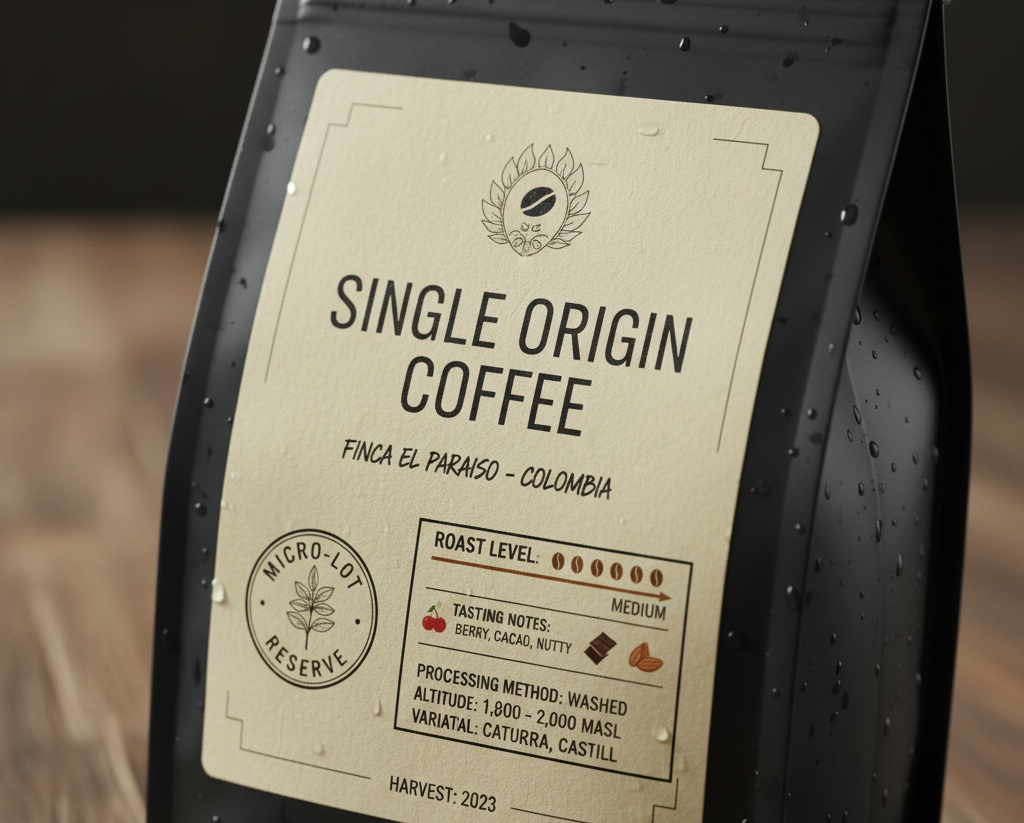
How to Read a Single Origin Coffee Label
When you pick up a bag of single origin coffee, here's what the information should tell you:
- Origin specificity: Country + region minimum. Farm or cooperative name is better. Microlot details are best.
- Processing method: Washed (clean, bright), natural (fruity, sweet), honey (balanced). This is one of the biggest flavor predictors.
- Altitude: 1,500+ masl is specialty territory. 1,800+ is excellent. Higher altitude generally correlates with more flavor complexity.
- Varietal: Gesha, Pink Bourbon, SL-28 = rare and typically exceptional. Caturra, Bourbon, Castillo = quality Colombian workhorses. Heirloom = Ethiopian complexity.
- Roast date: Non-negotiable for single origin. These coffees are especially sensitive to freshness — the delicate aromatics that define origin character are the first things to degrade after roasting.
- Tasting notes: Directional flavor expectations based on the origin, varietal, and processing. "Jasmine, bergamot, lemon curd" tells you it's a light, floral, high-acidity coffee. "Chocolate, caramel, hazelnut" tells you it's sweet, medium-bodied, and approachable.
Why Colombian Single Origin Deserves Special Attention
For North American coffee drinkers — particularly in Canada — Colombian single origin coffee occupies a unique position. It's the most widely recognized coffee origin in the market, yet most people have only experienced it in commercial blended form. The gap between a commercial "Colombian blend" and a genuine single origin from a specific Colombian farm at altitude is enormous.
Colombia's geography makes it uniquely suited to producing exceptional single origins: high-altitude growing regions across the Andes, diverse microclimates, multiple harvest seasons in some areas, a culture of smallholder farming that naturally produces diverse, traceable lots, and an increasingly sophisticated specialty coffee community investing in processing quality.
Regions like Antioquia — home to high-altitude farms between 1,400 and 2,100 meters, with volcanic and clay soils, significant shade cover, and generations of farming expertise — consistently produce single origins in the 85 to 92 point quality range. The best of these, from farms with careful processing and direct roaster relationships, represent some of the finest and most approachable single origin coffees available in the global market.
When you buy a genuinely traceable single origin from a specific Antioquian farm, you're buying something categorically different from the "Colombian coffee" you've had before — not just a better version of the same thing, but a different kind of experience entirely.
Frequently Asked Questions
What is single origin coffee?
Single origin coffee is coffee sourced from one specific, traceable geographic location — ranging from a country to a specific farm, cooperative, or microlot. The defining principle is that the coffee's origin is known and directly influences its flavor through terroir: the unique combination of soil, altitude, climate, varietal, and processing that makes each growing location produce a distinctive cup. Single origin coffee is the specialty coffee equivalent of a vineyard-specific wine — the location is the point.
What is the difference between single origin and blend coffee?
Single origin coffee comes from one traceable geographic location and expresses that location's terroir — its specific, unique flavor character. Blends combine beans from multiple origins to create a consistent, balanced profile designed by the roaster rather than defined by a place. Single origins are seasonal and variable; blends are consistent year-round. Single origins are best for tasting and exploring coffee's diversity; blends are best for consistency, espresso performance, and milk-based drinks.
Is single origin coffee better than blends?
Neither is objectively better — they serve different purposes. Single origin coffee offers terroir expression, traceability, and flavor education. Blends offer consistency, balance, and versatility across brewing methods. The best coffee drinkers typically enjoy both: single origins for exploration and attentive tasting sessions, blends for reliable daily espresso. Quality depends on sourcing and roasting skill in both cases — an exceptional blend from a great roaster outperforms a mediocre single origin, and vice versa.
Why is single origin coffee more expensive?
Several factors contribute: limited supply (each harvest lot is finite), seasonal availability (once it's gone it's gone), smaller batch sizes, higher per-pound prices paid to farmers for traceable quality lots, and the cost of direct or near-direct sourcing relationships. However, not all single origins are expensive — many excellent single origin coffees are comparably priced to quality blends. The price premium is most pronounced for microlots and rare varietals.
What does single origin coffee taste like?
It depends entirely on the origin. Ethiopian single origins often taste floral and tea-like — jasmine, bergamot, lemon, blueberry. Colombian single origins typically offer chocolate, caramel, and balanced citrus brightness. Kenyan single origins are intense and fruity — blackcurrant, wine, syrupy body. Guatemalan and Costa Rican coffees tend toward chocolate, caramel, and stone fruit. Indonesian single origins are earthy, heavy-bodied, and complex. Each origin has a recognizable signature that single origin coffee preserves rather than blends away.
Can you use single origin coffee for espresso?
Yes — and it's increasingly popular in specialty coffee. Single origin espresso can be transcendent when done well, expressing intensely concentrated versions of the origin's best characteristics. However, it requires precise extraction and may not work as well in milk-based drinks as purpose-designed espresso blends. Medium roast single origins with natural sweetness and caramel notes — like Colombian Antioquia coffees — typically work better for single origin espresso than very light, floral singles.
The Bottom Line
Single origin coffee is, at its core, an argument that where coffee comes from matters — and that you deserve to taste it. Not a sanitized, standardized, blended version of where it comes from, but the actual expression of a specific piece of land, a specific harvest, a specific family's farming practices.
That expression changes year to year. It rewards attention and curiosity. It tells you something real about the world's most diverse and complex agricultural beverage. And it does something that commodity and blended coffee can't: it connects what's in your cup to a specific person, a specific farm, and a specific place on the planet.
Start with a Colombian medium roast from Antioquia if you want approachable complexity. Try an Ethiopian washed if you want to be genuinely surprised. Explore a Kenyan if you want intensity. And every time you find a single origin that stops you mid-sip and makes you think "what is this?" — that's terroir doing exactly what it's supposed to do.
If you'd like to read other articles similar to What Is Single Origin Coffee? Why It Tastes Different — And Why That Matters you can visit the category The Art and Science of Coffee: Guides, Reviews, and Expert Tips.
Does Coffee Affect Cortisol Levels? The Science Behind Caffeine and Your Stress Hormone

Is Coffee Good for Depression Risk? What the Research Actually Shows

Is Coffee Bad for Anxiety? What the Science Actually Shows
The 5 Elements of Coffee Tasting Every Coffee Lover Should Know
What Is Green Coffee? How Raw Beans Differ From Roasted — and What That Means for Your Health
How Is Coffee Decaffeinated? The 4 Methods Explained — Including the One You Should Avoid

What Is Coffee Degassing? Why Fresh Roasted Beans Release CO2 — and Why It Matters
What Is a Coffee Cooperative? How They Help Farmers — and Why They Matter for Your Cup
How Altitude Affects Coffee Flavor: Why High-Grown Coffee Tastes Different
Leave a Reply
Related post