

What Is Cold Brew Coffee? How It's Different From Iced Coffee (And Everything Else)
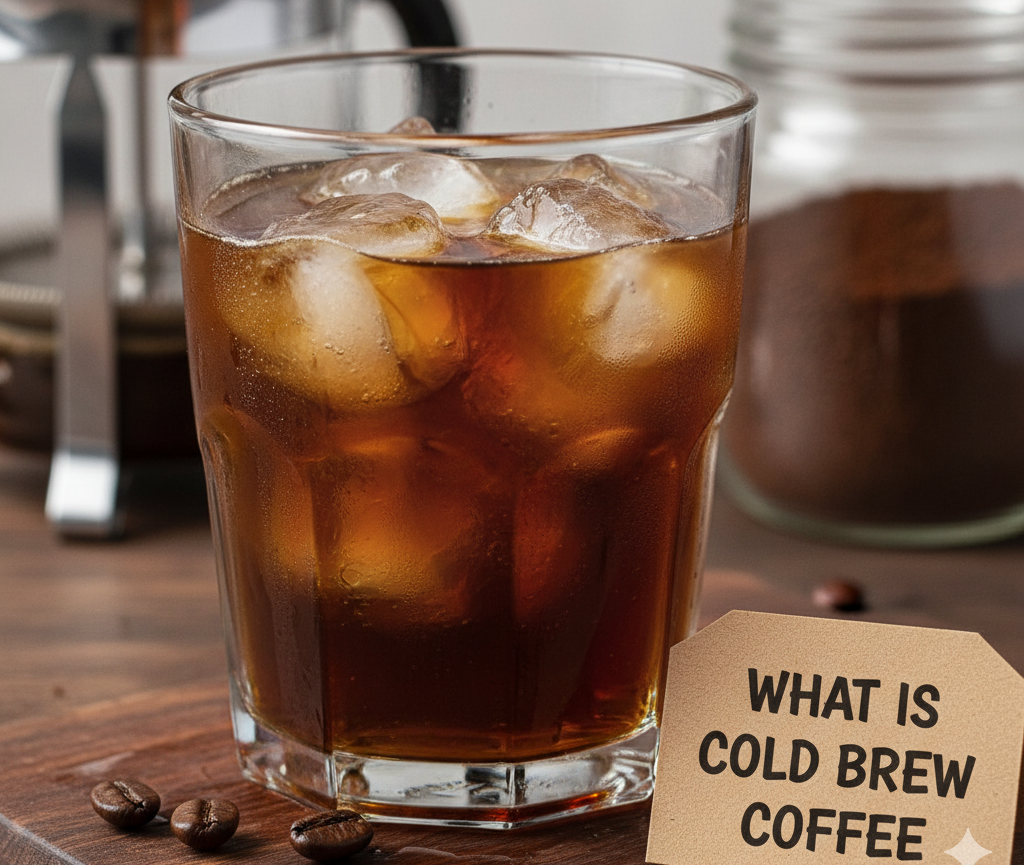
Walk into any coffee shop in the summer and you'll see cold brew on the menu — usually alongside iced coffee, and sometimes alongside "Japanese iced coffee" or "flash brew." Most people assume these are all just variations of the same thing: coffee that's cold. They're not. Each is made in a fundamentally different way, and each produces a dramatically different result in the cup.
Understanding what cold brew actually is — and how it differs from the alternatives — changes how you order, how you make coffee at home, and which option is right for your preferences, your stomach, and your caffeine needs.
Table of contents
- What Is Cold Brew Coffee?
- The Three Cold Coffee Methods — And Why They're All Different
- The Chemistry: Why Cold Brew Tastes So Different
- Cold Brew vs Iced Coffee vs Japanese Iced Coffee: The Complete Comparison
- How Much Caffeine Is in Cold Brew?
- Is Cold Brew Healthier Than Regular Coffee?
- How to Make Cold Brew at Home
- Which Beans Work Best for Cold Brew?
- Nitro Cold Brew: What's the Difference?
- Frequently Asked Questions
- The Bottom Line
What Is Cold Brew Coffee?
Cold brew coffee is coffee made by steeping coarsely ground coffee in cold or room-temperature water for an extended period — typically 12 to 24 hours — without any heat involved. The result is a coffee concentrate that is then diluted with water or milk before serving.
There is no boiling, no heat extraction, no filter through which hot water flows. The coffee simply sits in cold water and slowly releases its compounds over time. It is an immersion method — like a very long, cold French press.
The definition matters because it distinguishes cold brew from the other cold coffee options that are often confused with it. As the National Coffee Association (NCA) has formally clarified: cold brew is a specific brewing method, not simply "coffee with ice," not a serving style, and not a marketing term. A drink can only legitimately be called cold brew if it was brewed cold from start to finish.
☕ Recommended by cocondo.coffee
Cocondo Orgánico — The only certified organic coffee from Antioquia, Colombia
Reserve Your Bag →The Three Cold Coffee Methods — And Why They're All Different
Most confusion around cold brew comes from conflating three genuinely distinct methods. Here's how each one works and what it produces:
Method 1: Cold Brew (True Cold Brew)
How it's made: Coarsely ground coffee is steeped in cold or room-temperature water (4°C to 25°C / 39°F to 77°F) for 12 to 24 hours. Typically uses a higher coffee-to-water ratio than regular brewing — commonly 1:4 to 1:8 (concentrate) or 1:8 to 1:10 for ready-to-drink.
Result: A smooth, low-acid, naturally sweet concentrate. Full-bodied, chocolatey, and mellow. Diluted before serving.
Time: 12 to 24 hours
Caffeine: High — because of the concentrated ratio and long extraction time
Method 2: Iced Coffee
How it's made: Regular hot coffee brewed at double strength — using any standard brewing method (drip, pour-over, French press) — then poured over ice. The ice dilutes the concentrated brew to normal drinking strength.
Result: Bright, acidic, complex — tastes like hot coffee but cold. Preserves origin character and floral/fruity notes.
Time: Standard brew time (3 to 5 minutes)
Caffeine: Similar to standard hot coffee
Method 3: Japanese Iced Coffee (Flash Brew / Flash Chill)
How it's made: Hot water is poured over coffee grounds using a pour-over method, but the brewer sits directly on top of a vessel filled with ice. The hot coffee extracts normally from the grounds but immediately hits the ice and chills instantly. Uses half the normal water volume in the pour, and the other half as ice.
Result: Bright, clean, and complex like iced coffee, but with better preservation of volatile aromatic compounds that are captured at the moment of rapid chilling rather than degrading slowly. Best of both worlds — hot extraction clarity with cold temperature.
Time: Standard pour-over time (3 to 4 minutes)
Caffeine: Standard coffee levels
Of these three, cold brew and iced coffee are what most people encounter. Japanese iced coffee is the technique that specialty coffee shops use when they want the brightness of iced coffee with better aromatic preservation — it's worth knowing about if you ever see it on a café menu.
The Chemistry: Why Cold Brew Tastes So Different
The most important question about cold brew isn't just "what is it" — it's why it tastes so dramatically different from hot-brewed coffee. The answer is in the extraction chemistry.
What Heat Does (and Cold Brew Avoids)
Hot water is a highly efficient extraction solvent. At 90 to 96°C (195 to 205°F), it rapidly dissolves hundreds of compounds from coffee grounds — including:
- Sugars and caramel compounds (sweetness and body)
- Chlorogenic acids (antioxidants, brightness)
- Organic acids — citric, malic, tartaric (the acidity that makes hot coffee bright)
- Caffeic acid and quinic acid (form at high temperatures — both contribute to bitterness)
- Chlorogenic acid lactones (formed during roasting and released during hot brewing — a primary source of coffee's bitterness)
- Volatile aromatic compounds (the floral, fruity, bright notes)
Cold water, working over 12 to 24 hours, is a much more selective solvent. It extracts coffee's compounds, but more slowly and with different selectivity:
- Extracts: Caffeine (highly soluble regardless of temperature), larger sugar molecules, oils and lipids, melanoidins
- Extracts less of: Organic acids (particularly citric and malic acid — these require heat to fully extract), chlorogenic acid lactones, quinic acid
- Does not form: The temperature-dependent bitter compounds that require heat to develop — quinic acid from chlorogenic acids, for example, forms primarily through thermal degradation during hot brewing
A 2022 study by researchers at China Agricultural University found that cold brew was perceived as significantly less bitter, less sour, and less "rubbery" than regular coffee — even when the comparison was made at the same serving temperature. This confirmed that the differences are chemical, not just about serving temperature.
What this means in practice: Cold brew naturally has lower acidity (60 to 70% less than hot-brewed coffee according to multiple studies), less bitterness, more perceived sweetness, and a heavier, more chocolatey body. It lacks some of the bright, complex aromatic notes that hot-brewed coffee expresses — those volatile compounds either don't extract well in cold water or evaporate quickly once the concentrate is made.
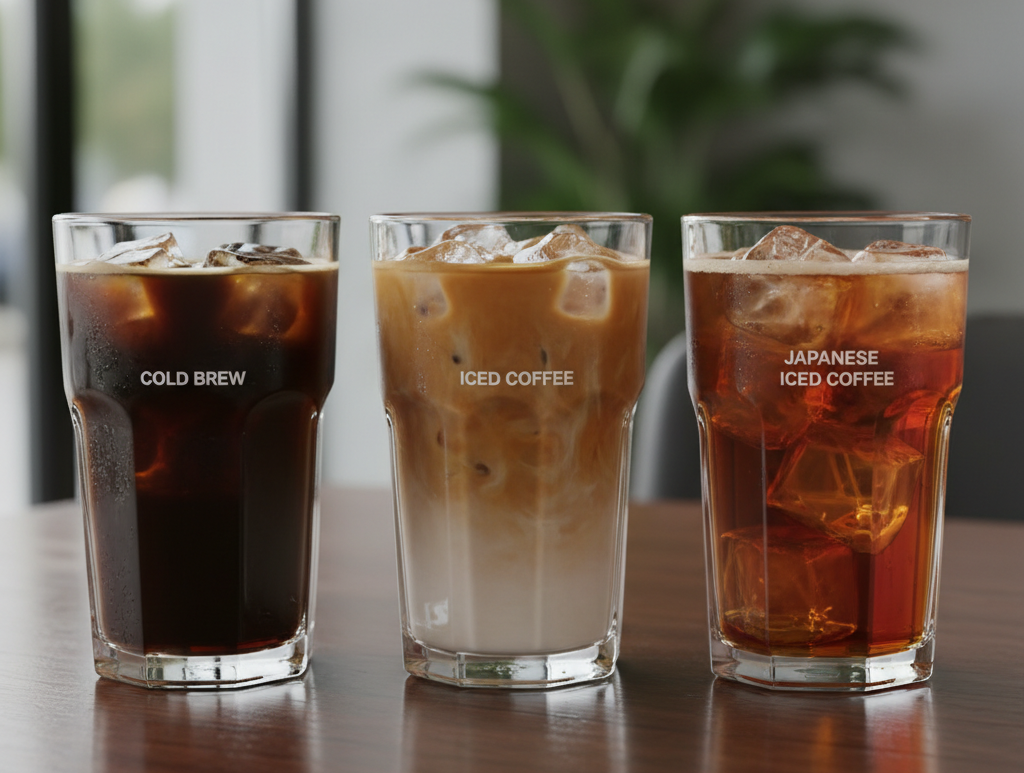
Cold Brew vs Iced Coffee vs Japanese Iced Coffee: The Complete Comparison
- Acidity: Cold brew (very low) — Japanese iced (medium-high) — Iced coffee (medium-high)
- Bitterness: Cold brew (low) — Japanese iced (medium) — Iced coffee (medium)
- Sweetness: Cold brew (naturally sweet) — Japanese iced (medium) — Iced coffee (medium)
- Body: Cold brew (full, syrupy) — Japanese iced (light-medium) — Iced coffee (medium)
- Flavor complexity: Cold brew (simple, one-dimensional) — Japanese iced (highest complexity) — Iced coffee (medium)
- Origin character expression: Cold brew (low) — Japanese iced (high) — Iced coffee (medium-high)
- Caffeine per serving: Cold brew (highest) — Japanese iced (standard) — Iced coffee (standard)
- Shelf life: Cold brew (7 to 14 days refrigerated) — Japanese iced (1 to 3 days) — Iced coffee (1 to 3 days)
- Prep time: Cold brew (12 to 24 hours) — Japanese iced (4 minutes) — Iced coffee (4 minutes)
- Stomach friendliness: Cold brew (best — lowest acid) — Japanese iced (similar to hot coffee) — Iced coffee (similar to hot coffee)
How Much Caffeine Is in Cold Brew?
Cold brew's caffeine content is one of the most misunderstood aspects of the drink. Many people assume that because it tastes smooth and mild, it's lower in caffeine. The opposite is typically true.
A 2017 peer-reviewed study from the University of Victoria analyzed five 12-ounce cold brews and found an average caffeine content of 207 mg per serving — 41.57% higher than expected — with individual values ranging from 168 mg to 246 mg. For context, a standard 12-ounce cup of drip coffee contains approximately 120 to 150 mg of caffeine.
Why is cold brew higher in caffeine? Two reasons:
- Higher coffee-to-water ratio: Cold brew typically uses 2 to 3 times more ground coffee per unit of water than standard brewing — this is necessary because cold water extracts more slowly and less efficiently overall.
- Caffeine is equally soluble in cold water: Unlike some flavor compounds that require heat to extract, caffeine dissolves readily in cold water. The long steep time gives it plenty of time to extract fully despite the lower temperature.
The practical implication: if you're switching from regular iced coffee to cold brew and using the same serving volume, you may be getting significantly more caffeine than you realize. If you're caffeine-sensitive or monitoring intake, dilute cold brew concentrate generously — a 1:2 to 1:3 ratio of concentrate to water is standard for ready-to-drink cold brew.
A 2024 study published in Food Science & Nutrition (Clemson University) also found that cold brew's flavor and freshness lasts significantly longer in the refrigerator than hot-brewed coffee — cold water brewing preserves flavor compounds in a way that hot brewing doesn't. This explains cold brew's 7 to 14-day shelf life versus 1 to 3 days for iced coffee.
Is Cold Brew Healthier Than Regular Coffee?
The health comparison between cold brew and hot coffee is nuanced — both have genuine benefits, but they differ in specific ways:
Where Cold Brew Has an Advantage
- Lower acidity: For people with acid reflux, GERD, or sensitive stomachs, cold brew is significantly more comfortable to drink. The substantially lower acid content (60 to 70% less) makes it the best coffee option for acid-sensitive individuals.
- Longer shelf life without degradation: The 2024 Clemson study confirmed that cold brew maintains flavor quality longer in storage — meaning less waste and more consistent taste over time.
- Potentially gentler on tooth enamel: Lower acid content means less enamel erosion — relevant for people who drink cold coffee frequently throughout the day.
Where Hot Coffee Has an Advantage
- More antioxidants per serving: The heat extraction process extracts more of coffee's chlorogenic acids and other polyphenols than cold water. Cold brew has fewer antioxidants per milliliter than hot-brewed coffee, though the difference is less significant when adjusted for the higher coffee-to-water ratio.
- More complex flavor expression: Hot brewing extracts the volatile aromatics that carry most of coffee's health-promoting phytochemicals and that are responsible for its most complex flavor compounds.
- Lower caffeine per ounce (for diluted servings): For people monitoring caffeine intake, properly diluted cold brew is manageable — but requires more careful attention to dilution ratios.
Bottom line on health: Neither is definitively "healthier." Hot coffee offers more antioxidants and aromatic compound variety. Cold brew is gentler on the digestive system and better for people with acid sensitivity. For most healthy adults, the difference is minor — drink whichever you enjoy more and can consume sustainably.
How to Make Cold Brew at Home
Cold brew is one of the easiest coffee preparations to make at home — it requires no special equipment and almost no active effort. Most of the work is just waiting.
What You Need
- Coarsely ground coffee (extra coarse — like coarse sea salt or small breadcrumbs)
- Cold or room temperature filtered water
- A mason jar, pitcher, or any container with a lid
- A fine mesh strainer, cheesecloth, or a paper coffee filter
- A kitchen scale (recommended for consistency)
The Standard Recipe
For concentrate (dilute 1:2 or 1:3 before drinking):
- Coffee: 100g (approximately 1 cup) of coarsely ground coffee
- Water: 500ml (approximately 2 cups) of cold or room-temperature filtered water
- Ratio: 1:5 coffee to water by weight
For ready-to-drink (no dilution needed):
- Coffee: 100g of coarsely ground coffee
- Water: 1,000ml (approximately 4 cups) of cold or room-temperature filtered water
- Ratio: 1:10 coffee to water by weight
Step-by-Step
- Grind your coffee extra coarse. Finer grinds over-extract during the long steep and produce bitter, over-extracted cold brew. Extra coarse — the coarsest your grinder allows — is correct for 18 to 24 hour steeps. For 12-hour steeps, medium-coarse works.
- Combine coffee and water. Add the grounds to your container, pour cold or room-temperature water over them, and stir briefly to ensure all grounds are saturated.
- Cover and steep. Place in the refrigerator for 16 to 24 hours (for concentrate) or 12 to 18 hours (for ready-to-drink). Room temperature steeping is faster — 8 to 12 hours — but produces a slightly different, sometimes more acidic profile. Refrigerator steeping is recommended for cleaner, smoother results and food safety.
- Strain. Pour through a fine mesh strainer, cheesecloth, or a paper coffee filter into a clean container. A paper filter produces the clearest, cleanest cold brew; cheesecloth leaves more oils for a fuller body. Use whichever matches your preference.
- Store and serve. Refrigerate the strained cold brew in a sealed container. It will keep for 7 to 14 days as concentrate, or 5 to 7 days as ready-to-drink. Serve over ice, diluted to taste.
Common Cold Brew Mistakes
- Grind too fine: The most common error. Fine grinds over-extract during long cold steeps — producing bitter, harsh cold brew. Go extra coarse.
- Steeping too long: More than 24 hours (for concentrate) or 20 hours (for ready-to-drink) pushes extraction into over-extracted territory even with cold water. Taste around the 18 to 20 hour mark and adjust future batches.
- Using stale beans: Cold brew's smooth, low-acid profile means there's less complexity to work with — and stale beans produce flat, one-note cold brew. Fresh, quality beans make a dramatic difference.
- Steeping at room temperature too long: At room temperature, cold brew should be consumed or refrigerated within 24 hours. Extended room-temperature steeping beyond this creates food safety risks.
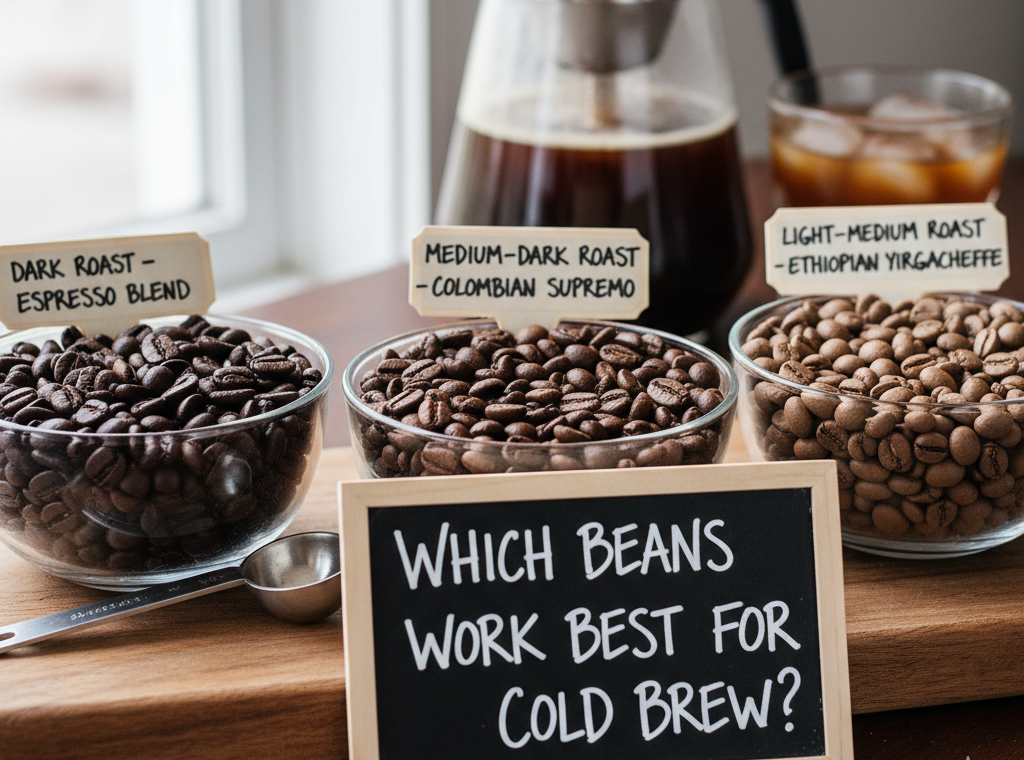
Which Beans Work Best for Cold Brew?
Cold brew's chemistry favors beans with naturally sweet, chocolate, and nutty profiles — because it amplifies those notes while reducing bright acidic ones. The ideal cold brew beans:
- Medium to dark roast: The caramel, chocolate, and toffee compounds from medium-to-dark roasting translate beautifully to cold brew. Light roasts' brightness (primarily from acidic compounds) is largely lost in cold extraction.
- Brazilian and Colombian origins: Natural chocolate, nut, and caramel notes from these origins shine in cold brew. Colombian coffees from Antioquia, with their balance of chocolate and mild fruit, work particularly well.
- Natural processed beans: The fruit-forward sweetness of naturally processed coffees translates into a richer, more complex cold brew than washed coffees — some of that fruit character survives cold extraction as sugar-derived sweetness.
- Freshly roasted: The 2024 Clemson study on freshness directly applies here — fresh beans produce cold brew that maintains quality longer in the refrigerator. Stale beans produce flat cold brew that deteriorates quickly.
Light roast Ethiopian coffees — prized for their floral and citrus complexity in pour-over — are generally not the best choice for cold brew. Those bright, volatile notes don't extract well in cold water, leaving a flat, unremarkable result. Save those beans for pour-over and use your richer, chocolate-forward coffees for cold brew.
Nitro Cold Brew: What's the Difference?
Nitro cold brew is cold brew coffee infused with nitrogen gas under pressure — the same technique used to create Guinness stout's characteristic creamy texture. The nitrogen produces tiny, stable bubbles that give the coffee a thick, velvety mouthfeel and a dramatic cascading effect when poured from a tap.
Nitro cold brew is typically served without ice — the nitrogen creates natural creaminess that ice would dilute. It has slightly higher perceived sweetness than regular cold brew because the carbonation-adjacent effect of nitrogen amplifies sweetness perception. Caffeine content is the same as standard cold brew.
Frequently Asked Questions
What is cold brew coffee?
Cold brew coffee is made by steeping coarsely ground coffee in cold or room-temperature water for 12 to 24 hours without any heat. The result is a smooth, naturally sweet, low-acid coffee concentrate that is diluted before serving. Unlike iced coffee (which is hot-brewed and then cooled), cold brew is brewed cold from start to finish — producing a fundamentally different flavor profile through different chemical extraction.
How is cold brew different from iced coffee?
Iced coffee is hot-brewed coffee cooled down and poured over ice — it retains hot coffee's bright acidity and complex flavor notes but can become diluted as ice melts. Cold brew is steeped in cold water for 12 to 24 hours — producing lower acidity, less bitterness, natural sweetness, and a fuller body. Cold brew is also higher in caffeine per serving and lasts significantly longer in the refrigerator (7 to 14 days vs 1 to 3 days for iced coffee).
Is cold brew stronger than regular coffee?
As a concentrate, yes — cold brew contains significantly more caffeine per ounce than regular coffee. A 2017 study found an average of 207 mg of caffeine in a 12-ounce cold brew serving — 41% higher than expected. As ready-to-drink (properly diluted), cold brew can be calibrated to contain a similar caffeine level to regular coffee. The smooth, mellow taste of cold brew can mask its actual caffeine strength, making it easy to consume more caffeine than intended.
Why is cold brew less acidic than regular coffee?
Cold water extracts coffee differently than hot water. Many of the acidic compounds in coffee — particularly citric acid, malic acid, and chlorogenic acid lactones — require heat to fully extract. Cold water, working slowly over 12 to 24 hours, extracts primarily the sweeter, fuller-bodied compounds while leaving most of the harsh acids behind. Studies show cold brew contains approximately 60 to 70% less acid than hot-brewed coffee, making it significantly gentler on the stomach and tooth enamel.
How long does cold brew last in the fridge?
Cold brew concentrate stored in a sealed container in the refrigerator stays fresh for 7 to 14 days. Ready-to-drink (diluted) cold brew is best within 5 to 7 days. A 2024 study from Clemson University confirmed that cold water brewing preserves flavor quality significantly longer than hot brewing — which explains cold brew's superior shelf life compared to 1 to 3 days for hot-brewed iced coffee.
Can you make cold brew with any coffee?
Yes, but results vary significantly by bean choice. Medium to dark roast coffees with chocolate, caramel, and nutty profiles work best — those flavors translate well to cold extraction. Very light roasts with primarily acidic, floral, and fruity notes (like Ethiopian light roasts) tend to produce flat, unremarkable cold brew because those bright compounds don't extract well in cold water. Colombian, Brazilian, and similarly chocolate-forward origins typically produce the most satisfying cold brew.
The Bottom Line
Cold brew isn't just coffee that's cold — it's a fundamentally different extraction method that produces a fundamentally different beverage. Lower acidity, natural sweetness, full body, higher caffeine per serving, and significantly longer shelf life are the hallmarks of true cold brew — all stemming directly from the cold water chemistry that doesn't form the bitter and acidic compounds that hot water extraction produces.
For people who find hot coffee too acidic or too bitter, cold brew is genuinely transformative. For people who love the bright, complex aromatic character of specialty coffee, hot brewing (or Japanese iced coffee) expresses those qualities better. Neither is objectively superior — they serve different preferences, different occasions, and different needs.
What makes cold brew worthwhile at home is how easy it is to make in large batches, how long it lasts, and how satisfying a well-made cold brew from quality beans actually is. The beans matter here too — the smooth, chocolatey profile of cold brew rewards coffees with natural sweetness and depth. Single-origin Colombian coffee from high-altitude farms, with its balance of chocolate, caramel, and mild fruit complexity, produces a cold brew that goes well beyond what any commercial ready-to-drink product delivers.
If you'd like to read other articles similar to What Is Cold Brew Coffee? How It's Different From Iced Coffee (And Everything Else) you can visit the category The Art and Science of Coffee: Guides, Reviews, and Expert Tips.
Does Coffee Affect Cortisol Levels? The Science Behind Caffeine and Your Stress Hormone

Is Coffee Good for Depression Risk? What the Research Actually Shows

Is Coffee Bad for Anxiety? What the Science Actually Shows
The 5 Elements of Coffee Tasting Every Coffee Lover Should Know
What Is Green Coffee? How Raw Beans Differ From Roasted — and What That Means for Your Health
How Is Coffee Decaffeinated? The 4 Methods Explained — Including the One You Should Avoid
What Is Coffee Degassing? Why Fresh Roasted Beans Release CO2 — and Why It Matters
What Is a Coffee Cooperative? How They Help Farmers — and Why They Matter for Your Cup

How Altitude Affects Coffee Flavor: Why High-Grown Coffee Tastes Different
Leave a Reply
Related post