

Arabica vs Robusta Coffee: Everything That's Actually Different Between Them
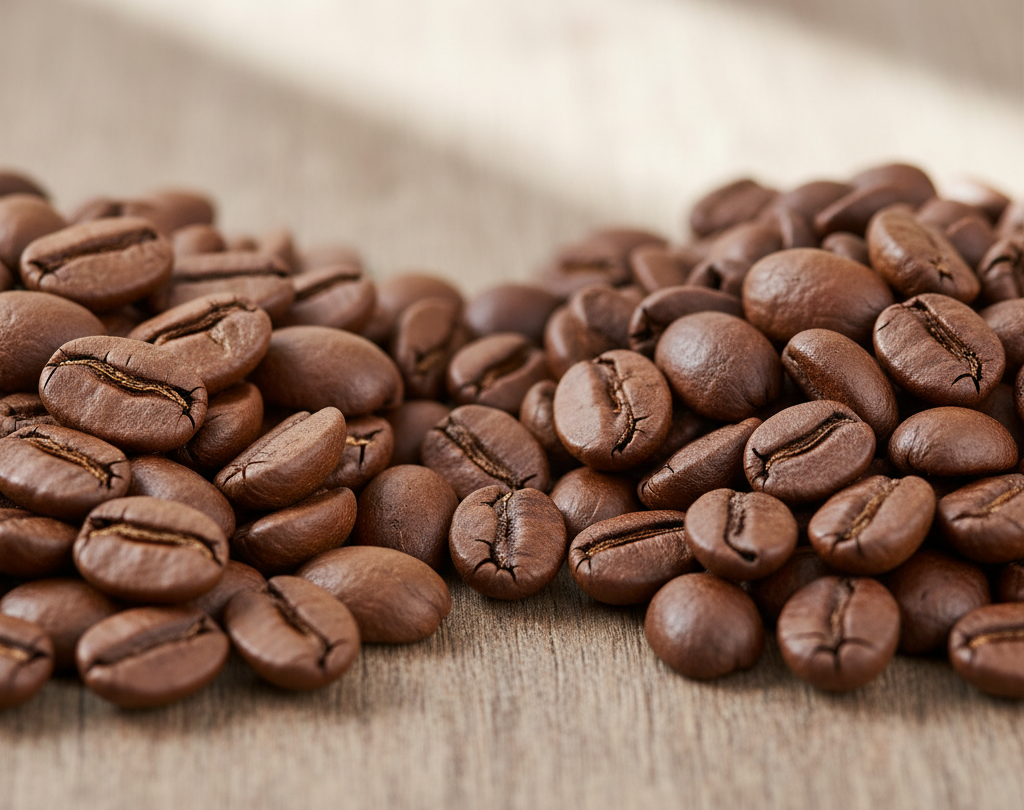
If you've bought coffee at a specialty shop, you've seen "100% Arabica" prominently displayed as a quality signal. If you've drunk espresso in Italy or instant coffee virtually anywhere, you've consumed Robusta. The distinction between these two coffee species is one of the most fundamental in the coffee world — and also one of the most misunderstood.
Here's the complete, honest comparison: what each species actually is, how they differ in flavor, chemistry, and health effects, where each belongs, and why the blanket dismissal of Robusta that specialty coffee culture promotes is more complicated than it sounds.
Table of contents
- The Two Species That Define Coffee
- A Remarkable Genetic Secret: Arabica Descended From Robusta
- Growing Conditions: Where Each Species Thrives
- The Chemistry: What's Actually Different Inside the Bean
- Flavor Profile: The Real Taste Differences
- Crema: The One Area Where Robusta Wins Clearly
- The 80/20 Espresso Blend Rule Revisited
- Price: Why Arabica Costs More
- Health: Which Is Actually Better for You?
- The Specialty Coffee Industry's Robusta Problem
- Arabica vs Robusta: Which Should You Choose?
- Frequently Asked Questions
- The Bottom Line
The Two Species That Define Coffee
Of the 100+ species in the genus Coffea, only two dominate global production:
- Coffea arabica (Arabica): Accounts for approximately 60% of global coffee production. Originated in the highland forests of Ethiopia. Grown at altitude in tropical and subtropical climates. The species behind all specialty coffee.
- Coffea canephora (Robusta): Accounts for approximately 40% of global production — a percentage that has been growing steadily. Originated in central and western sub-Saharan Africa. Grown at lower altitudes. The dominant species in instant coffee, commercial espresso blends, and Vietnamese coffee culture.
A third species, Coffea liberica (Liberica), accounts for only 2 to 3% of global production, primarily in the Philippines and parts of West Africa. Its flavor is described as fruity, unusual, and intensely distinctive — worth knowing about but beyond the scope of most everyday coffee decisions.
A Remarkable Genetic Secret: Arabica Descended From Robusta
Here's something that upends the intuitive hierarchy most coffee drinkers assume: Arabica is the genetic child of Robusta, not the other way around.
☕ Recommended by cocondo.coffee
Cocondo Orgánico — The only certified organic coffee from Antioquia, Colombia
Reserve Your Bag →Arabica is an allotetraploid — a species that arose from the natural hybridization of two diploid ancestors, followed by chromosome doubling. The two parent species were Coffea canephora (Robusta) and Coffea eugenioides — a much rarer species with very low caffeine content. At some point in evolutionary history, these two diploid species naturally crossed, and the resulting hybrid underwent chromosome doubling to create the tetraploid Coffea arabica.
Research published in Nature Genetics (2024) — "The genome and population genomics of allopolyploid Coffea arabica reveal the diversification history of modern coffee cultivars" — confirmed this evolutionary history through genomic analysis of Arabica's entire chromosome-scale assembly. A companion study in Nature Communications (2024) mapped the chromosomal exchanges and aberrations that have generated genetic diversity in Arabica germplasm over time.
The practical implication of this evolutionary history: Arabica inherited 50% of its genome from Robusta's ancestor. The traits that make Arabica taste better — higher sugar content, greater lipid content, more aromatic precursors — are partly the result of combining Robusta's caffeine-related genetics with Coffea eugenioides' low-bitterness, high-sweetness profile.
Growing Conditions: Where Each Species Thrives
Arabica
- Altitude: 600 to 2,200 masl — best quality above 1,200 masl
- Temperature: 15 to 24°C (59 to 75°F) — cool, stable temperatures essential
- Rainfall: 1,500 to 2,000mm per year with seasonal variation
- Humidity: Moderate — too much causes disease, too little stresses the plant
- Plant height: 3 to 5 meters (manageable with pruning)
- Disease susceptibility: High — vulnerable to coffee leaf rust, coffee berry borer, and several other pests and pathogens
- Yield: Relatively low per tree — each tree produces less fruit than Robusta
- Primary growing regions: Ethiopia, Colombia, Brazil (Minas Gerais highlands), Central America, Kenya, Yemen
Robusta
- Altitude: 0 to 900 masl — a lowland species by nature
- Temperature: 24 to 30°C (75 to 86°F) — tolerates heat that would stress Arabica
- Rainfall: 2,000 to 3,000mm — tolerates higher rainfall and humidity
- Plant height: 4 to 6 meters — larger, more sprawling
- Disease susceptibility: Low — highly resistant to coffee leaf rust, berry borer, and most major coffee diseases. The high caffeine content acts as a natural pesticide, toxic to insects at the concentrations present in the beans.
- Yield: High — produces significantly more fruit per tree than Arabica
- Primary growing regions: Vietnam (the world's largest Robusta producer), Indonesia, Uganda, Côte d'Ivoire, Brazil (where Robusta is called "conilon")
The climate and pest resistance advantages of Robusta have significant economic implications — particularly as climate change shifts growing conditions in traditional Arabica regions. Arabica's vulnerability to higher temperatures and increased disease pressure from climate change is already threatening production in some regions. Robusta's resilience is increasingly relevant as a climate adaptation strategy, and some research programs are investigating Robusta genetics for traits that could be bred into more climate-resilient Arabica varieties.
The Chemistry: What's Actually Different Inside the Bean
The flavor, health, and functional differences between Arabica and Robusta are directly traceable to their different chemical compositions. Here's the full comparison:
Sugars
- Arabica: 6 to 9% sugar content by weight
- Robusta: 3 to 7% sugar content — approximately half of Arabica
Sugar content is one of the primary drivers of flavor quality. During roasting, sugars caramelize and participate in Maillard reactions, producing the caramel, chocolate, and sweet aromatic compounds that define enjoyable coffee. Higher sugar content means more raw material for flavor development. This is why Arabica produces sweeter, more complex roasted flavors than Robusta from equivalent roasting conditions.
Lipids (Fats and Oils)
- Arabica: 15 to 17% lipid content
- Robusta: 10 to 12% lipid content
Arabica contains approximately 60% more lipids than Robusta. Lipids contribute directly to mouthfeel — the sense of richness, body, and lingering aftertaste in the cup. They also carry aromatic volatile compounds. Higher lipid content is a significant reason Arabica feels richer and more complex in the mouth.
Caffeine
- Arabica: 0.8 to 1.6% caffeine by weight (average approximately 1.2 to 1.5%)
- Robusta: 1.5 to 2.7% caffeine by weight (average approximately 2.0 to 2.5%)
Robusta contains approximately double the caffeine of Arabica. This serves two distinct functions. First, caffeine is bitter — higher caffeine content directly contributes to Robusta's more intense bitterness. Second, caffeine is toxic to insects — Robusta's high caffeine content is literally a chemical defense mechanism that explains much of its pest resistance. An 8oz cup of Robusta delivers approximately 140 to 200mg of caffeine; the same volume of Arabica delivers approximately 80 to 100mg.
Chlorogenic Acids (CGAs)
Here's the most counterintuitive finding in the Arabica vs Robusta health comparison:
- Arabica: 5.5 to 8% chlorogenic acid content
- Robusta: 7 to 10% chlorogenic acid content — 25 to 80% higher than Arabica
Chlorogenic acids are coffee's primary antioxidant compounds — responsible for most of the anti-inflammatory, antidiabetic, and hepatoprotective effects documented in coffee health research. Robusta has meaningfully higher CGA content than Arabica. This means that from a pure antioxidant standpoint, Robusta coffee is technically more potent than Arabica.
The catch: the same high CGA content contributes to Robusta's more pronounced bitterness. And as with all aspects of the Arabica vs Robusta comparison, roast level affects CGA content dramatically — lighter roasts preserve more CGAs regardless of species, and by the time both are dark-roasted, much of the CGA difference has been reduced through thermal degradation.
Tocopherols (Vitamin E)
- Arabica: Higher tocopherol content
- Robusta: Lower tocopherols — and those present tend to break down more during roasting
Tocopherols are fat-soluble antioxidants important for cell membrane protection. Arabica's advantage here slightly offsets Robusta's CGA advantage from an overall antioxidant profile perspective.
Flavor Profile: The Real Taste Differences
Arabica — What It Tastes Like
- Sweetness: Noticeable natural sweetness from higher sugar content — often described as sugary, caramel, or fruity sweet
- Acidity: Bright, structured, and lively — one of Arabica's most defining qualities. Citrus, malic (apple-like), and tartaric acids produce a vibrancy that Robusta lacks.
- Body: Medium to full — depends on roast and brewing method
- Bitterness: Lower — less caffeine, less CGA per relative cup sweetness
- Flavor complexity: High — the combination of higher sugars, lipids, and aromatic precursors produces hundreds of flavor compounds during roasting
- Flavor notes: Fruit, floral, chocolate, caramel, nut, spice — the full range of specialty coffee's flavor vocabulary
- Aftertaste: Clean, sweet, and lingering
Robusta — What It Tastes Like
- Sweetness: Lower — less sugar means less caramel development during roasting
- Acidity: Low — Robusta lacks the organic acid structure that defines Arabica's brightness
- Body: Heavy and thick — often described as syrupy or even grainy in texture
- Bitterness: Pronounced — from high caffeine and high CGA content
- Flavor complexity: Generally lower — the limited sugar and lipid content produces fewer flavor compounds during roasting
- Flavor notes: Earthy, woody, dark chocolate, grain, rubber (at low quality), nuts. Good quality Robusta: dark chocolate, tobacco, grain-like intensity.
- Aftertaste: Heavy, sometimes harsh, lingering bitterness
The contrast is stark — and it explains the specialty coffee world's preference for Arabica. But it's worth noting that the worst Robusta (commercial-grade commodity beans grown at low altitude, harvested mechanically, poorly processed) tastes dramatically worse than even the characterization above suggests. The best Robusta — carefully sourced "fine Robusta" from Uganda, Vietnam's specialty segment, or India — tastes significantly better than commercial-grade Robusta and can be genuinely enjoyable.
Crema: The One Area Where Robusta Wins Clearly
In espresso, Robusta has a documented functional advantage that no amount of Arabica quality can fully compensate for: Robusta produces dramatically better, thicker, and more persistent crema.
Crema — the reddish-brown foam layer on top of a properly pulled espresso — is an emulsion of CO2 bubbles, coffee oils, and melanoidins. It forms when high-pressure water forces CO2 out of the coffee grounds during extraction. Two factors influence crema quality:
- CO2 content: Robusta beans contain significantly more CO2 after roasting due to their cellular structure and caffeine content. More CO2 means more crema.
- Caffeine as a surfactant: Caffeine acts as a natural emulsifier — it helps stabilize the crema structure. Robusta's higher caffeine content produces a thicker, more stable foam that persists longer in the cup.
This is why traditional Italian espresso blends — developed specifically for making espresso — typically contain 20 to 30% Robusta. The Robusta provides the thick, tiger-striped crema and intensity that cuts through milk in cappuccinos and lattes; the Arabica provides the flavor complexity and sweetness. The classic Italian espresso blend is a deliberate engineering decision, not a quality compromise.

The 80/20 Espresso Blend Rule Revisited
As discussed in the 80/20 coffee rule article, the standard Italian espresso blend is 80% Arabica and 20% Robusta. This ratio is specifically designed to balance Arabica's flavor qualities with Robusta's structural contributions to crema and intensity.
At 20% Robusta, the blend gains:
- Thicker, more stable crema
- More caffeine intensity (relevant for cutting through milk)
- Added body and mouthfeel from Robusta's heavier character
- Lower cost — Robusta is approximately half the commodity price of Arabica
The Arabica component provides the sweetness, acidity, and aromatic complexity. Together, they produce something neither achieves alone — which is precisely the point of blending.
Price: Why Arabica Costs More
Arabica consistently trades at higher prices than Robusta — and the gap widened significantly in 2025:
- As of 2025, Arabica commodity prices are approximately double Robusta commodity prices
- In 2025, Arabica prices spiked approximately 41% due to significant crop failures in Brazil — the world's largest Arabica producer — caused by drought and frost events consistent with climate change patterns
- Specialty grade Arabica from premium origins can command 5 to 20 times commodity Arabica prices
The reasons Arabica costs more are structural, not arbitrary:
- More demanding growing requirements — specific altitude, temperature, rainfall, and soil
- More susceptible to disease and pests — higher crop loss risk, higher management cost
- Lower yield per tree than Robusta
- Labor-intensive selective harvesting for quality
- More delicate handling requirements post-harvest
Robusta's lower price reflects its genuine growing advantages — not necessarily lower intrinsic value. Fine Robusta from Uganda or India, carefully processed and properly roasted, is not a "cheap" product in any meaningful sense — it's a different product.
Health: Which Is Actually Better for You?
The honest health comparison is more nuanced than the specialty coffee narrative suggests:
Antioxidants
Robusta wins on chlorogenic acid content (25 to 80% higher). Arabica wins on tocopherol content. For the specific health benefits most associated with coffee — anti-inflammatory, hepatoprotective, neuroprotective — the CGA advantage slightly favors Robusta at equivalent doses, though roast level matters more than species by the time coffee reaches your cup.
Caffeine and Health
Higher caffeine (Robusta) means stronger stimulant effects — both the benefits (alertness, fat oxidation, Parkinson's protection, athletic performance) and the risks (sleep disruption, anxiety, cardiovascular strain for sensitive individuals). Arabica is gentler. Which serves you better depends entirely on your caffeine sensitivity and health goals.
Acidity and Stomach Comfort
Arabica has higher perceived acidity than Robusta — its bright organic acid structure can cause more stomach irritation in acid-sensitive individuals. Robusta's lower acidity makes it gentler on the stomach for some people, despite its higher caffeine content.
The Honest Bottom Line on Health
Moderation matters more than species. Both are associated with the health benefits of regular coffee consumption — liver protection, cardiovascular benefits, brain health. The species difference in health outcomes is relatively small compared to the difference between drinking quality coffee and not drinking coffee at all.
The Specialty Coffee Industry's Robusta Problem
The specialty coffee world has been largely dismissive of Robusta for decades, treating it as categorically inferior to Arabica. This position is partially correct but increasingly oversimplified.
It's correct that commercial-grade Robusta is genuinely inferior to good Arabica — harvested mechanically from disease-resistant plants at low altitude, poorly processed, sold as commodity. This Robusta tastes like rubber tires, harsh grain, and bitterness with few redeeming qualities. It deserves its reputation.
It's increasingly incorrect to dismiss fine Robusta — carefully farmed, selectively harvested, properly processed specialty-grade Robusta from origins like Uganda, India's Chikmagalur, or Vietnam's emerging specialty segment. Fine Robusta scores in the 80s on professional cupping forms, has genuine flavor character, and serves specific brewing purposes (espresso crema, strong cup character) that even excellent Arabica cannot replicate.
The Coffee Quality Institute and Specialty Coffee Association have both developed evaluation frameworks for fine Robusta specifically — recognition that the blanket "100% Arabica = quality" marketing oversimplifies a genuinely complex comparison.

Arabica vs Robusta: Which Should You Choose?
Choose Arabica if you:
- Want to explore specialty coffee's full flavor complexity — fruity, floral, sweet, complex
- Drink coffee primarily through filter methods (pour-over, drip, AeroPress) that showcase acidity and delicacy
- Are sensitive to caffeine — Arabica's lower caffeine content produces gentler stimulant effects
- Want to taste terroir — origin character expresses most clearly through Arabica
- Prefer light to medium roast profiles
Choose Robusta (or Arabica-Robusta blends) if you:
- Want maximum caffeine per cup
- Drink primarily espresso and want thick, persistent crema
- Make milk-based drinks (cappuccino, latte) where Robusta's intensity cuts through more effectively
- Prefer bold, intense, heavy-bodied coffee with dark chocolate and earthy notes
- Are budget-conscious — quality Robusta blends provide good espresso at lower cost
- Have acid sensitivity — Robusta's lower acidity may be gentler
Consider both in a blend if you:
- Make espresso and want the best of both worlds — Arabica's flavor + Robusta's crema
- Are looking for an everyday espresso that works well in milk drinks
- Appreciate the tradition of Italian espresso culture, which was built on blending
Frequently Asked Questions
What is the difference between Arabica and Robusta coffee?
Arabica and Robusta are the two main commercial coffee species. Arabica (Coffea arabica) grows at high altitude, has higher sugar and lipid content, lower caffeine (1.2 to 1.5%), bright acidity, and complex sweet flavor — the dominant species in specialty coffee. Robusta (Coffea canephora) grows at low altitude, has nearly double the caffeine (2.0 to 2.7%), higher chlorogenic acid content, lower sugar and lipid content, and produces bold, earthy, bitter flavors with excellent espresso crema. About 60% of global production is Arabica; 40% is Robusta.
Is Arabica coffee better than Robusta?
For flavor complexity and specialty coffee appreciation, Arabica is generally considered superior. For espresso crema, maximum caffeine, stomach acidity sensitivity, and price value, Robusta or Arabica-Robusta blends have genuine advantages. "Better" depends entirely on what you're optimizing for — the specialty coffee industry's categorical preference for Arabica is well-founded for many use cases but overstates the case when applied universally. Fine Robusta from quality origins is a genuinely good coffee product, not simply a compromise.
Does Arabica or Robusta have more caffeine?
Robusta has significantly more caffeine — approximately 2.0 to 2.7% by weight compared to Arabica's 1.2 to 1.5%. A cup of Robusta delivers approximately 140 to 200mg of caffeine vs 80 to 100mg for the same volume of Arabica. Robusta's high caffeine content is partly a natural pest defense mechanism — the concentration in the bean is toxic to insects.
Which coffee has more antioxidants — Arabica or Robusta?
Counterintuitively, Robusta has higher chlorogenic acid (CGA) content — coffee's primary antioxidant compounds — at 7 to 10% compared to Arabica's 5.5 to 8%. However, Arabica has higher tocopherol (vitamin E) content. The health difference between the two species is modest — both provide meaningful antioxidant benefits with regular consumption. Roast level affects antioxidant content more significantly than species — lighter roasts preserve more CGAs regardless of which species.
Why does Robusta produce better espresso crema?
Robusta produces superior espresso crema because of two factors: it contains more CO2 after roasting (which forms the foam under pressure), and it has higher caffeine content (caffeine acts as a natural surfactant that stabilizes the crema structure). This is why traditional Italian espresso blends contain 20 to 30% Robusta — the Arabica provides flavor complexity while the Robusta provides the thick, persistent crema and intensity that defines Italian espresso culture.
Is Arabica or Robusta better for sensitive stomachs?
Paradoxically, Robusta may be gentler for some acid-sensitive individuals. Despite Robusta's more intense flavor, it has lower perceived acidity than Arabica — Arabica's bright organic acid structure (citric, malic, tartaric acids) can cause more stomach irritation in susceptible people. However, Robusta's higher caffeine content stimulates gastric acid production more strongly. The net effect varies by individual — some acid-sensitive drinkers do better with cold brew (lowest acidity regardless of species) than with either straight Arabica or Robusta.
The Bottom Line
Arabica and Robusta are genuinely different species — in genetics, growing conditions, chemistry, and the cup experience they produce. Arabica's higher sugar, lipid, and aromatic precursor content makes it the foundation of specialty coffee's flavor complexity. Robusta's higher caffeine, CGA content, and CO2 yield make it the structural backbone of Italian espresso culture and the most caffeinated mainstream option.
The "100% Arabica = quality" shorthand is a useful consumer heuristic that's approximately correct at the commodity level — most bad coffee contains significant Robusta, and most great coffee is pure Arabica. But it's an oversimplification that obscures the genuine functional advantages of quality Robusta in espresso and the fact that species identity is only one of several factors that determine what ends up in your cup.
For specialty coffee exploration — tasting terroir, understanding varietals, experiencing the full range of what coffee can offer — Arabica is the species to explore. For everyday espresso with great crema and strong character, a well-crafted Arabica-Robusta blend is often better than pure Arabica for the specific use case. And for the most caffeine per cup without switching to energy drinks, Robusta is your answer.
The best Colombian specialty coffees — grown at altitude in regions like Antioquia, Huila, and Nariño — are pure Arabica, and express the full potential of the species through carefully selected varietals, ideal terroir, and meticulous processing. That's not because Robusta is bad — it's because high-altitude Colombian growing conditions are specifically suited to bring out the best in Arabica, and the specialty coffee market rewards that expression with the prices that make quality farming viable for Colombian farmers.
If you'd like to read other articles similar to Arabica vs Robusta Coffee: Everything That's Actually Different Between Them you can visit the category The Art and Science of Coffee: Guides, Reviews, and Expert Tips.
Does Coffee Affect Cortisol Levels? The Science Behind Caffeine and Your Stress Hormone

Is Coffee Good for Depression Risk? What the Research Actually Shows

Is Coffee Bad for Anxiety? What the Science Actually Shows
The 5 Elements of Coffee Tasting Every Coffee Lover Should Know
What Is Green Coffee? How Raw Beans Differ From Roasted — and What That Means for Your Health
How Is Coffee Decaffeinated? The 4 Methods Explained — Including the One You Should Avoid
What Is Coffee Degassing? Why Fresh Roasted Beans Release CO2 — and Why It Matters
What Is a Coffee Cooperative? How They Help Farmers — and Why They Matter for Your Cup
How Altitude Affects Coffee Flavor: Why High-Grown Coffee Tastes Different
Leave a Reply
Related post