

What Is Natural Process Coffee? Why It Tastes So Fruity — And How to Tell a Good One From a Bad One

The first time most people drink a natural process Ethiopian coffee, it stops them. Not because it's bad — because it doesn't taste like what they think coffee tastes like. Blueberry. Strawberry jam. Something almost winey. A sweetness that doesn't require sugar. The reaction is usually some version of: this is coffee?
Yes. And understanding why it tastes that way reveals something fundamental about how coffee's flavor is created — not just in the roaster, but in the weeks before the bean ever sees heat.
Table of contents
- What Is Natural Process Coffee?
- The History: Where Natural Processing Comes From
- The Chemistry: Why Natural Processing Creates Fruit Flavors
- The Natural Processing Method: Step by Step
- What Does Natural Process Coffee Taste Like?
- Natural Process vs Washed vs Honey: The Complete Comparison
- The Best Origins for Natural Process Coffee
- How to Brew Natural Process Coffee for Best Results
- How to Tell a Quality Natural Process Coffee from a Poor One Before You Buy
- Frequently Asked Questions
- The Bottom Line
What Is Natural Process Coffee?
Natural process coffee — also called dry process or sun-dried coffee — is the oldest method of transforming a coffee cherry into a green bean ready for roasting. It's also the simplest, at least in concept:
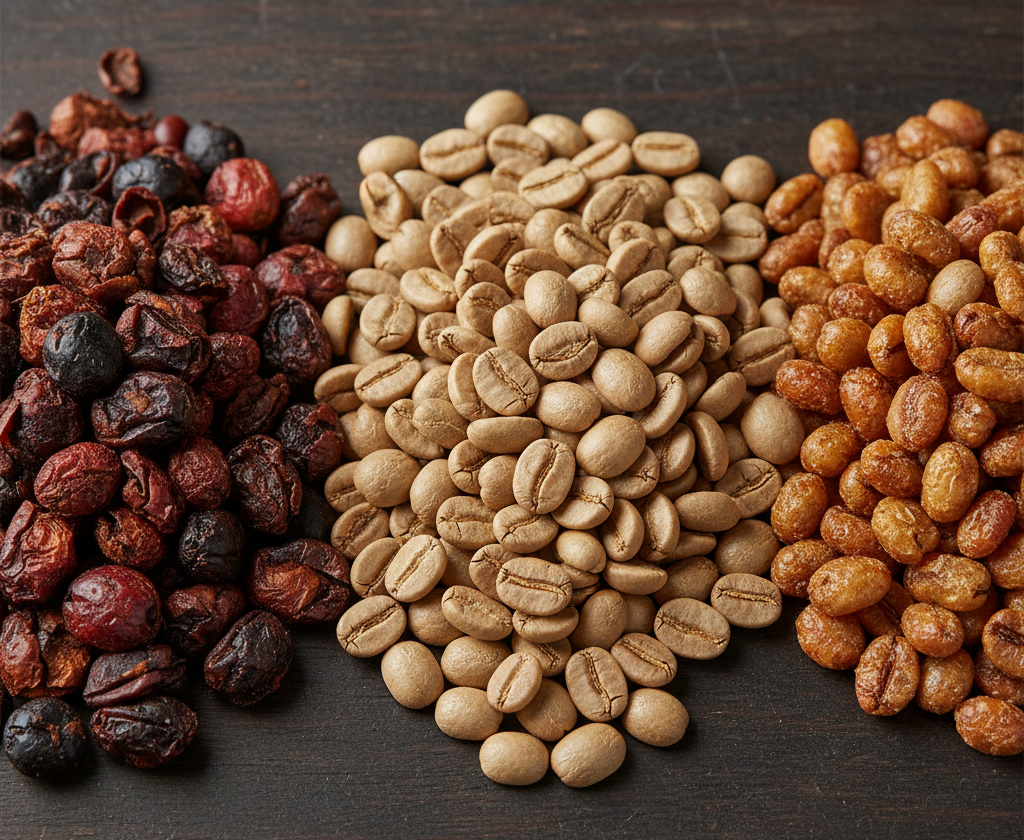
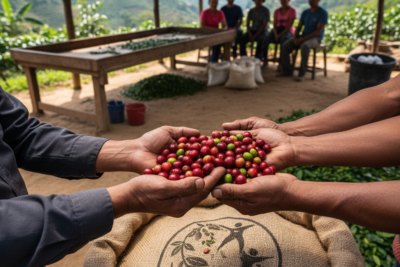
After harvest, the whole coffee cherry — fruit skin, pulp, mucilage, and bean — is dried in the sun intact, exactly as it came off the tree. No pulping machine removes the fruit. No water tank ferments the mucilage away. The cherry simply dries, over two to six weeks, until its moisture content drops from around 60% to approximately 11%. Only then is the dried fruit mechanically hulled away to reveal the green bean inside.
Compare this to the washed (wet) process, where the fruit skin is mechanically removed within hours of harvest, the bean is fermented in water to break down the mucilage, and then dried — a process that takes days rather than weeks and deliberately separates the bean from the fruit's influence as quickly as possible.
☕ Recommended by cocondo.coffee

Cocondo Orgánico — The only certified organic coffee from Antioquia, Colombia
Reserve Your Bag →The contrast in philosophy is clear: washed processing minimizes fruit influence to reveal the bean's intrinsic character. Natural processing maximizes fruit influence to transform it.
The History: Where Natural Processing Comes From
Natural processing isn't a modern specialty coffee innovation — it's how coffee has always been processed in its place of origin. Coffee was first discovered and consumed in Ethiopia, where the plant grows wild in highland forests with hot, dry seasonal climates ideal for sun drying. The first processors weren't making a sophisticated flavor decision — they were making a practical one. In a dry climate with no reliable water infrastructure, drying the whole cherry in the sun was the only viable option.
Yemen adopted the same method when coffee cultivation spread there in the 15th century, producing the ancient Mocha coffee style — a naturally processed cup with intensely fruity, wine-like, and often rustic character that became coffee's defining flavor profile for centuries before the washed process was developed.
Brazil later adopted natural processing at industrial scale — not for flavor reasons but for economic ones. Brazil's vast coffee-growing regions lack the water infrastructure required for widespread wet processing, and the country's dry harvesting season makes sun drying viable. Today Brazil produces the largest volume of naturally processed coffee in the world, though much of it is commercial-grade rather than specialty.
The washed process, developed in the 19th century, became dominant in Central America and parts of East Africa where water was accessible — and for decades was considered the "cleaner," more sophisticated processing method. Natural processing was associated with lower-grade, inconsistent coffee from regions that couldn't afford better infrastructure.
That perception has been completely reversed in the specialty coffee era. Today, natural processed coffees — particularly from Ethiopia, where both the wild genetic diversity of the coffee plants and the ideal drying climate produce extraordinary results — are among the most prized and highest-scoring lots in the world.
The Chemistry: Why Natural Processing Creates Fruit Flavors
This is the part most guides skip — and it's genuinely fascinating. The fruit flavors in a natural process coffee are not added artificially, not the result of flavoring, and not something the roaster creates. They develop during the drying process through specific biochemical mechanisms:
Sugar Migration Through Concentration Gradients
During the 2 to 6 weeks of drying, the coffee cherry is in a state of controlled desiccation. As the outer fruit dries and concentrates, a concentration gradient forms between the fruit pulp and the bean inside. The pulp's sugar concentration becomes higher than the bean's internal sugar concentration, driving sugar molecules to migrate inward through the bean's porous cell walls by osmosis.
The bean literally absorbs the fruit's sugars during drying. These sugars — primarily sucrose, fructose, and glucose from the cherry pulp — become part of the bean's chemical composition. When roasted, they undergo Maillard reactions and caramelization that produce the sweet, jammy, fruit-forward flavor compounds characteristic of natural process coffees.
Microbial Fermentation on the Bean Surface
Simultaneously, natural fermentation occurs on the surface of the drying cherry. Naturally occurring yeasts and bacteria — primarily Saccharomyces cerevisiae and various Lactobacillus species — colonize the fruit and begin breaking down sugars into organic acids, alcohols, and esters. These fermentation byproducts migrate into the bean surface and contribute to the flavor profile.
This is where natural processing becomes either transcendent or disastrous, depending on how well it's managed:
- Well-controlled fermentation: Produces fruity esters (ethyl acetate, isoamyl acetate) that taste like strawberry, blueberry, and tropical fruit. Wine-like aldehydes that add complexity and sweetness. Lactic acids that contribute mild brightness without harshness.
- Poorly controlled fermentation: Produces butyric acid (rancid, vomit-like), acetic acid in excess (harsh vinegar), and putrescine compounds (barnyard, manure-like off-notes). These are the "bad naturals" that give the processing method its contentious reputation.
The difference between a natural processed coffee that tastes like blueberry cheesecake and one that tastes like a barn is almost entirely a function of quality control during drying — how carefully the cherries were sorted before drying, how evenly they were spread, how consistently they were turned, and how well temperature and humidity were managed throughout the process.
Flavor Compound Retention
Because the bean is protected by the intact cherry skin and pulp during drying, it's also shielded from UV radiation and oxidation that can degrade delicate aromatic compounds. Some researchers suggest this protection allows the bean to retain aromatic precursors that would be lost in washed processing — contributing to the greater aromatic intensity of well-made natural process coffees.
The Natural Processing Method: Step by Step
Step 1: Harvest and Sorting
Everything about a natural process coffee's quality begins here. Only fully ripe, deep red or purple cherries should enter the natural process. Underripe cherries lack the sugar content needed for flavor development; overripe or damaged cherries introduce fermentation problems and off-flavors.
High-quality natural processors use a float tank as a first sort — cherries are placed in water and any that float (indicating internal defects, insect damage, or underripeness) are removed. Remaining cherries are hand-sorted on sorting tables. This step takes significant labor and time, and it's the single most important determinant of the final cup quality. Shortcuts here create problems that no amount of careful drying can fix.
Step 2: Spreading on Drying Surfaces
Sorted cherries are spread in thin, even layers — typically 2 to 5 cm deep — on drying surfaces. There are three main types:
- Raised African drying beds: Mesh tables elevated above the ground that allow air to circulate above and below the cherry layer. Considered the best option for natural processing because even airflow promotes uniform drying and reduces mold risk from moisture accumulation at the bottom of the pile.
- Paved drying patios: Concrete or clay floors where cherries are spread. More common in Brazil and larger-scale operations. Requires more frequent turning to prevent bottom layer fermentation, and has less ideal airflow than raised beds.
- Mechanical dryers: Industrial rotating drum dryers used in large-scale operations where consistency is prioritized over flavor complexity. Faster (days rather than weeks) but generally considered to produce less complex natural coffees than slow sun drying.
Step 3: Turning and Monitoring — The Critical Phase
This is where natural processing diverges most sharply from washed processing in labor intensity. The cherries must be turned regularly — typically 2 to 4 times per day during peak drying periods — to ensure:
- Even drying across the entire cherry surface and depth
- Prevention of mold growth in the moist bottom layers
- Even fermentation throughout the batch
- Detection and removal of individual cherries that show signs of over-fermentation or mold
The drying phase typically lasts 15 to 30 days depending on climate, altitude, humidity, and cherry density. During this period, the cherries change color from red to deep purple to dark raisin-brown as they desiccate. Workers at quality-conscious farms do daily sensory checks — smelling samples from each drying lot to detect off-fermentation notes before they spread through the batch.
The target moisture content is approximately 11%. Too dry (below 9%) and the bean becomes brittle and cracks during hulling, causing damage that affects roasting uniformity. Too wet (above 13%) and the coffee is unstable in storage, subject to mold and continued fermentation that produces off-flavors.
Step 4: Resting and Stabilization
After drying, the dried whole cherries rest in storage for 4 to 8 weeks before hulling. This stabilization period allows moisture to distribute evenly throughout the bean and the dried cherry material, preventing the uneven moisture distribution that causes cracking during mechanical hulling.
Step 5: Hulling and Grading
The dried outer layers — skin, dried pulp, parchment — are removed by a mechanical huller that applies controlled pressure to strip the layers without damaging the green bean beneath. The resulting green beans are then sorted by size (using mesh screens) and density (using gravity tables or air classifiers), and inspected for visual defects before being graded and bagged for export.
What Does Natural Process Coffee Taste Like?
The flavor profile of natural process coffee is distinct enough that once you've had a good one, you'll recognize the processing method in future cups. The key characteristics:
When Natural Processing Is Done Well
- Intense fruit notes: Blueberry, strawberry, raspberry, and blackberry are the most common descriptors — often described as "jammy" or "preserved fruit" rather than fresh fruit. Tropical fruit notes (mango, passionfruit, guava) are common in certain origins. The fruit intensity can be genuinely striking — some Ethiopian naturals taste more like berry fruit than coffee to first-time drinkers.
- Wine-like complexity: A round, wine-adjacent quality — sometimes described as reminiscent of red wine or port — from the fermentation esters and aldehydes. This is one of the most distinctive qualities of natural process coffees that has no equivalent in washed coffees.
- Heavy, syrupy body: Natural process coffees consistently have more body (mouthfeel) than washed coffees from the same origin. The sugar migration and retained oils during whole-cherry drying produce a thicker, more viscous texture in the cup.
- Lower perceived acidity: Despite often having comparable actual organic acid content to washed coffees, natural process coffees are perceived as less acidic — the sweetness and body mask and buffer the acidity. This makes them more accessible to people who find bright, acidic washed coffees challenging.
- Natural sweetness: A persistent sweetness that requires no added sugar — from the absorbed cherry sugars that survived roasting and extraction.
- Long, complex finish: Well-made naturals have a finish that evolves — fruit notes fading into chocolate or spice, often lingering for 30+ seconds after swallowing.
When Natural Processing Goes Wrong
- Over-fermented: Harsh, acetic (vinegar), or butyric (rancid/vomit-like) notes. Sometimes described as "ferment bomb" — where fermentation dominated the cup in an unpleasant way rather than a fruity way.
- Barnyard or earthy off-notes: Sometimes called "wild" in a negative sense — musty, animal, or manure-adjacent notes from uncontrolled bacterial fermentation. Some drinkers accept low levels of this as part of natural coffee's character; others find it off-putting at any level.
- Musty or moldy: From actual mold growth during drying — indicates inadequate turning or humidity management during the drying phase.
- Flat or raisin-like without complexity: A natural that was dried correctly but from underripe cherries — the fruit sugars weren't there to create the characteristic flavor development, leaving a dull, dried-fruit-without-freshness character.
The line between "pleasingly fruity" and "fermented in a bad way" is genuinely subjective for some note levels, which is why natural process coffees remain more divisive among coffee drinkers than any other processing method. What one cupper describes as "wine-like complexity," another describes as "over-fermented." Context, personal palate, and the specific coffee all determine where the line falls.
Natural Process vs Washed vs Honey: The Complete Comparison
- Fruit influence: Natural (maximum) — Honey (moderate) — Washed (minimal)
- Sweetness: Natural (highest) — Honey (high) — Washed (moderate)
- Acidity: Natural (lowest perceived) — Honey (medium) — Washed (highest)
- Body: Natural (heaviest) — Honey (medium-full) — Washed (lightest)
- Flavor clarity: Washed (clearest) — Honey (medium) — Natural (least clear)
- Origin character expression: Washed (most transparent) — Honey (moderate) — Natural (fruit masks some origin character)
- Processing consistency: Washed (most consistent) — Honey (moderate) — Natural (most variable)
- Water usage: Natural (minimal) — Honey (moderate) — Washed (highest)
- Processing time: Natural (2–6 weeks) — Honey (2–6 weeks) — Washed (1–2 weeks)
- Risk of defects: Natural (highest) — Honey (moderate) — Washed (lowest)
The Best Origins for Natural Process Coffee
Ethiopia — The Benchmark
Ethiopian naturals are widely considered the finest expression of the processing method. The combination of wild and semi-wild Arabica genetic diversity (hundreds of native heirloom varieties), the ideal dry harvesting climate, and generations of natural processing expertise produces coffees of extraordinary aromatic complexity. Regions like Guji, Sidama, and Yirgacheffe produce natural process coffees that consistently score 87 to 94 points — among the highest-scoring coffees in the world. The blueberry and jasmine character of Guji natural is a reference point that defines what exceptional natural processing can achieve.
Brazil — Volume and Accessibility
Brazil processes the majority of its coffee naturally due to climate and infrastructure — making it the world's largest producer of natural process coffee by volume. Brazilian naturals are gentler and less intensely fruity than Ethiopian ones — more chocolate, nut, and dried fruit than berry explosion. Lower risk, lower peak, broadly accessible. The best Brazilian naturals from Sul de Minas and Cerrado are excellent value specialty coffees; the bulk of Brazilian natural is commercial-grade.
Yemen — The Historical Origin
Yemen's Mocha coffee — processed naturally in terraced mountain farms using ancient techniques — is among the world's most distinctive and historically significant coffees. Intensely complex, earthy, wine-like, and sometimes funky in ways that can be either compelling or challenging. Availability is limited due to geopolitical instability, and when genuine Yemeni natural process coffee is available, it commands premium prices. Worth trying once if you can access it.
Colombia (Emerging)
Colombia has traditionally processed its coffee washed — the country's climate and infrastructure support it, and Colombian washed coffees are world-class. But the specialty market's enthusiasm for natural process has driven experimentation, particularly in Nariño, Cauca, and parts of Antioquia. Colombian naturals are a relatively recent category, and the best ones — from innovative producers who've invested in proper drying infrastructure — are genuinely exciting: the chocolate and caramel base of Colombian terroir combined with natural processing's fruit contribution produces distinctive, complex cups. As Colombian natural processing quality improves, it's becoming an increasingly interesting category to watch.
How to Brew Natural Process Coffee for Best Results
Natural process coffees respond differently to brewing methods than washed coffees — their higher sugar content, heavier body, and more volatile aromatic profile require some adjustments:
- Pour-over: Excellent for showcasing the fruit and floral complexity. Use slightly lower water temperature (89 to 93°C) than you would for washed coffees — the higher sugar content extracts sweetness quickly, and too-hot water can push into over-extracted harsh territory. Aim for the high end of the standard brew ratio (1:15 to 1:16) to let body express without overwhelming.
- AeroPress: Outstanding for natural process coffees — the pressure and immersion brewing style creates a syrupy, concentrated cup that highlights the body and fruit notes beautifully. Shorter steep times (1 to 1.5 minutes) work well.
- French press: The immersion method and unfiltered oils suit the natural's heavy body. Use a coarse grind and a 3.5 to 4-minute steep. The result is thick, rich, and intensely fruited — some people's absolute favorite way to experience a quality Ethiopian natural.
- Espresso: Natural process espresso is increasingly popular — the intense sweetness and fruit character translates into espresso beautifully when dialed in correctly. Expect to grind slightly coarser than you would for washed espresso (the higher sugar content makes extraction faster) and target a slightly shorter shot time. The resulting espresso has a jammy, wine-like sweetness that's unlike any washed coffee espresso.
- Cold brew: Good but loses some of the volatile aromatic complexity. The fruit notes translate into natural sweetness in cold brew, but the jasmine and delicate floral qualities of Ethiopian naturals largely disappear. A solid choice for accessibility; not the best vehicle for showcasing the processing method's finest qualities.
How to Tell a Quality Natural Process Coffee from a Poor One Before You Buy
Given that natural processing's biggest risk is over-fermentation and off-flavors, knowing what signals quality before you open the bag is worth understanding:
- Roast date: Non-negotiable for naturals — the volatile fruit aromatics that define natural process are the first compounds to degrade after roasting. Naturals within 5 to 21 days of roast date express their character best; old naturals taste flat and raisin-like without the fresh fruit complexity.
- Specific tasting notes: "Blueberry, strawberry, wine, tropical fruit" signal a genuinely fruity natural. Vague notes like "dark fruit, rich, complex" without specifics sometimes indicate a roaster being cautious about a coffee that's pleasant but not exceptional. Notes like "earthy, rustic, wine" can signal a natural with some fermentation character the roaster is marketing as a feature.
- Origin specificity: A named farm or cooperative and specific Ethiopian sub-region signals more careful sourcing than "Ethiopia natural." The more specific the origin, the more likely careful selection and processing.
- Score or grade: Natural process coffees above 87 points on the SCA scale are reliably exceptional. Below 84 points and you're likely in territory where the processing quality doesn't guarantee a clean, fruity cup.
- Roaster transparency: Roasters who can tell you the drying method (raised beds vs patio), the moisture target, and the drying duration are the ones who've asked those questions of their producers — which means the producers they work with are thinking seriously about quality.
Frequently Asked Questions
What is natural process coffee?
Natural process coffee (also called dry process or sun-dried coffee) is coffee processed by drying the whole coffee cherry — fruit skin, pulp, and bean — in the sun intact after harvest, without removing the fruit first. Over 2 to 6 weeks of controlled drying, the bean absorbs sugars and fermentation compounds from the surrounding fruit, producing the intensely fruity, sweet, wine-like flavor profile that distinguishes natural process coffees from washed or honey process alternatives.
Why does natural process coffee taste fruity?
Two mechanisms create the fruit flavors. First, sugar migration: as the cherry desiccates during drying, concentrated fruit sugars migrate inward through the bean's cell walls, becoming part of the bean's chemical composition. These sugars caramelize and undergo Maillard reactions during roasting, producing jammy, sweet flavor compounds. Second, fermentation: naturally occurring yeasts and bacteria produce fruity esters (particularly isoamyl acetate, which tastes like banana and strawberry) on the bean surface during drying. Well-controlled fermentation produces desirable fruit notes; poorly controlled fermentation produces off-flavors.
Is natural process coffee better than washed?
Neither is objectively better — they produce fundamentally different cups suited to different preferences. Washed coffees are cleaner, brighter, more transparent to origin character, and more consistent. Natural process coffees are sweeter, heavier-bodied, more intensely fruited, and more complex — but also more variable and with higher risk of off-flavors. Many coffee enthusiasts appreciate both; the best approach is to try quality examples of each and develop your own preference rather than accepting either as categorically superior.
What countries produce the best natural process coffee?
Ethiopia produces the most celebrated natural process coffees globally — particularly from Guji, Sidama, and Yirgacheffe sub-regions, where wild Arabica genetics, ideal dry climate, and traditional processing expertise combine to produce extraordinary results. Brazil produces the highest volume of natural process coffee, with the best Brazilian naturals offering accessible chocolate-and-dried-fruit profiles at good value. Yemen's Mocha coffee represents the historic origin of the style. Colombia is an emerging natural process origin worth watching as quality improves.
What is the difference between natural and washed coffee?
Washed coffee has the fruit removed within hours of harvest — the bean ferments in water to break down the mucilage, then is washed clean and dried. This produces a clean, bright, transparent cup where the bean's intrinsic character is the focus. Natural process leaves the whole cherry intact to dry for 2 to 6 weeks — the bean absorbs fruit sugars and fermentation compounds throughout. This produces a fruity, sweet, heavy-bodied cup where the fruit's contribution transforms the flavor significantly. Washed = clean clarity; natural = fruit-forward transformation.
Is natural process coffee more or less acidic?
Natural process coffees are perceived as less acidic than washed coffees from the same origin, even though their actual organic acid content may be similar. The higher sweetness and heavier body of natural process coffees mask and buffer the acidity, making it feel gentler on the palate. This makes natural process coffees a good option for people who find bright washed coffees too sharp — the sweetness and body change the perceived acid balance significantly.
The Bottom Line
Natural process coffee is coffee's oldest and most transformative processing method — a weeks-long slow-fermentation technique that turns a simple coffee cherry into a flavor experience unlike anything else the plant can produce. When done well, the result is the most intensely fruited, sweetest, most complex cup in coffee's repertoire. When done poorly, the result is one of the most unpleasant.
The difference between the two is almost entirely about quality: quality of cherry selection, quality of drying management, quality of the producer's commitment to consistency. Those qualities correlate directly with the sourcing practices of the roaster — the ones who visit farms, pay premium prices for care, and can tell you specifically how the coffee was dried are the ones whose naturals taste like blueberry and wine rather than vinegar and barn.
If you've only had commercial natural process coffee or a natural that disappointed you, the specialty natural — particularly a well-processed Ethiopian from a specific named cooperative or farm — may be the most surprising cup of coffee you'll ever drink. It's coffee that tastes like fruit, brewed from nothing but coffee, grown in a country where coffee has been processed this way for over a thousand years.
That's not a trick. That's terroir, and time, and care.
If you'd like to read other articles similar to What Is Natural Process Coffee? Why It Tastes So Fruity — And How to Tell a Good One From a Bad One you can visit the category The Art and Science of Coffee: Guides, Reviews, and Expert Tips.
Does Coffee Affect Cortisol Levels? The Science Behind Caffeine and Your Stress Hormone

Is Coffee Good for Depression Risk? What the Research Actually Shows

Is Coffee Bad for Anxiety? What the Science Actually Shows

The 5 Elements of Coffee Tasting Every Coffee Lover Should Know
What Is Green Coffee? How Raw Beans Differ From Roasted — and What That Means for Your Health
How Is Coffee Decaffeinated? The 4 Methods Explained — Including the One You Should Avoid
What Is Coffee Degassing? Why Fresh Roasted Beans Release CO2 — and Why It Matters
What Is a Coffee Cooperative? How They Help Farmers — and Why They Matter for Your Cup

How Altitude Affects Coffee Flavor: Why High-Grown Coffee Tastes Different
Leave a Reply
Related post